Fulbright Lecture Series (2018 onwards)
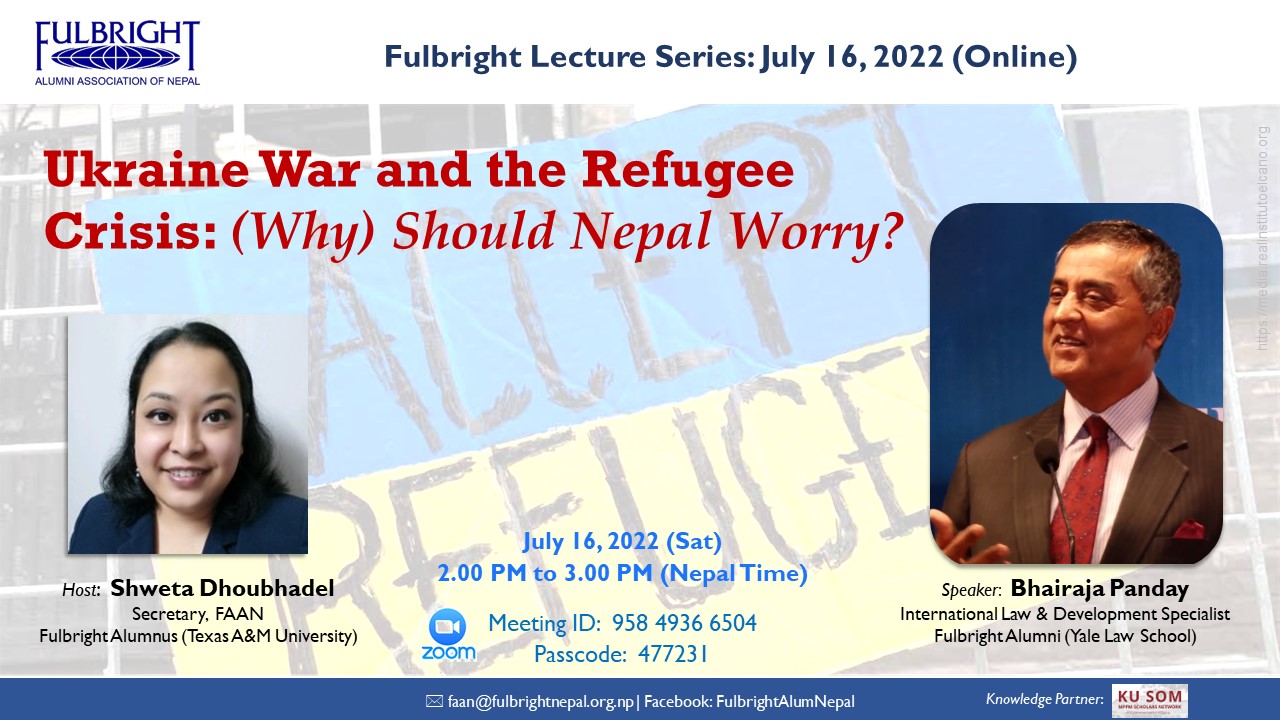
As part of its Fulbright Lecture Series, Fulbright Alumni Association of Nepal (FAAN) organized an online program featuring Mr. Bhairaja Panday, International Law & Development Specialist Fulbright Alumni, who spoke on "Ukraine War and the Refugee Crisis: (Why) Should Nepal Worry?".
In the context of the ongoing Ukraine War and the emergence of a new global Cold War, Mr. Panday asked and answered two questions: With Nepal's geographic location and its fragile political and economic systems and consequent vulnerabilities, what is the possibility of Nepal getting caught in a Ukraine style crossfire? And what are the political and diplomatic moves needed to avoid, control or manage the situation?
The event was organized in collaboration with KU School of Management as the knowledge partner.
https://www.youtube.com/watch?v=VwNiOnmVpL0
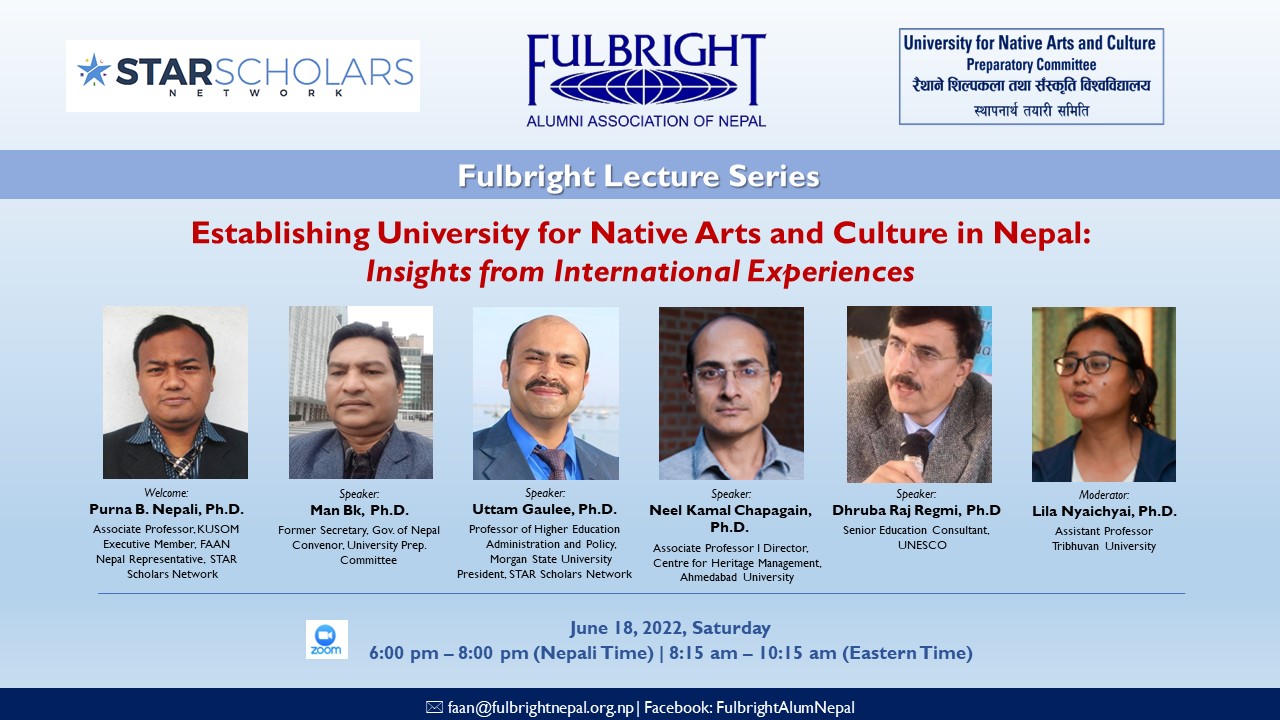
As part of its Fulbright Lecture Series, Fulbright Alumni Association of Nepal (FAAN) organized an online panel discussion on “Establishing University for Native Arts and Culture in Nepal: Insights from International Experiences” featuring Dr. Man Bk, Former Secretary, Government of Nepal and Convenor, University Preparatory Committee (Advocacy Group), Dr. Uttam Gaulee, Professor of Higher Education Administration and Policy, Morgan State University and President, STAR Scholars Network, Dr. Neel Kamal Chapagain, Associate Professor and Director, Centre for Heritage Management, Ahmedabad University, and Dr. Dhruba Raj Regmi, Senior Education Consultant, UNESCO as panelists.
Dr. Purna B. Nepali, Executive Member of FAAN and Nepal representative of STAR Scholars Network welcomed the panelists. The panelists shared their views and perceptions on the envisioned university.
Dr. Man Bk, Convener of Native Arts and Culture Preparatory Committee, explained why it is important to establish university for native arts and culture in Nepal.
Prof. Dr. Uttam Gaulee of Morgan State University talked about the rise and significance of community colleges and historically black colleges and universities (HBCUs) in the US.
Associate Prof. Dr. Neel Kamal Chapagain of Centre of Heritage Management, Ahmedabad University shared the Centre's journey in heritage management education. Dr. Dhruba Raj Regmi of UNESCO Nepal shed light on UNESCO's policies and strategies on heritage education.
Dr. Lila Nyaichyai, Assistant Professor at Tribhuvan University, moderated the discussion.
The event was organized in collaboration with STAR Scholars Network and University for Native Arts and Culture Preparatory Committee.
https://www.youtube.com/watch?v=XyAl87cjABk
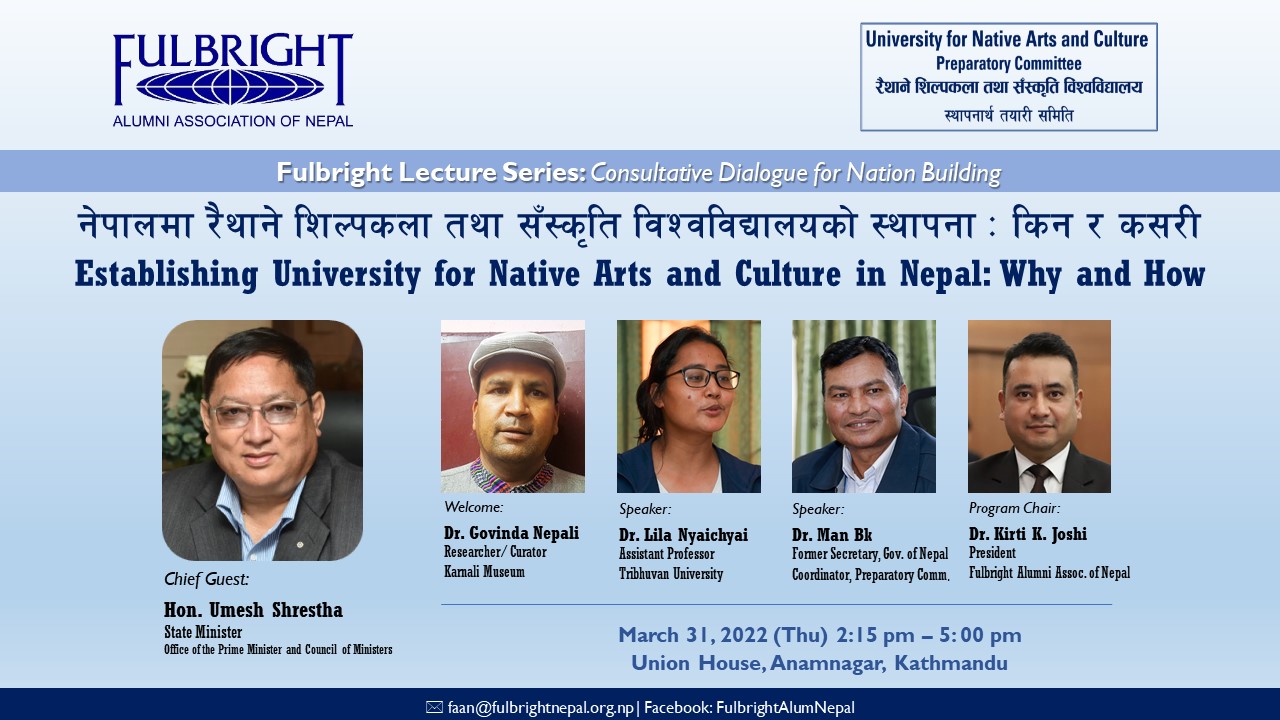
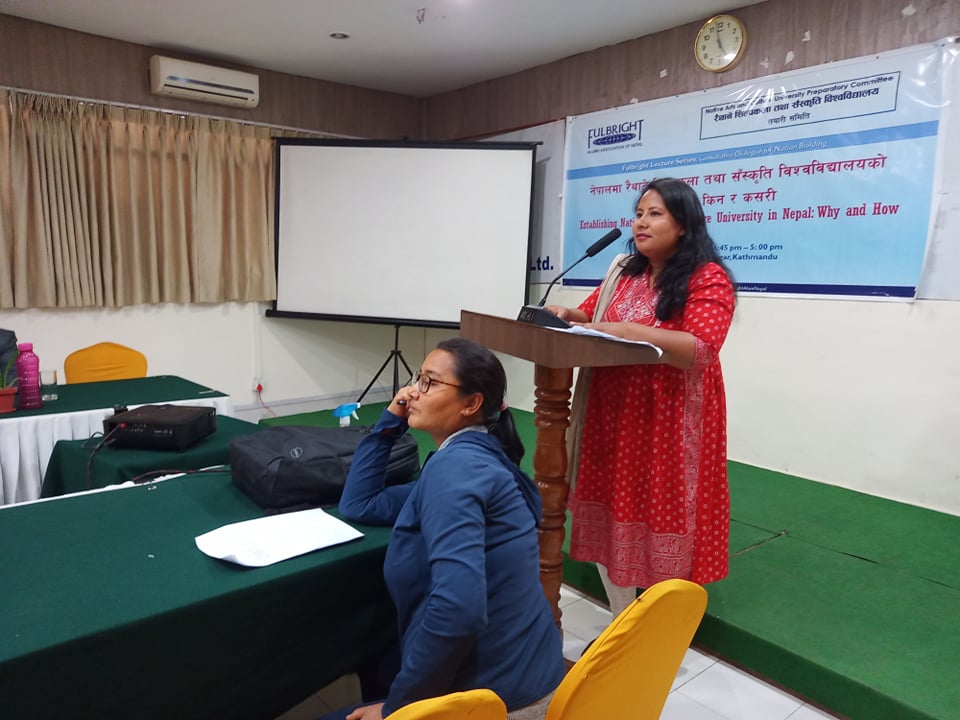
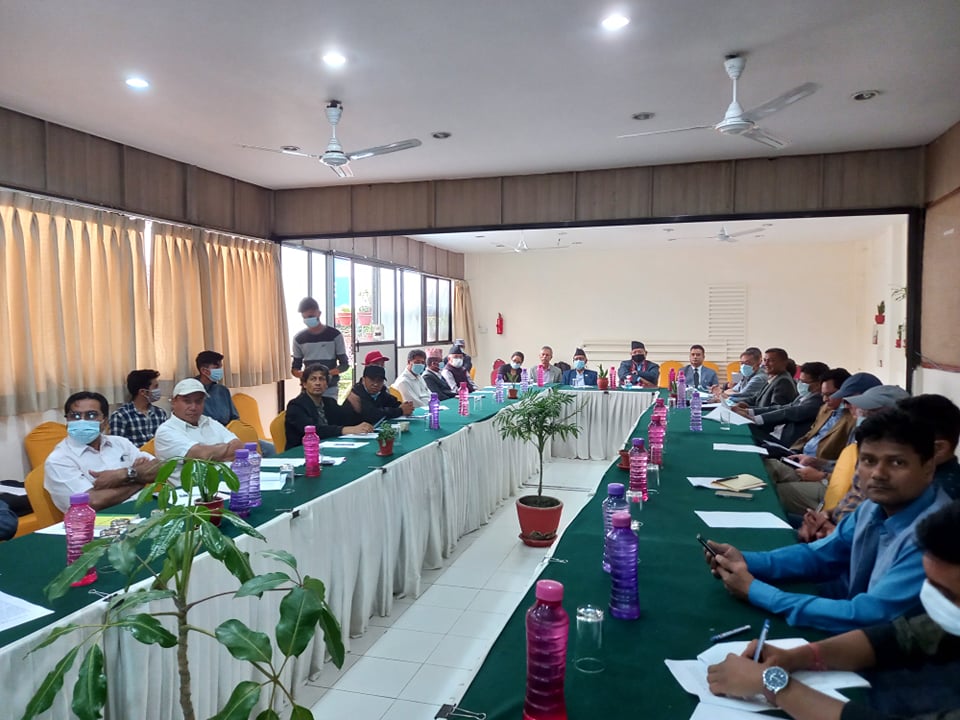
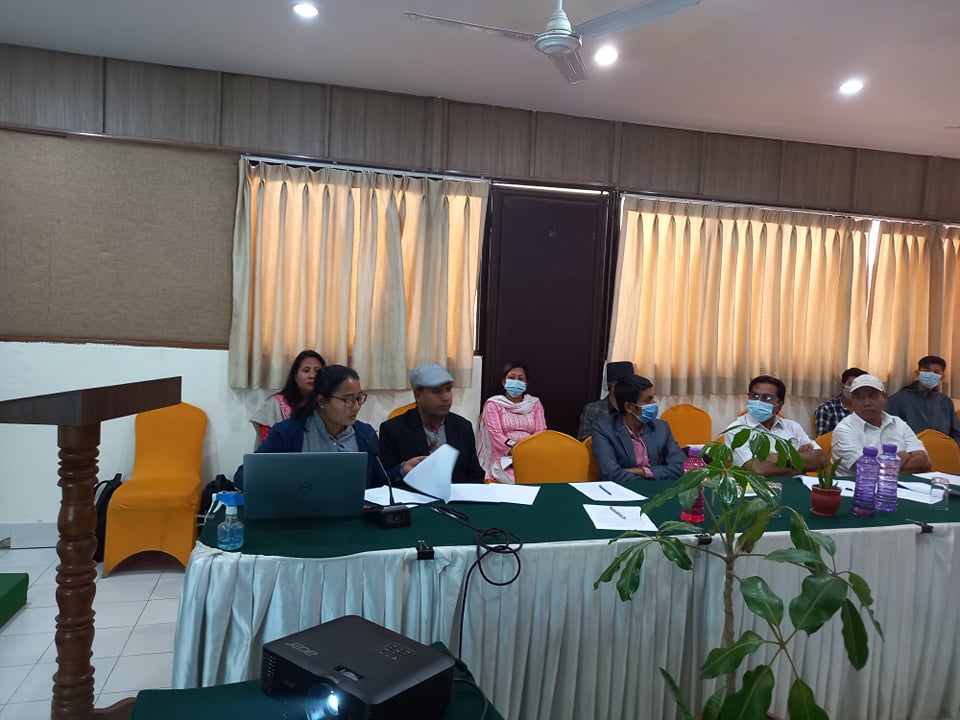
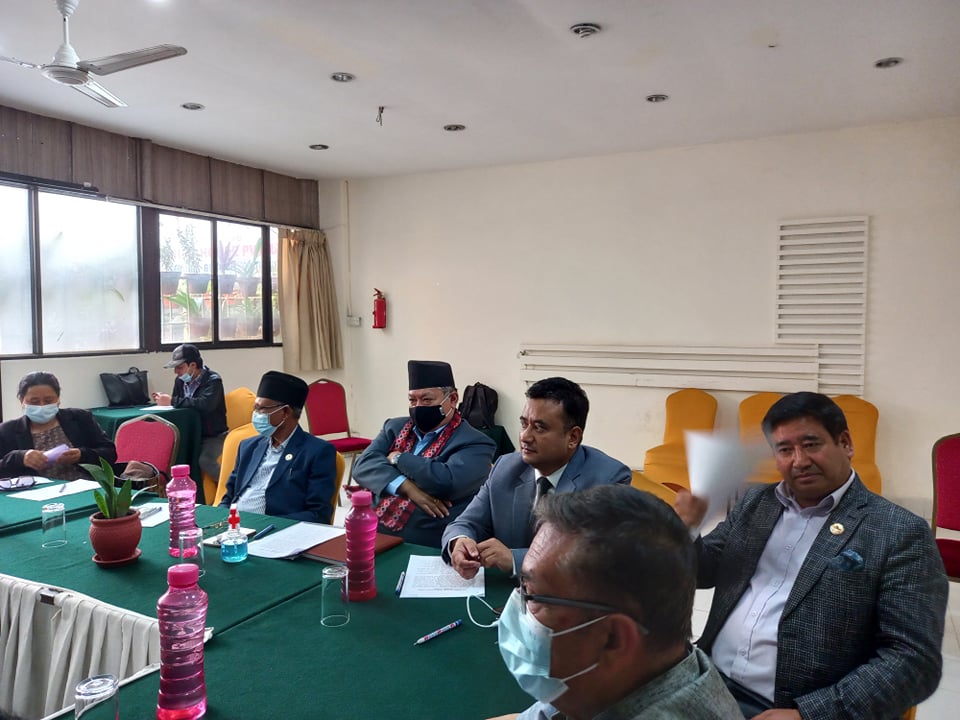
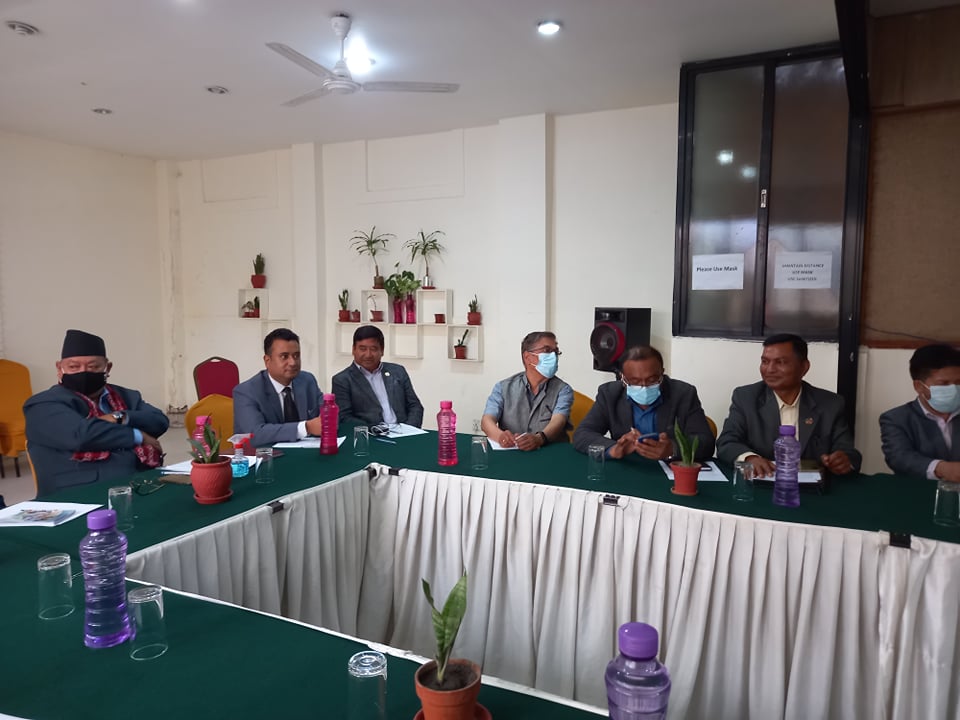
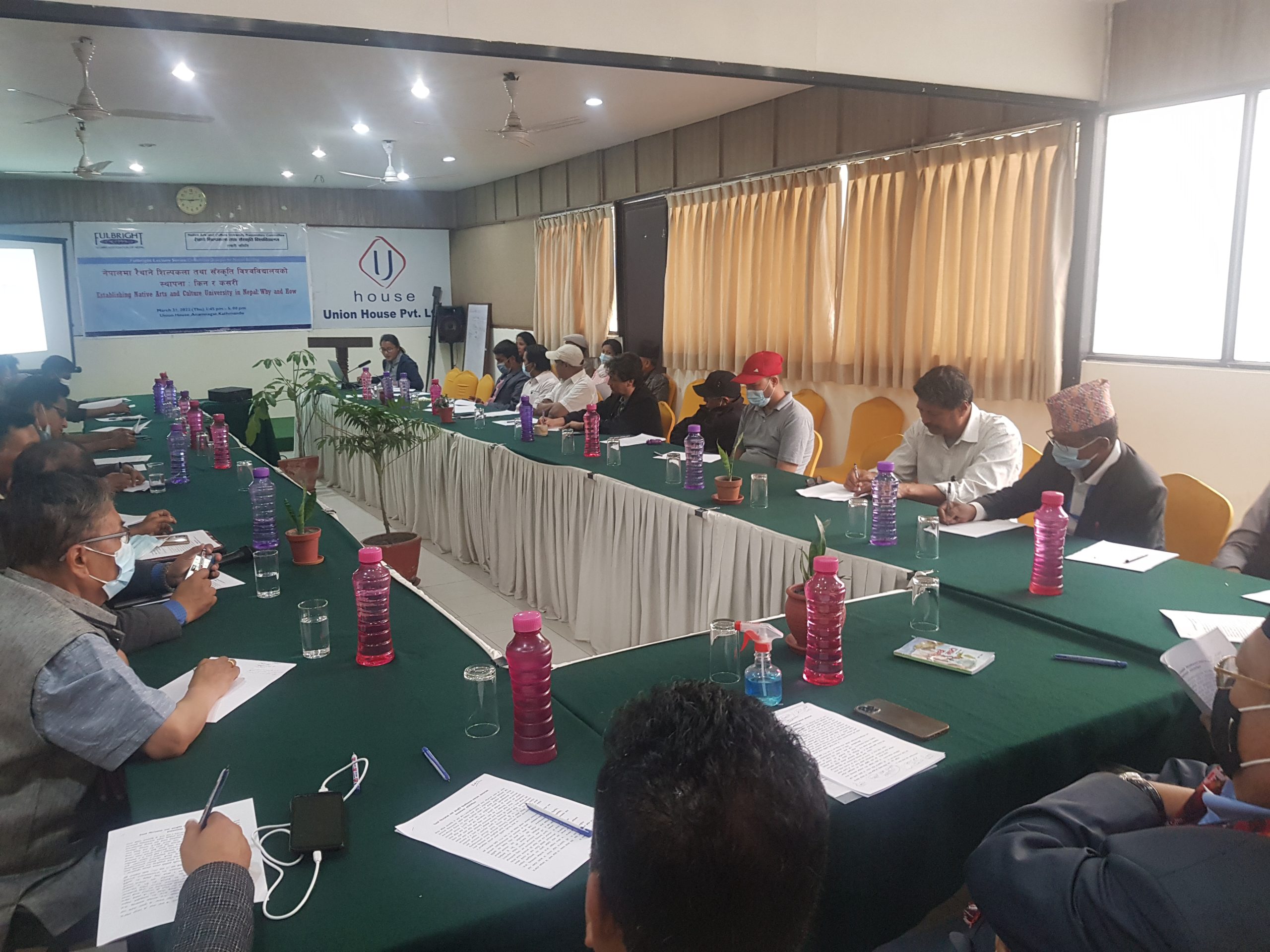
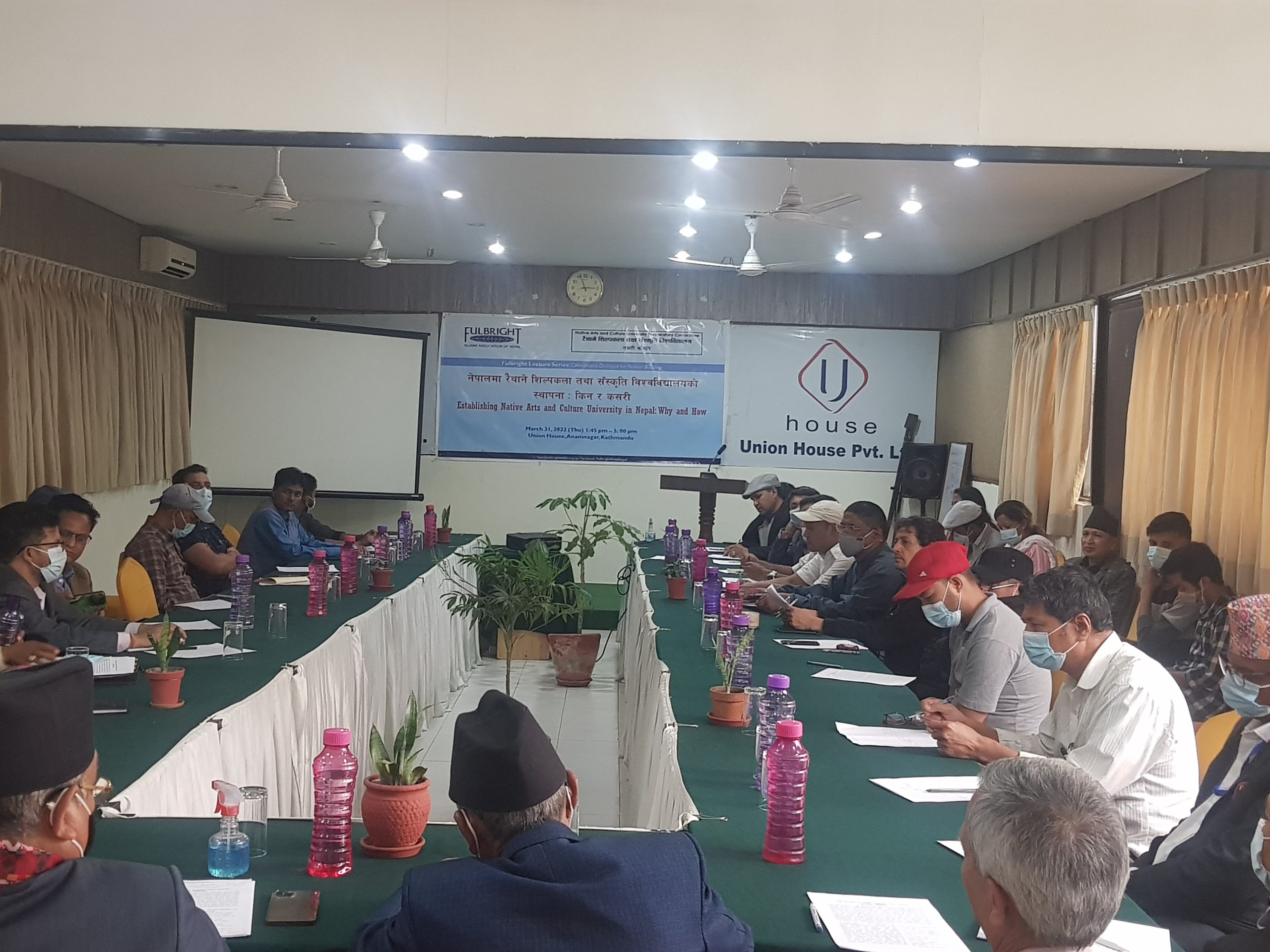
As part of its Fulbright Lecture Series, Fulbright Alumni Association of Nepal (FAAN) organized a consultative dialogue with lawmakers on establishing university for native arts and culture in Nepal.
Hon. Umesh Shrestha, State Minister at the Office of the Prime Minister and Council of Ministers, was the Chief Guest of the program. Several lawmakers attended the program and participated in the discussion.
Dr. Kirti K. Joshi, President of FAAN, chaired the program. Dr. Govinda Nepali delivered the welcome remarks.
Dr. Lila Nyaichyai and Dr. Man Bk spoke on the rationale and objective of the envisioned university. Participants including lawmakers agreed on the need to establish such university in order to address the country's paradoxical situation of ‘degree but no skill and skill but no degree’.
Chief Guest Hon. Shrestha expressed his opinion that establishing a university is an ambitious task but meaningful steps could be taken in order to start this journey.
Ms. Gita Chaudhary, General Secretary, Youth Advocacy Nepal, moderated the discussion.
The event was organized in collaboration with University for Native Arts and Culture Preparatory Committee (Advocacy Group). The event took place at Union House, Anamnagar, Kathmandu.
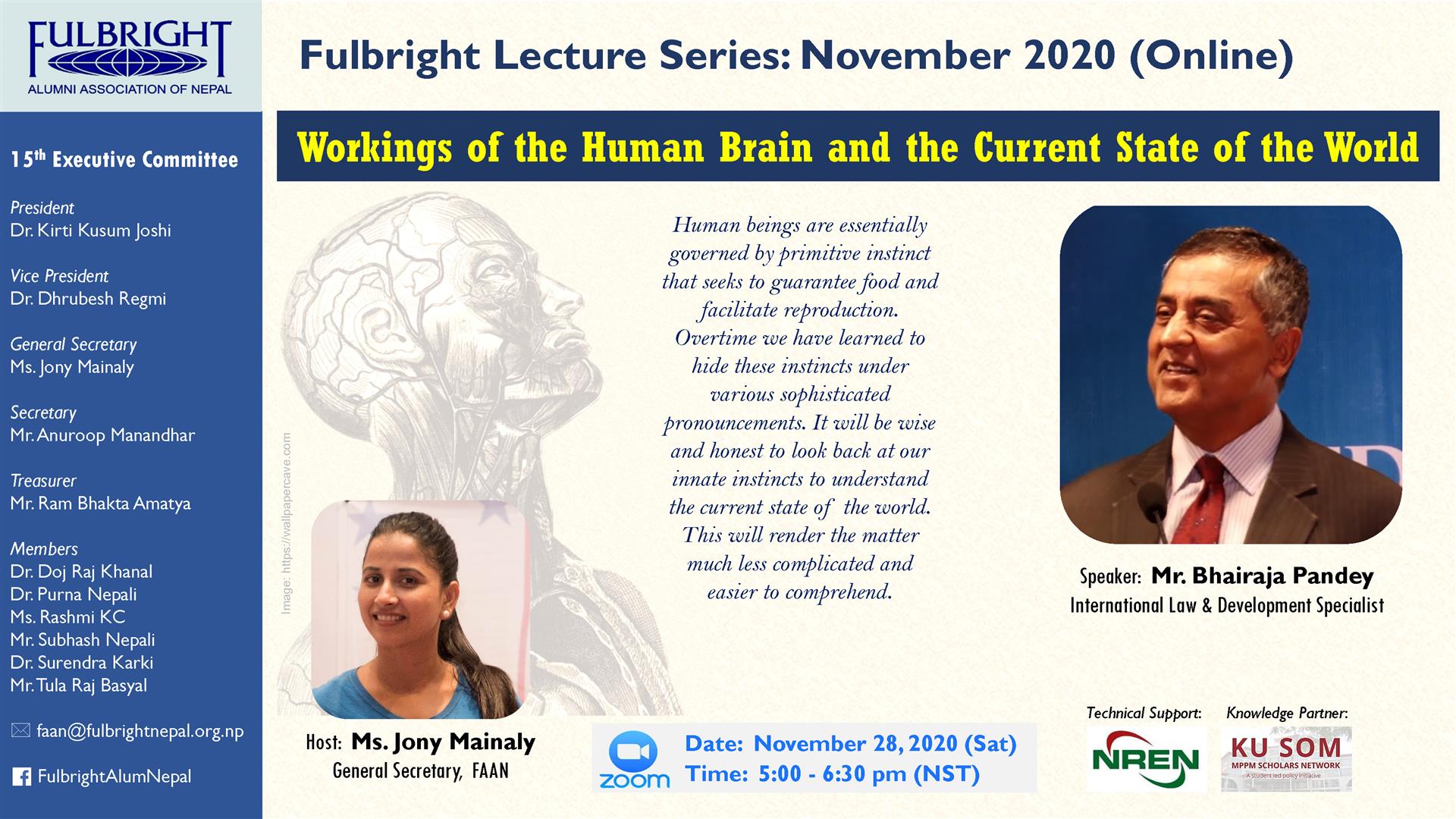
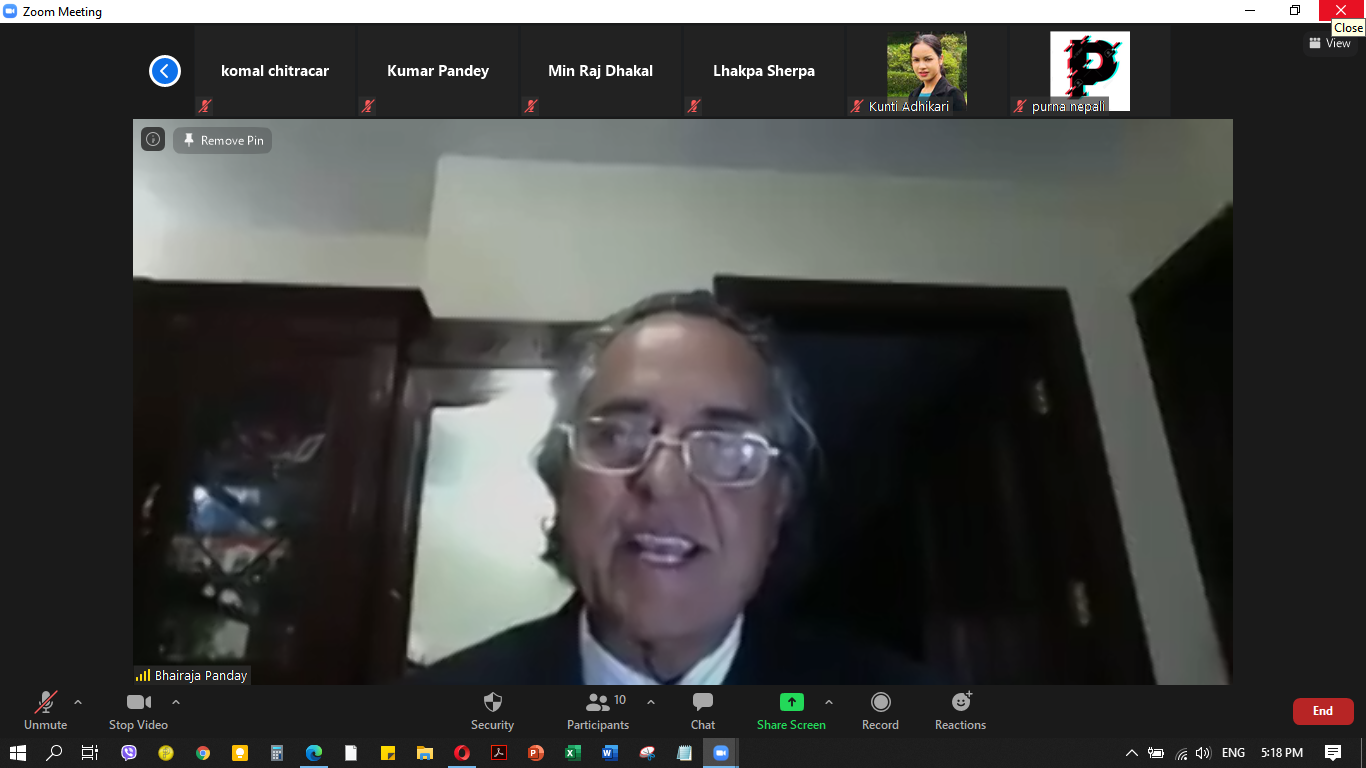
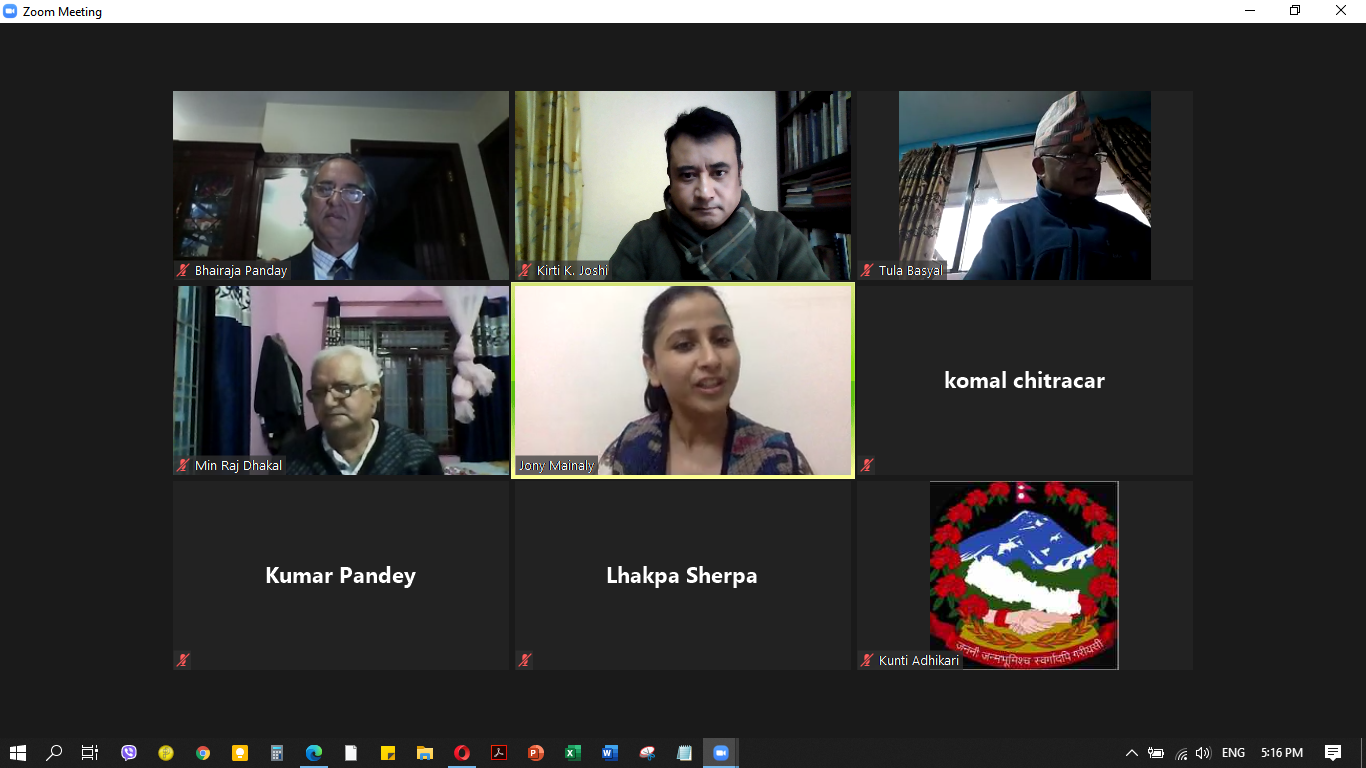
On November 28, 2020, FAAN had the pleasuring of hosting Mr. Bhairaja Pandey, International Law and Development Specialist, to speak on “Workings of the Human Brain and the Current State of the World.”
Mr. Pandey argued that human beings are essentially governed by primitive instinct that seeks to guarantee food and facilitate reproduction, but overtime we have learned to hide these instincts under various sophisticated pronouncements. He suggested that it would be wise and honest to look back at our innate instincts to understand the current state of the world, which would render the matter much less complicated and easier to comprehend.
Ms. Jony Mainaly, General Secretary of FAAN, moderated the discussion.
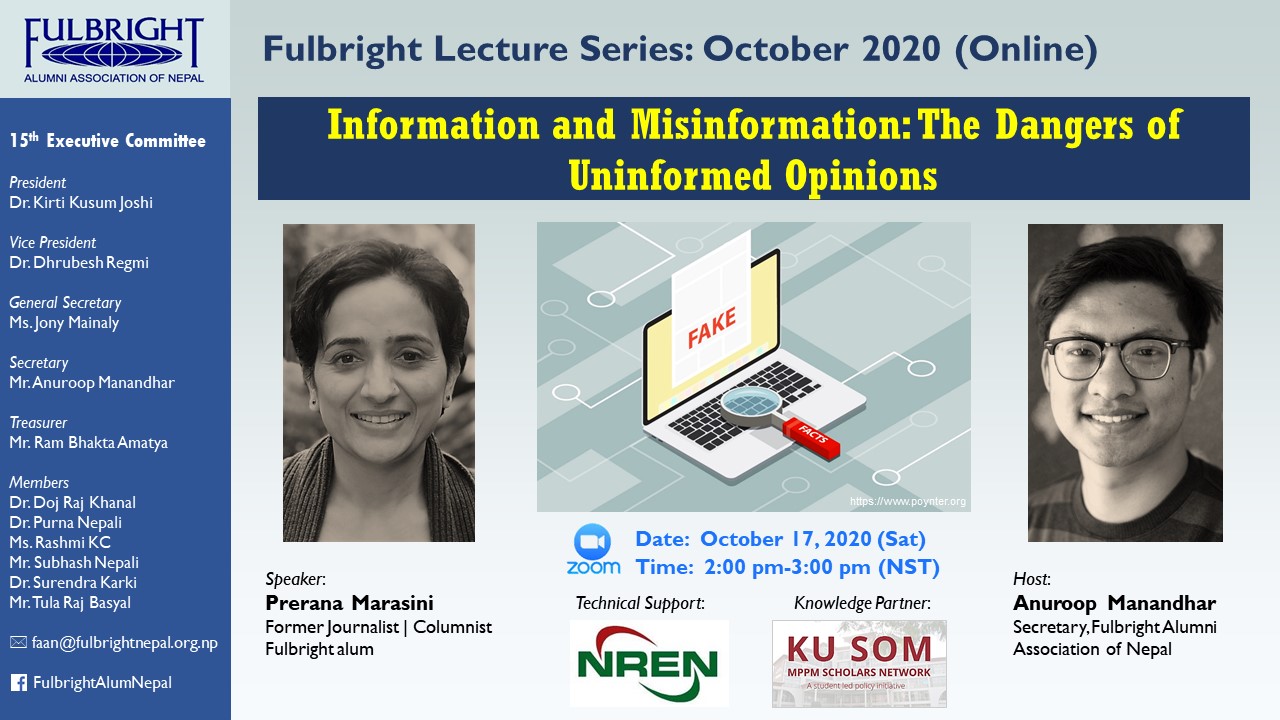
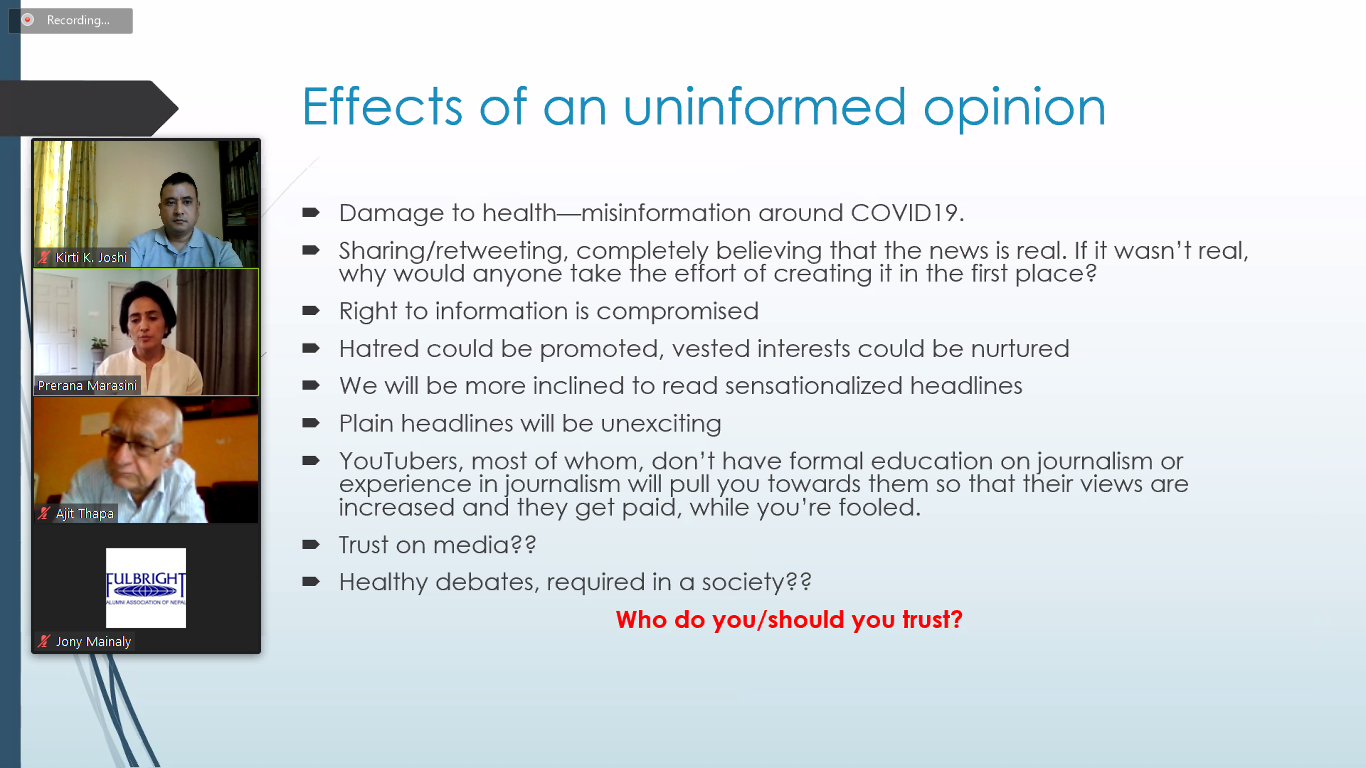
In the age of instant communication and widespread access to information, the issue of misinformation has become increasingly prevalent. In this context, it is crucial to recognize the dangers associated with uninformed opinions. While freedom of expression is a fundamental right, it is essential to distinguish between well-informed viewpoints and baseless assertions.
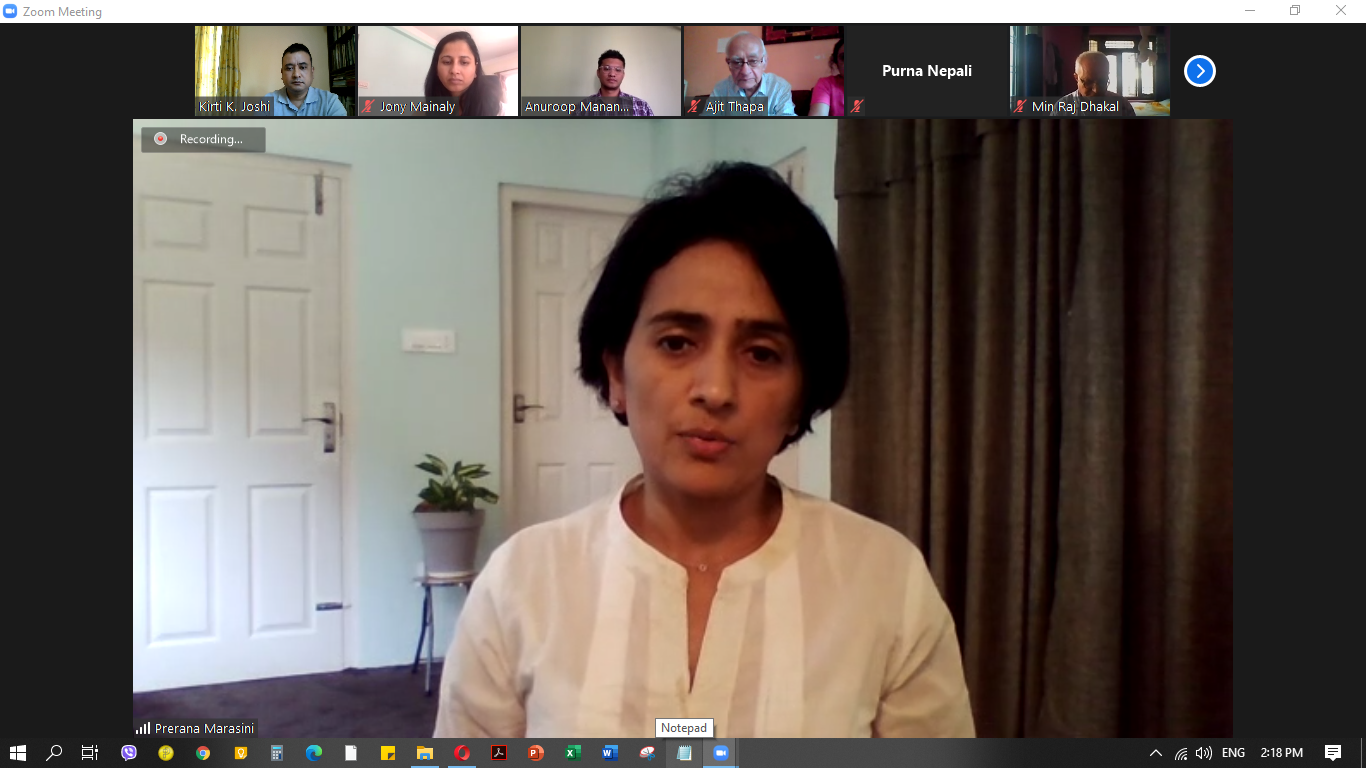
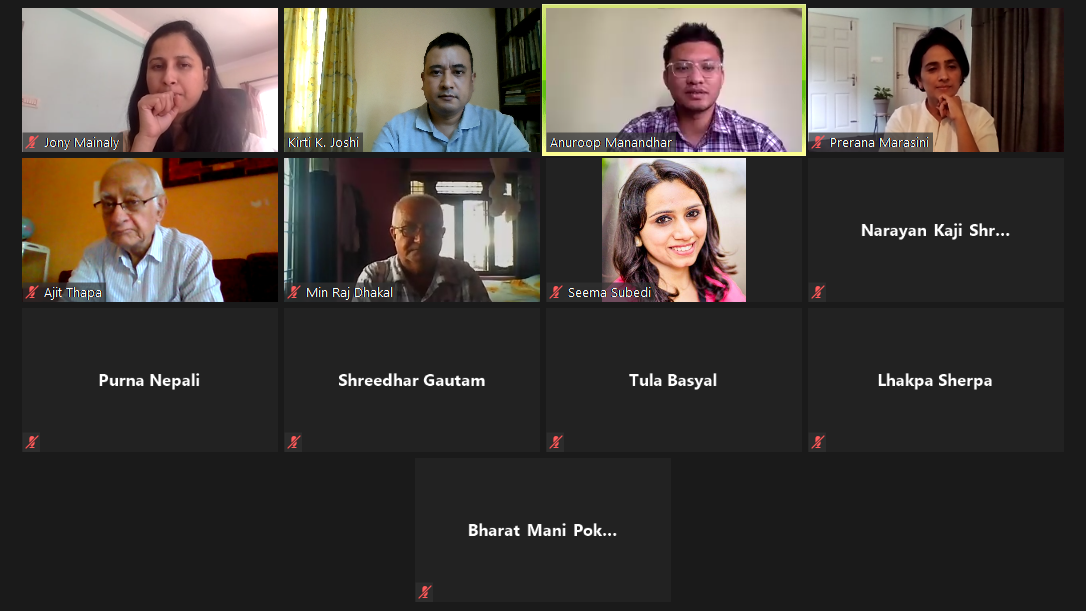
On October 17, 2020, FAAN invited Ms. Prerana Marasini, former journalist/ columnist and a Fulbright grantee, to speak on "Information and Misinformation: The Dangers of Uninformed Opinions". She explained how uninformed opinions can spread false information, perpetuate stereotypes, and fuel divisiveness within society. To combat the dangers of uninformed opinions, Ms. Marasini emphasized why it is vital for individuals to critically evaluate information, seek reliable sources, and engage in respectful and evidence-based dialogue.
Mr. Anuroop Manandhar, Secretary of FAAN, moderated the discussion.
Covid-19 significantly impacted global health, economies, and societies worldwide.
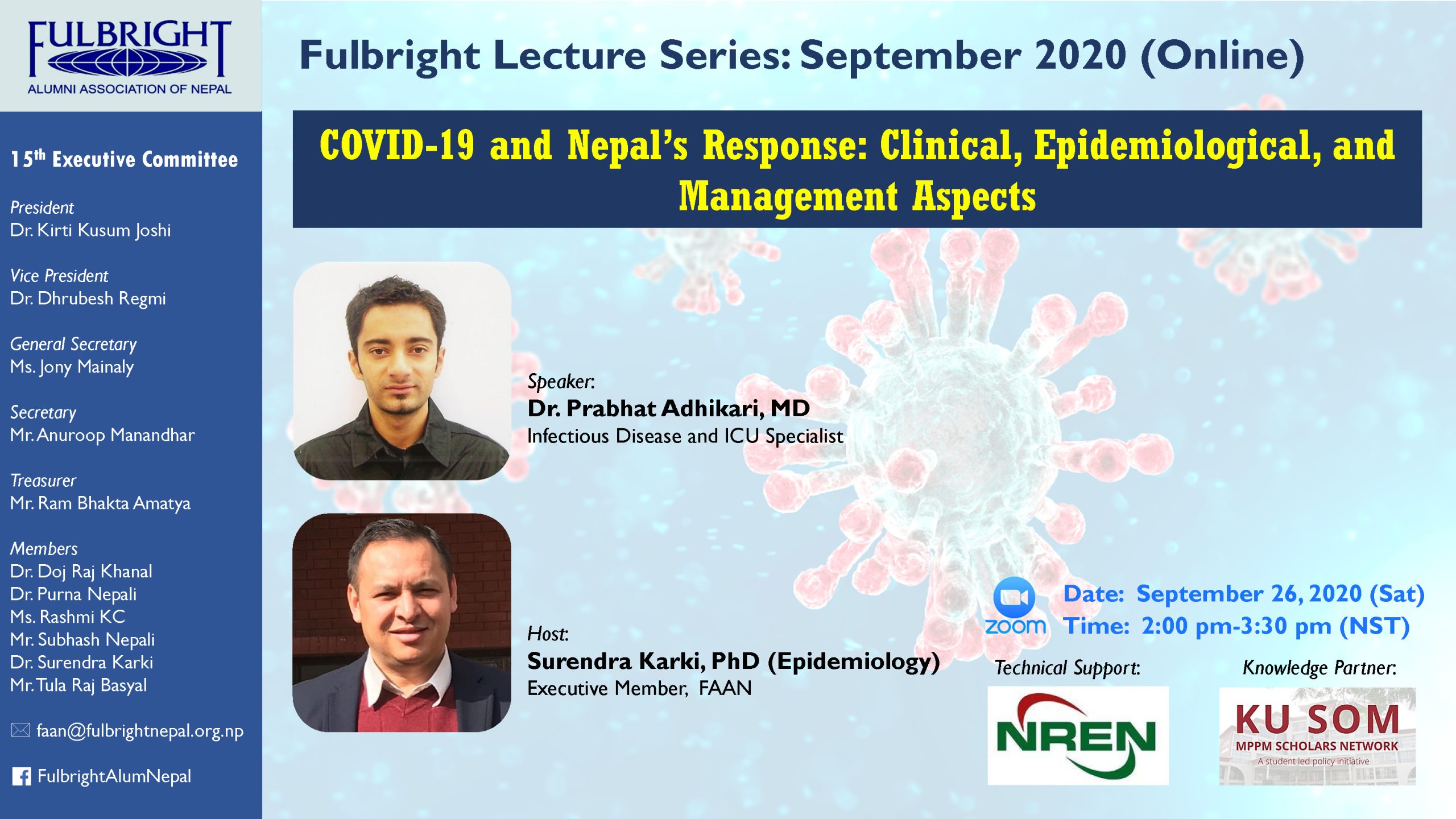
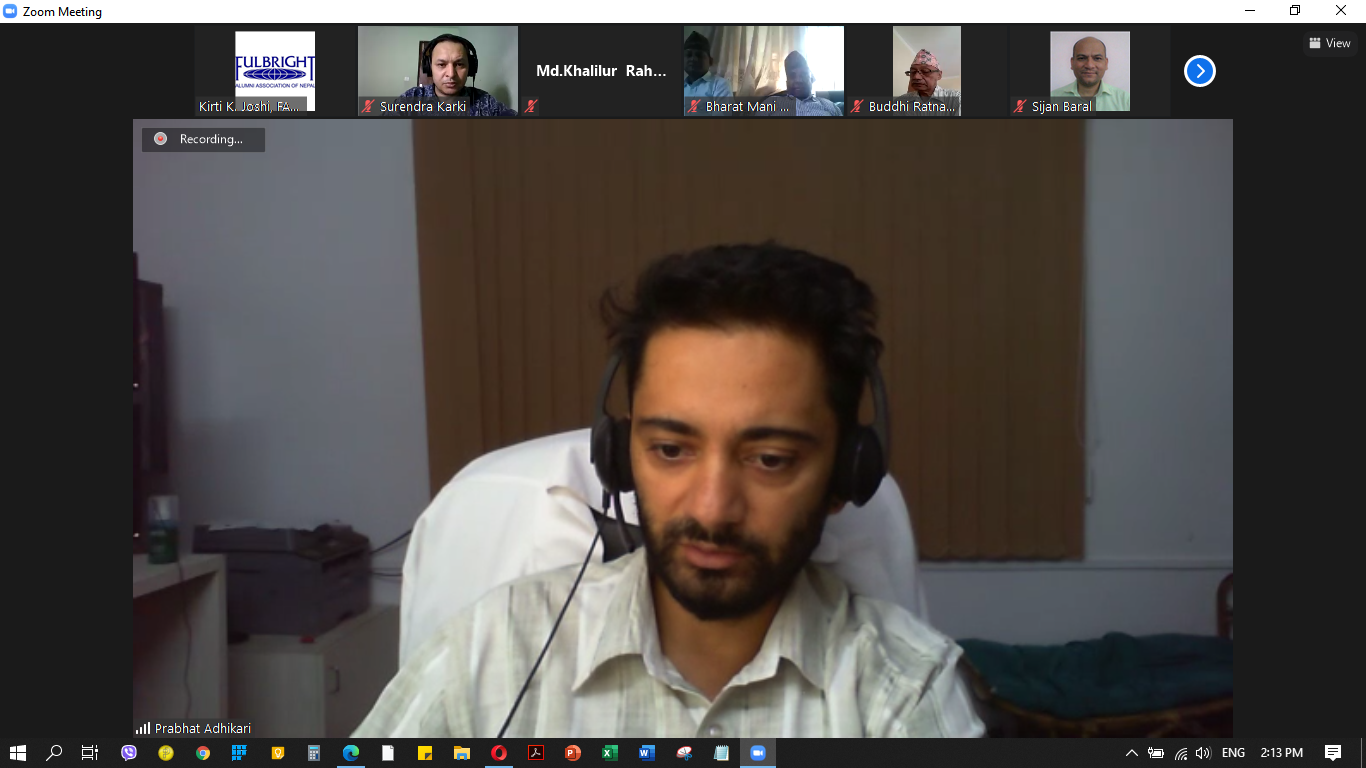
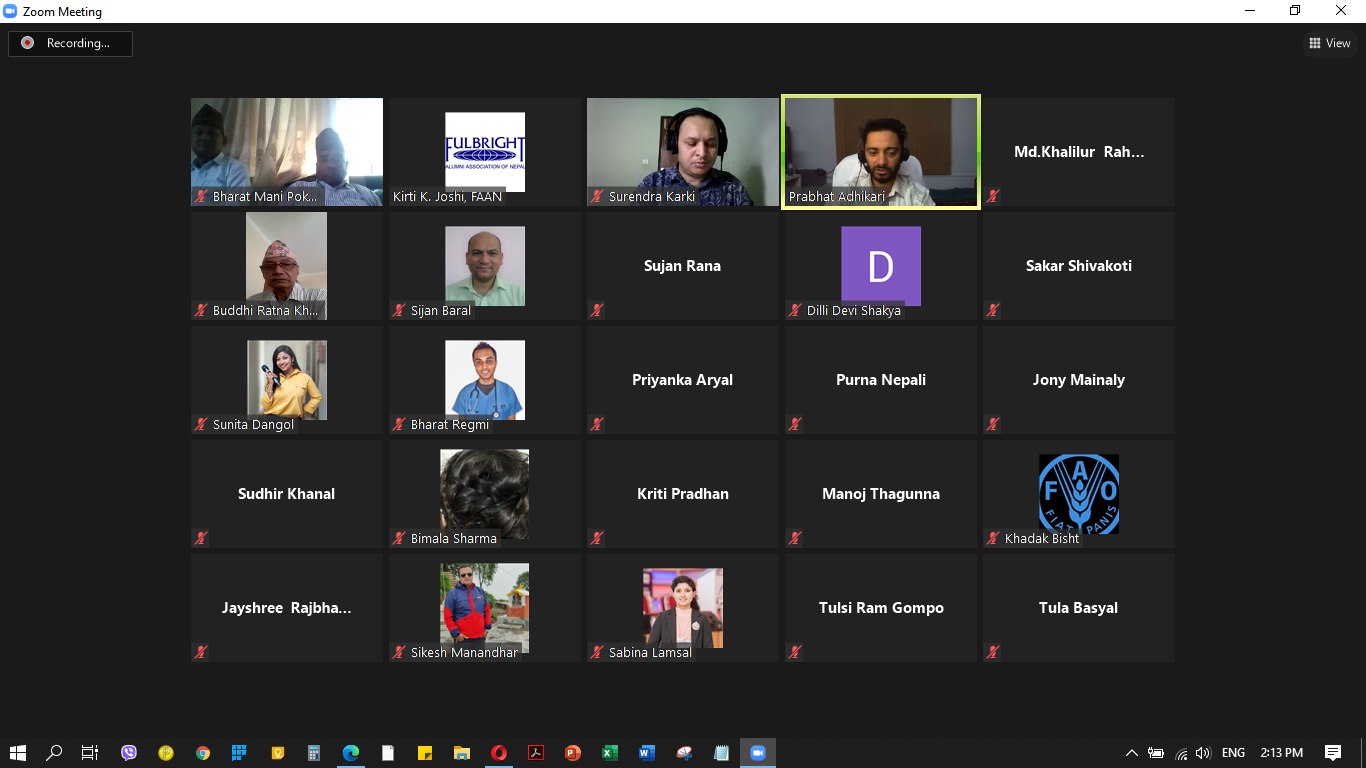
On September 26, 2020, Dr. Prabhat Adhikari, MD (Infectious Disease and ICU Specialist) spoke on “COVID-19 and Nepal’s Response: Clinical, Epidemiological, and Management Aspects”. Dr. Adhikari
Drawing upon his expertise, Dr. Adhikari provided a thorough analysis of the disease, discussing its clinical manifestations and transmission dynamics. He also shed light on the epidemiological trends specific to Nepal, highlighting key challenges faced by the healthcare system and the strategies employed to mitigate the spread of the virus. Dr. Adhikari also delved into the management aspects of the pandemic, discussing the coordination efforts between governmental agencies, healthcare institutions, and other stakeholders involved in response planning and resource allocation.
Dr. Surendra Karki, Executive Member of FAAN, moderated the discussion.
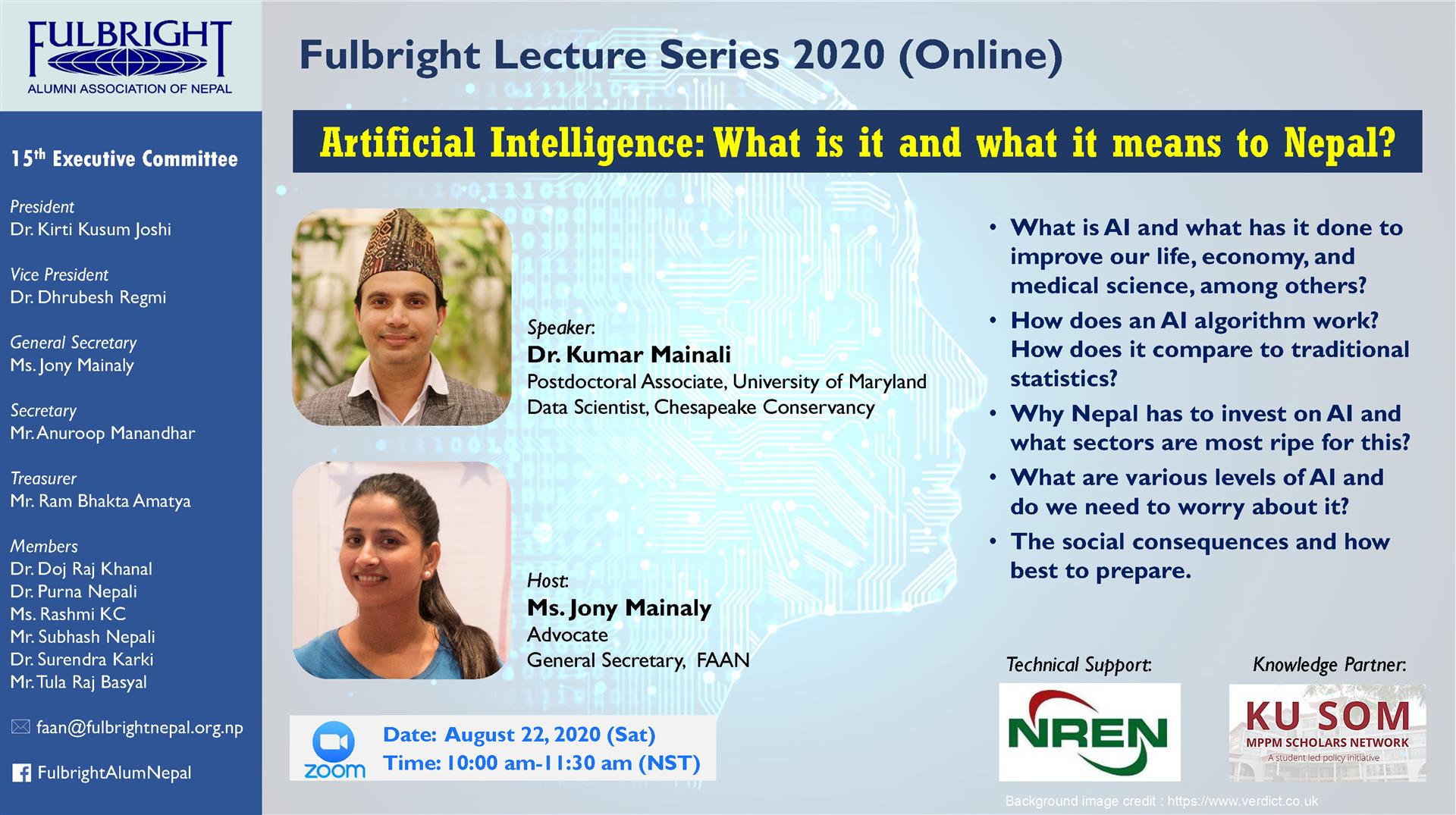
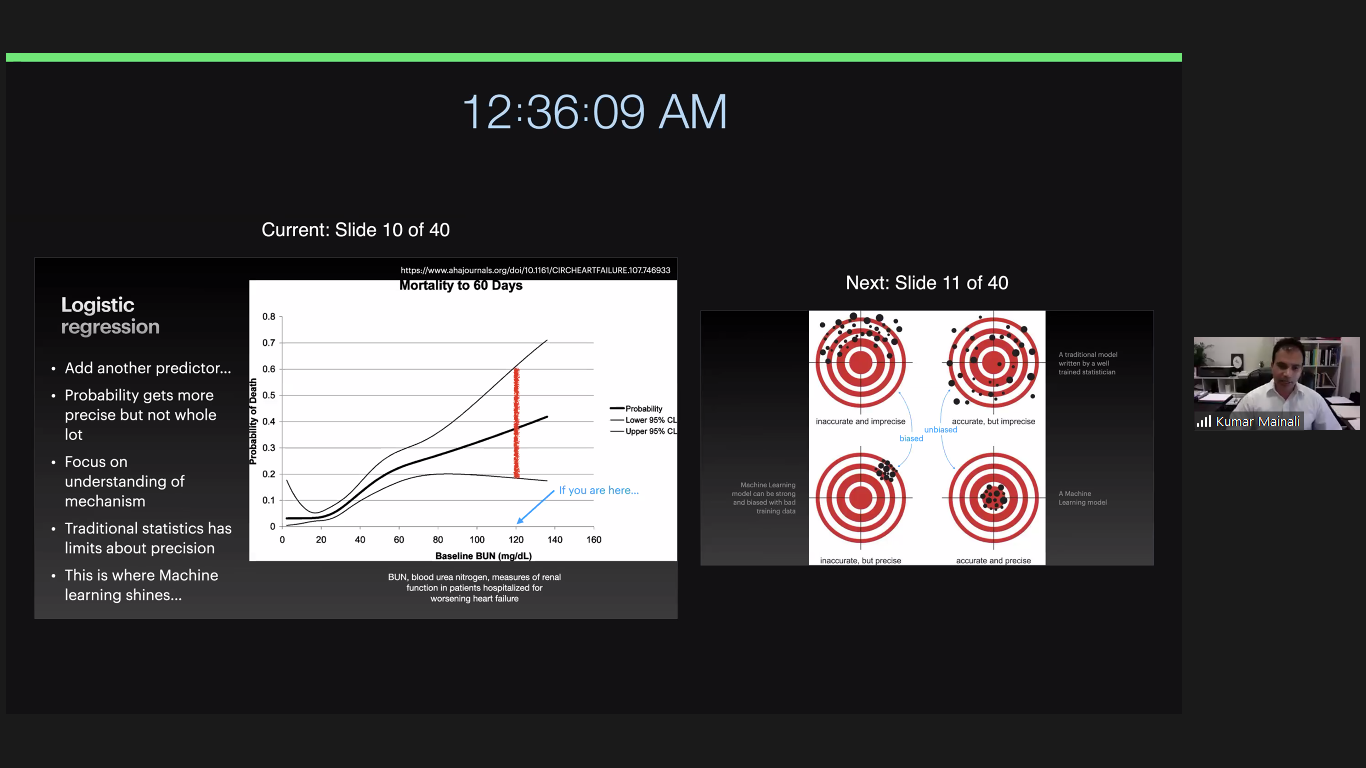
Artificial intelligence (AI) is taking the world by storm. But many people still wonder what AI is and what it has done to improve our life, economy, and medical science, among others.
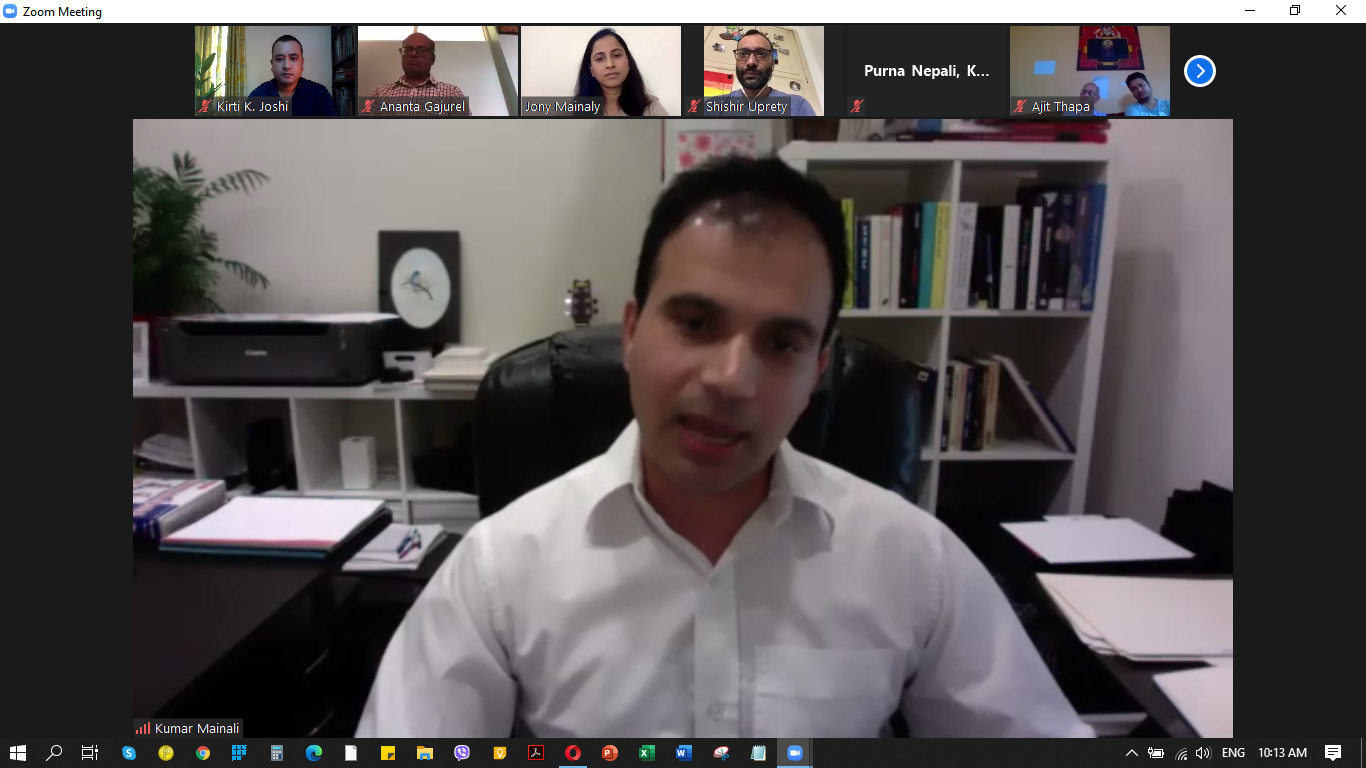
On August 22, 2020, FAAN had the pleasure of hosting Dr. Kumar Mainali (Postdoctoral Associate, University of Maryland | Data Scientist, Chesapeake Conservancy) who gave an online talk on “Artificial Intelligence: What is it and what it means to Nepal?”
Dr. Mainali addressed several important questions regarding AI algorithms, their comparison to traditional statistics, the need for Nepal to invest in AI, sectors ripe for AI implementation, various levels of AI, concerns surrounding AI, and the social consequences and preparation measures.
Ms. Jony Mainaly, General Secretary of FAAN, moderated the discussion.
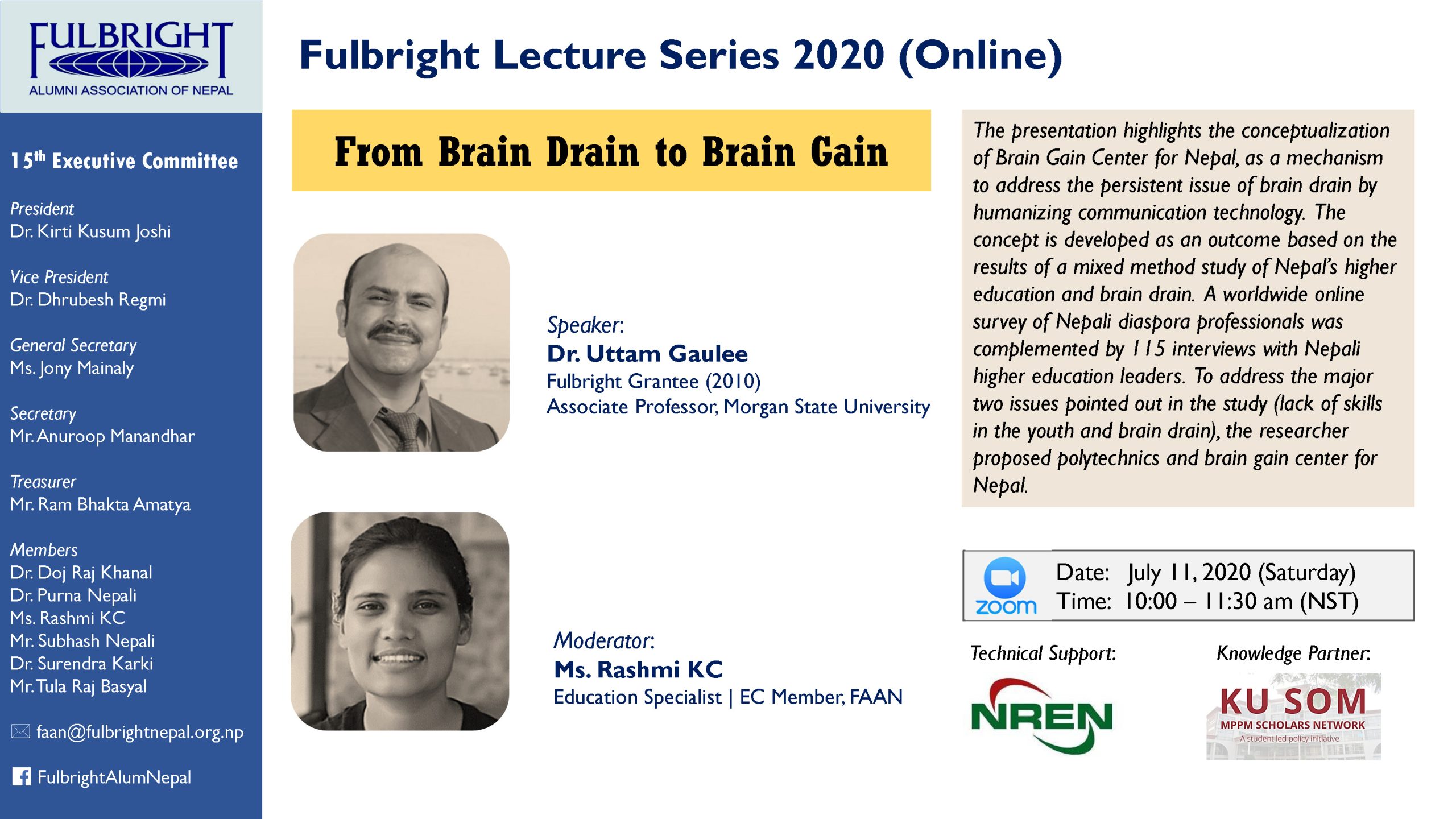
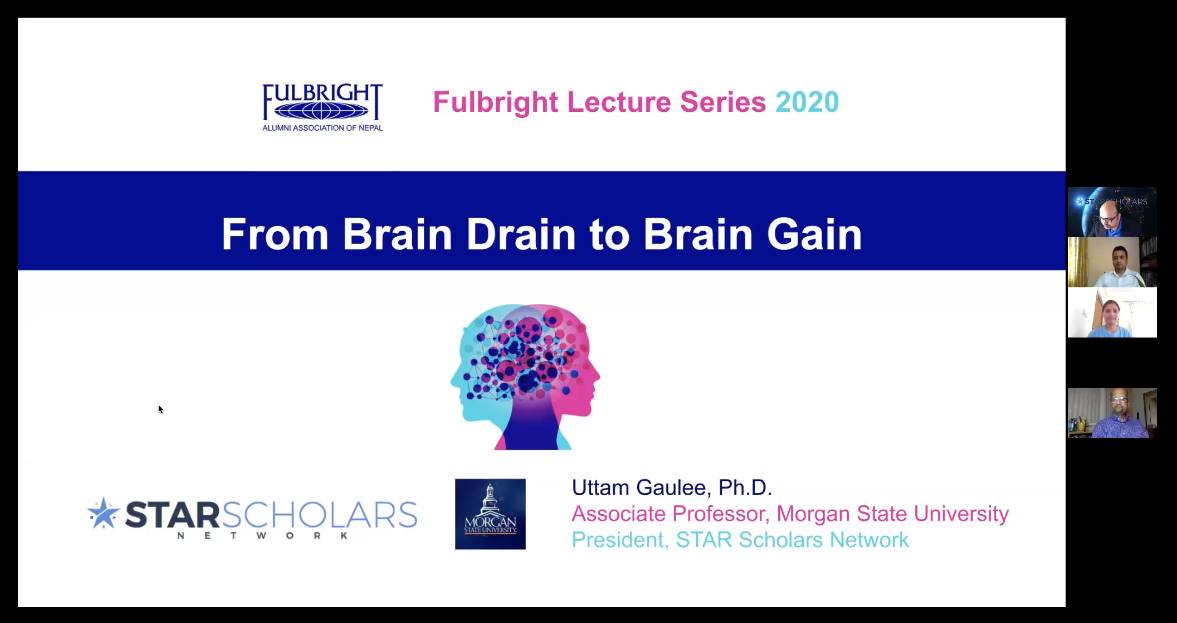
With globalization, brain drain has become a harsh reality for the developing countries, but we can either learn to live with it or be proactive and move on to a better future by capitalizing on brain gain.
On June 27, 2020, Dr. Uttam Gaulee, Associate Professor at Morgan State University and a Fulbright Grantee, gave a talk (online) titled “Brain Drain to Brain Gain”.
In his presentation, Dr. Gaulee highlighted the conceptualization of Brain Gain Center for Nepal as a mechanism to address the persistent issue of brain drain by humanizing communication technology. The concept was developed as an outcome based on the results of a mixed method study of Nepal’s higher education and brain drain. A worldwide online survey of Nepali diaspora professionals was complemented by 115 interviews with Nepali higher education leaders. To address the major two issues pointed out in the study (lack of skills in the youth and brain drain), Dr. Gaulee proposed polytechnics and brain gain center for Nepal.
Ms. Rashmi KC, Executive Member of FAAN, moderated the discussion.
The program started with a welcome speech by Dr. Kirti K. Joshi, President of FAAN.
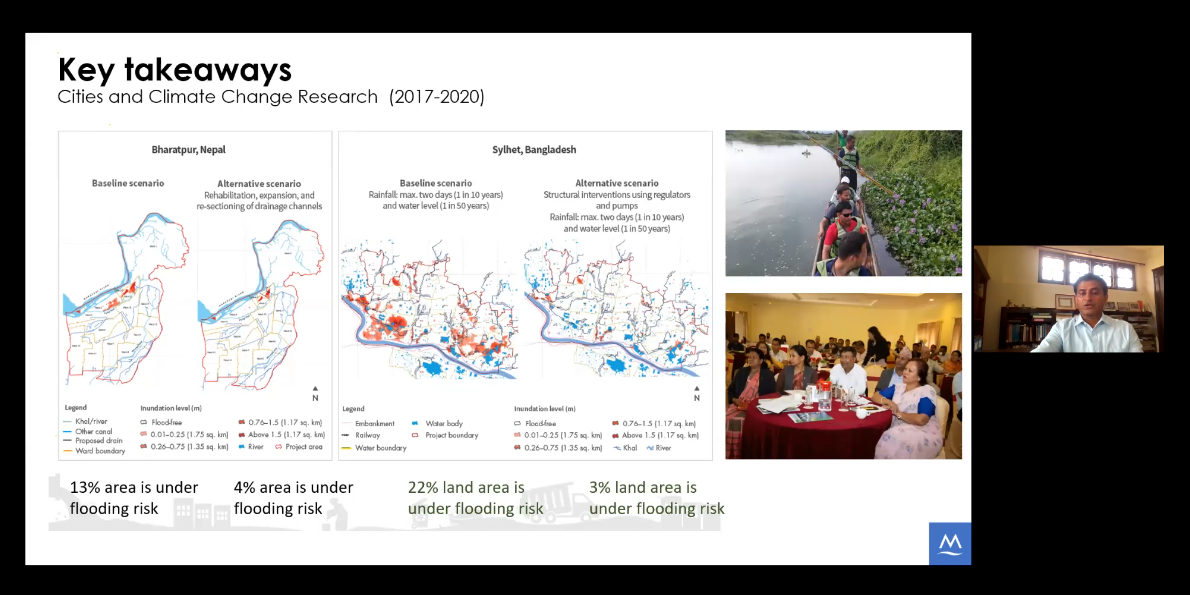
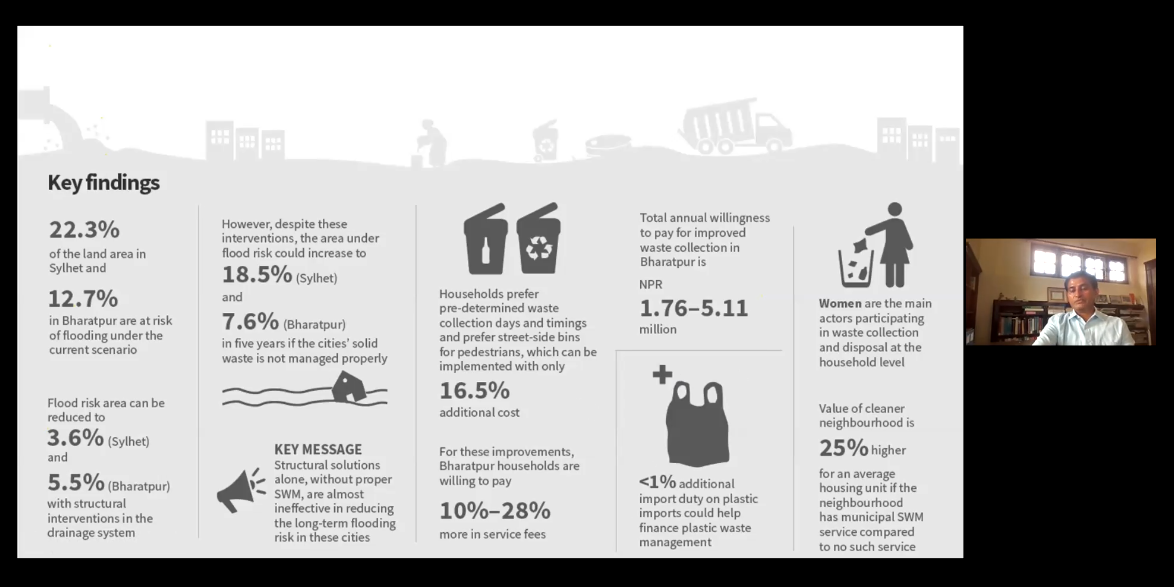
Climate change is posing pressures to cities in South Asia from multiple angles including water logging and flooding during excessive rainfall events. As cities in the region are growing fast in an unplanned manner, low-lying areas face the highest risk of flooding and water logging. When solid waste is not managed properly, the problem gets aggravated.
On June 27, 2020, FAAN invited Dr. Mani Nepal (Programme Coordinator, SANDEE | Senior Economist, ICIMOD | Fulbright Grantee, 2000-2002) to give a talk (online) on "Solid Waste (Mis)management, Urban Flooding and Returns from Drainage Infrastructure Investment". Dr. Nepal explained flooding and water logging risks under different scenarios and how proper solid waste management would help reducing such risk in South Asian cities. He also discussed benefits that cities would derive in terms of increased property value when neighborhoods get cleaner.
Dr. Kirti Kusum Joshi, President of FAAN and an urban specialist, moderated the talk.
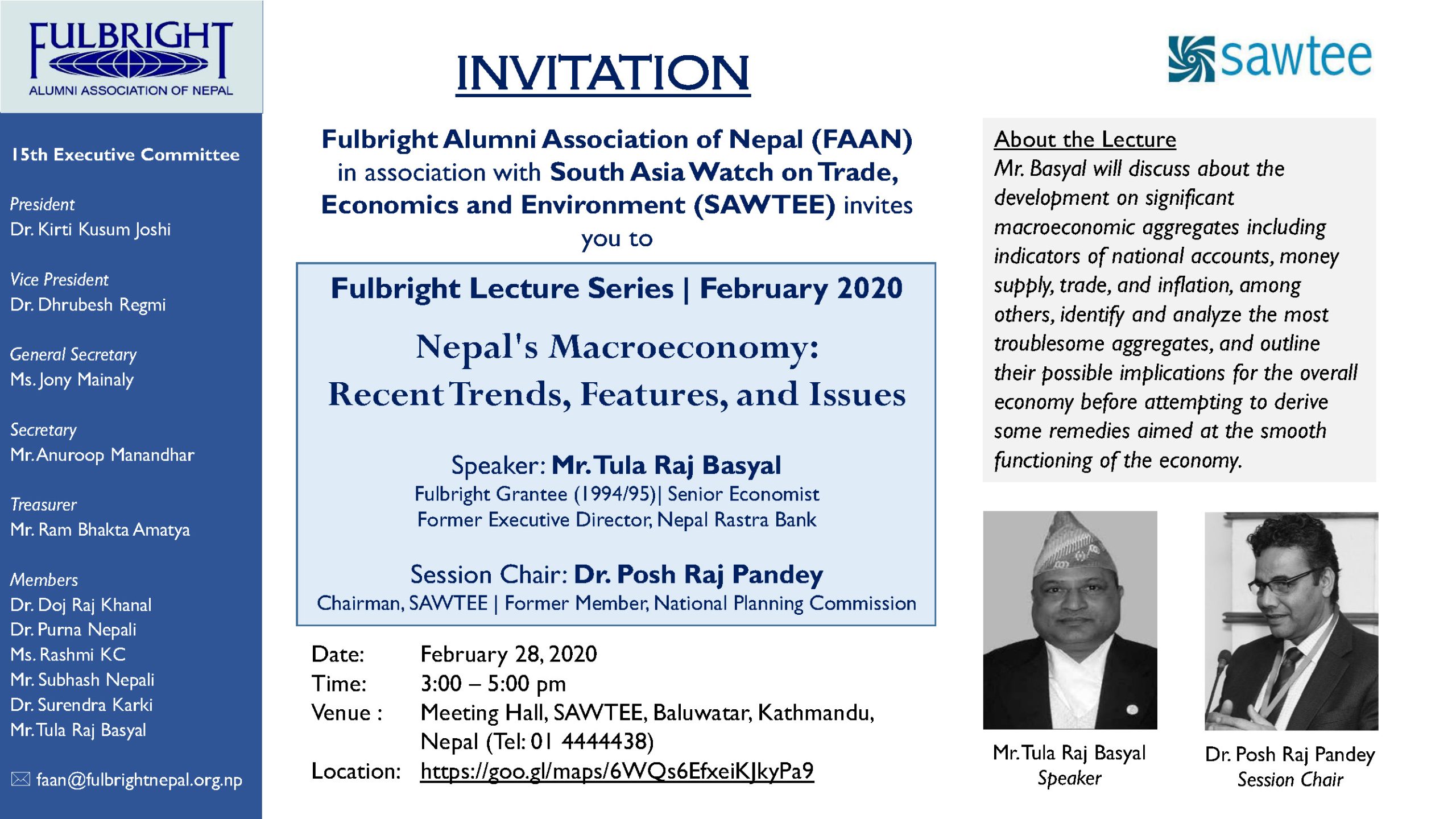
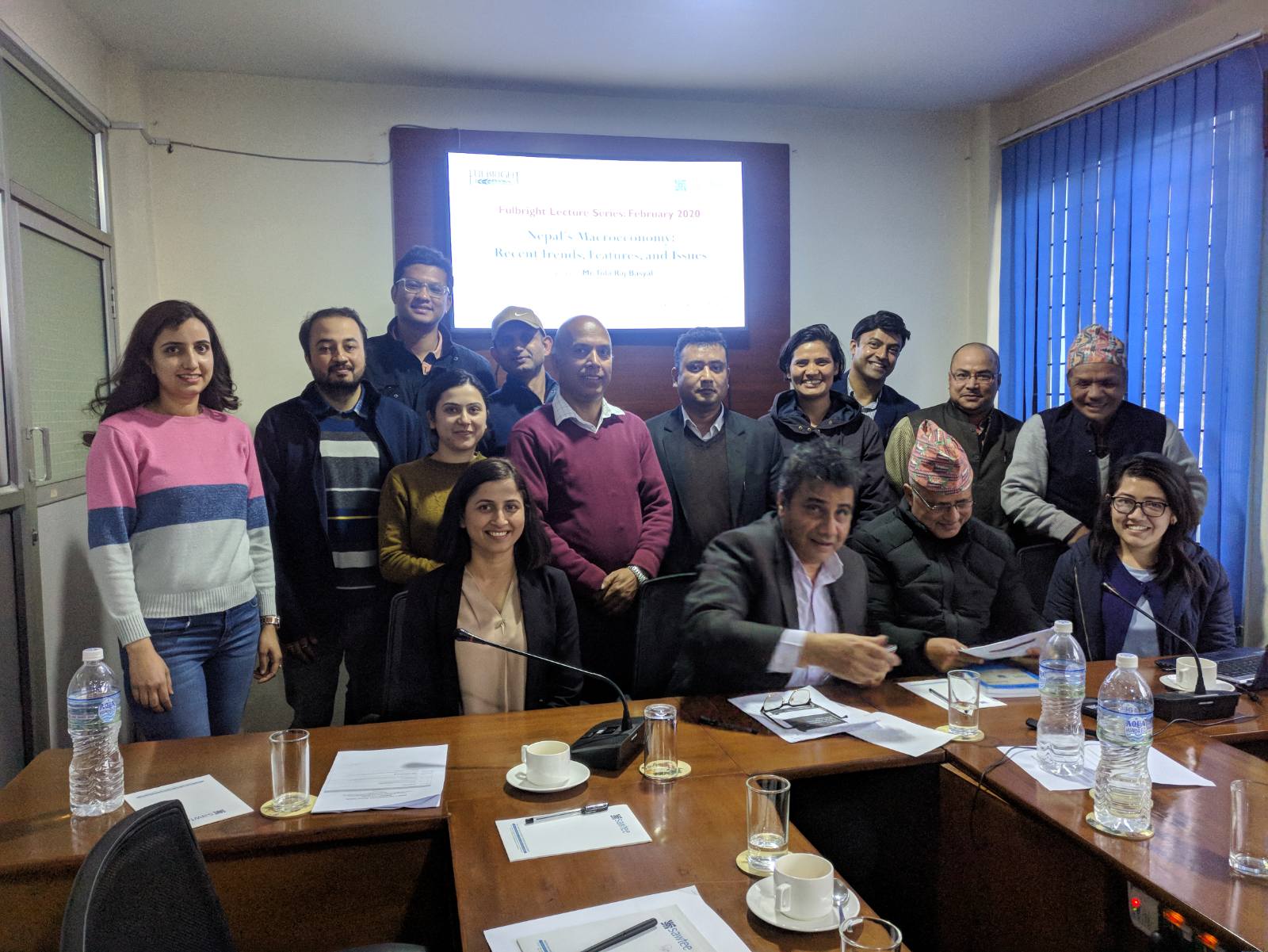
As a part of the Fulbright Lecture Series, Fulbright Alumni Association of Nepal (FAAN) in association with South Asia Watch on Trade, Economics and Environment (SAWTEE), organized a talk program on February 28, 2020 at SAWTEE Hall. Mr. Tula Basyal (Fulbright Grantee | Senior Economist | Former ED, Nepal Rastra Bank) made a presentation on "Nepal's Macroeconomy: Recent Trends, Features, and Issues".
Mr. Basyal discussed about the development on significant macroeconomic aggregates including indicators of national accounts, money supply, trade, and inflation, among others. He identified and analyzed the most troublesome aggregates, and outlined their possible implications for the overall economy before deriving some remedies aimed at the smooth functioning of the economy.
Dr. Posh Raj Pandey (Chair, SAWTEE | Former Member, NPC) chaired the technical session and offered his comments on the talk and insights on the topic.
Dr. Kirti K. Joshi, President of FAAN, thanked the speakers and participants.
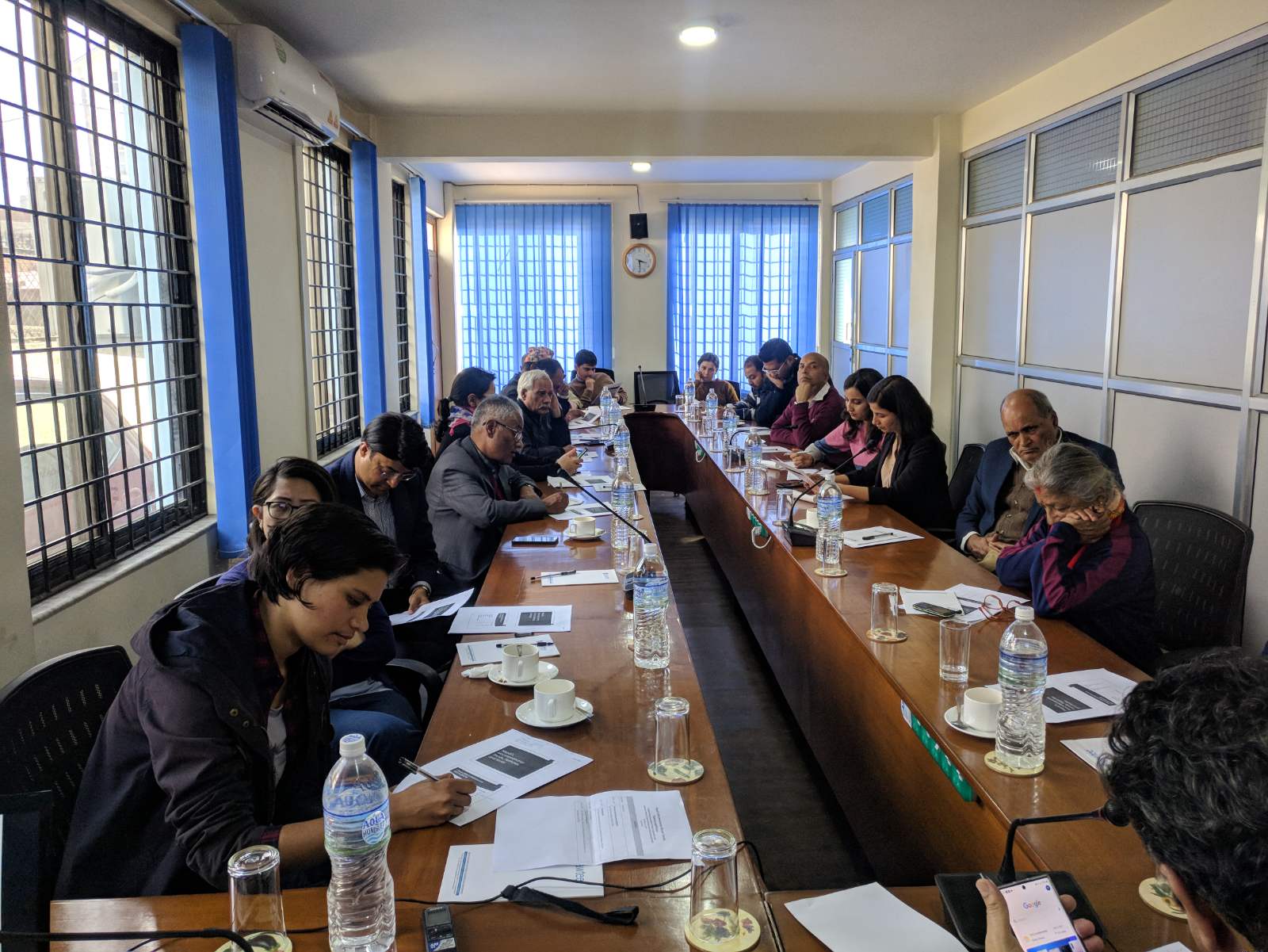
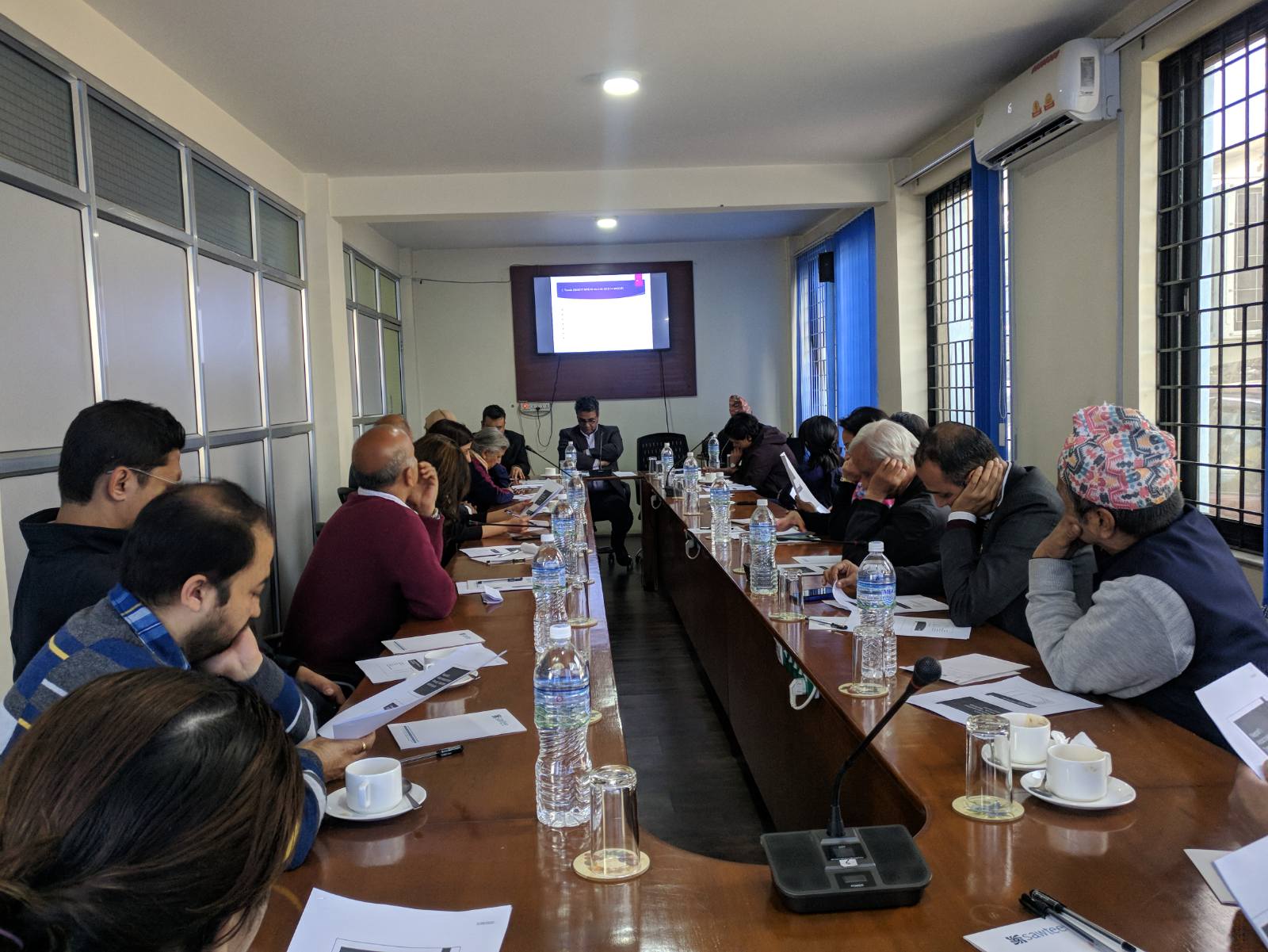
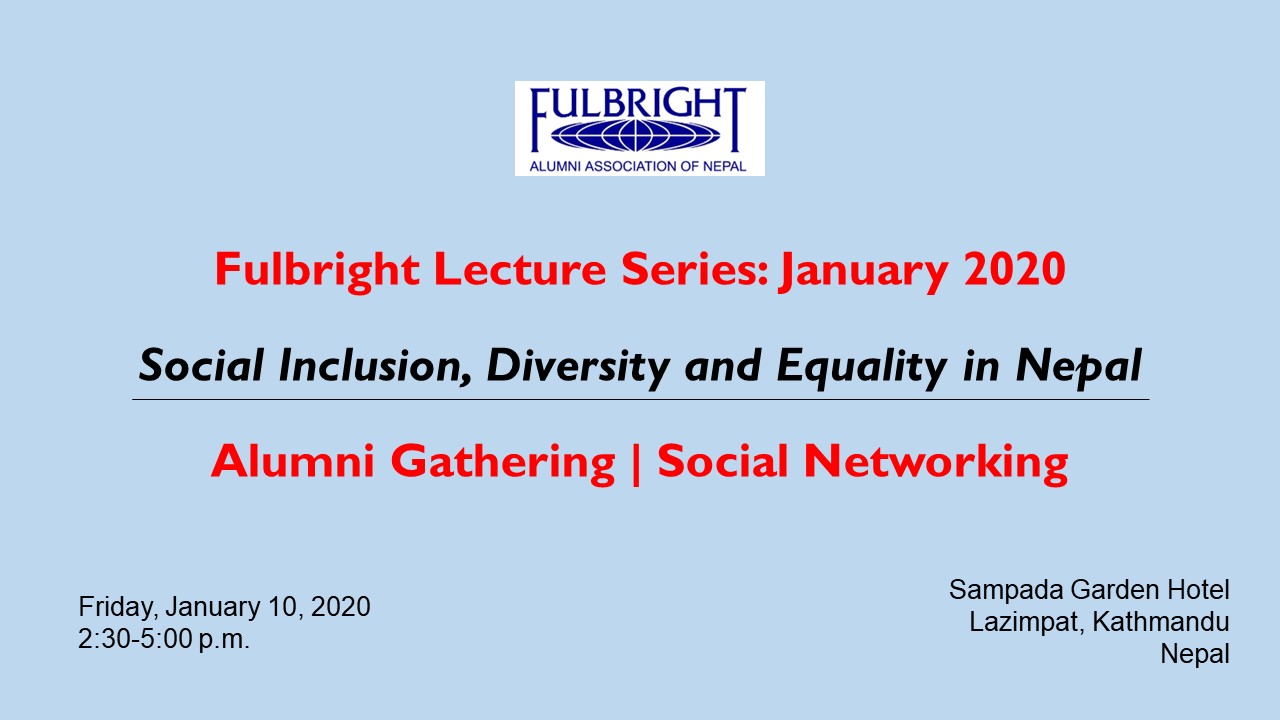
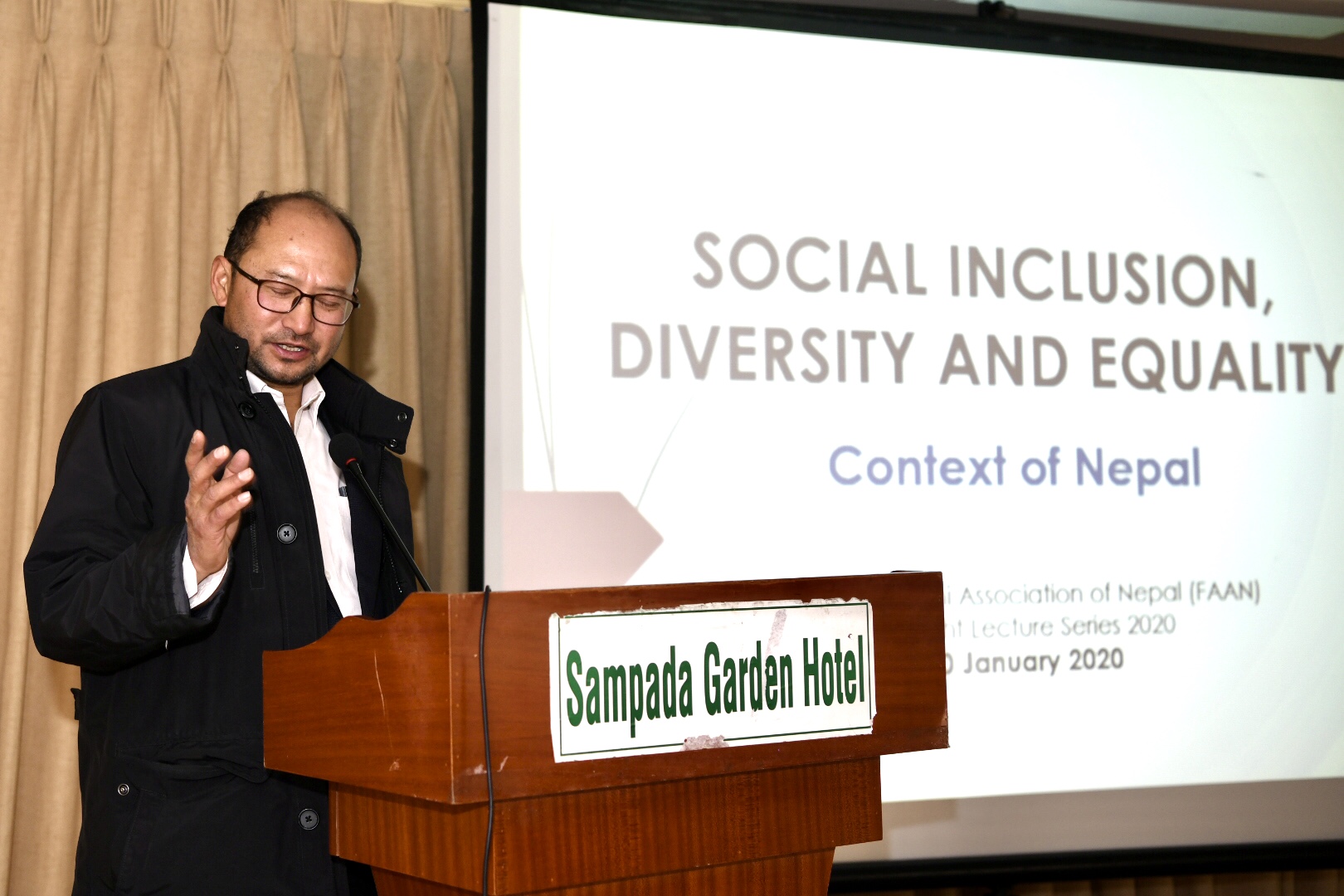
On Jan 10, 2020, Fulbright Alumni Association of Nepal (FAAN) organized alumni gathering as well as inaugurated Fulbright Lecture Series 2020 featuring a talk on "Social Inclusion, Diversity and Equality in Nepal" by Dr. Mukta S. Tamang, Anthropologist and a Fulbright alum.
In his presentation, Dr. Tamang highlighted constitutional provisions on inclusion, diversity and equality, and analyzed gaps in policy discourse and practice in terms of three key dimensions of inclusion in Nepal: representation, redistribution, and recognition/respect.
Several participants including high-level officials from the U.S. Embassy attended the program. Earlier, Ms. Jony Mainaly, General Secretary of FAAN, welcomed speaker and participants. Mr. Anuroop Manandhar, Secretary of FAAN, moderated the program.
Mr. Manuel Micaller, DCM of U.S. Embassy delivered remarks on behalf of the Embassy. Dr. Kirti K. Joshi, President of FAAN, presented vote of thanks.
The program was organized at Sampada Garden Hotel in Lazimpat.
 Social Inclusion diversity and Equality
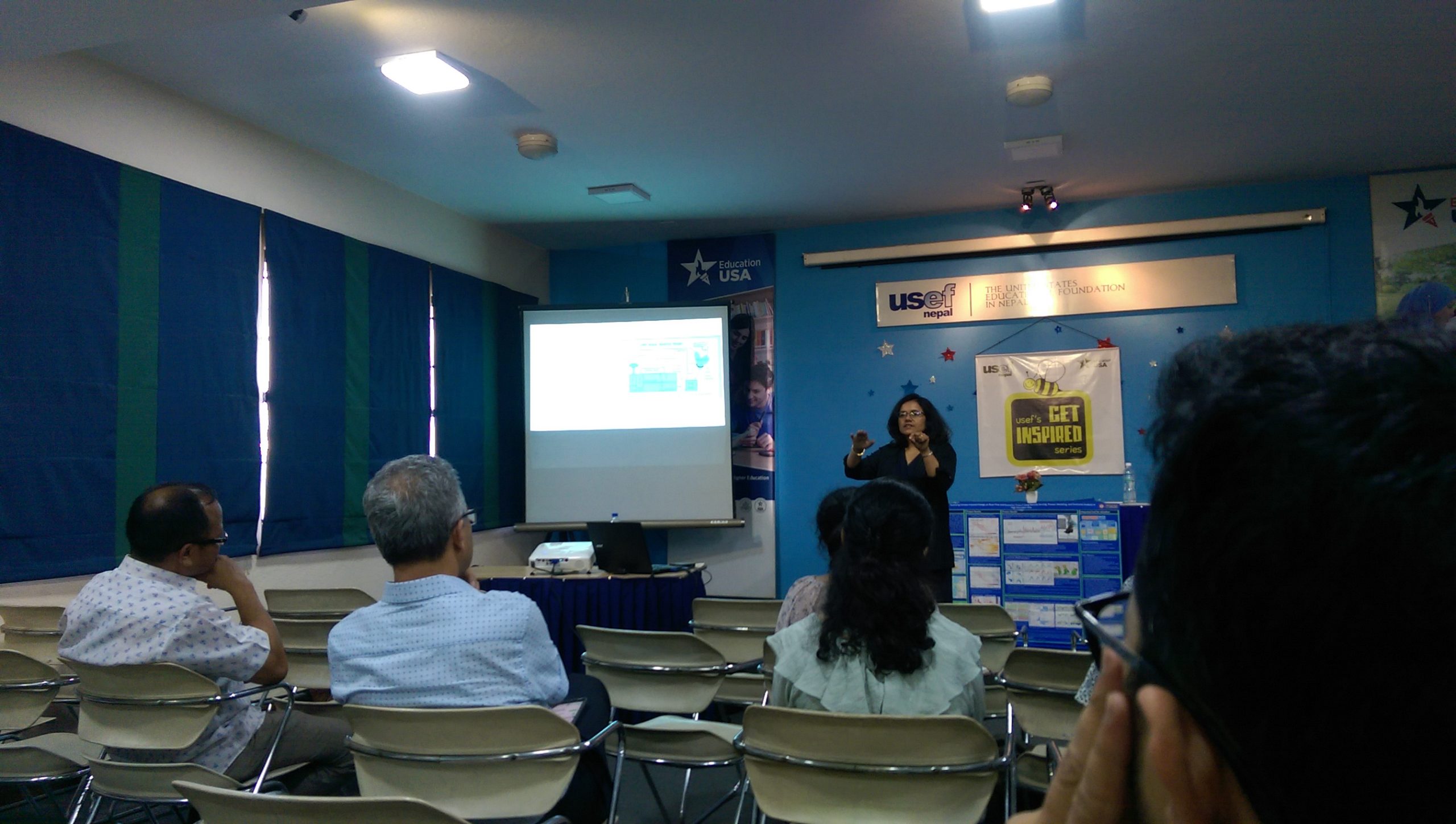
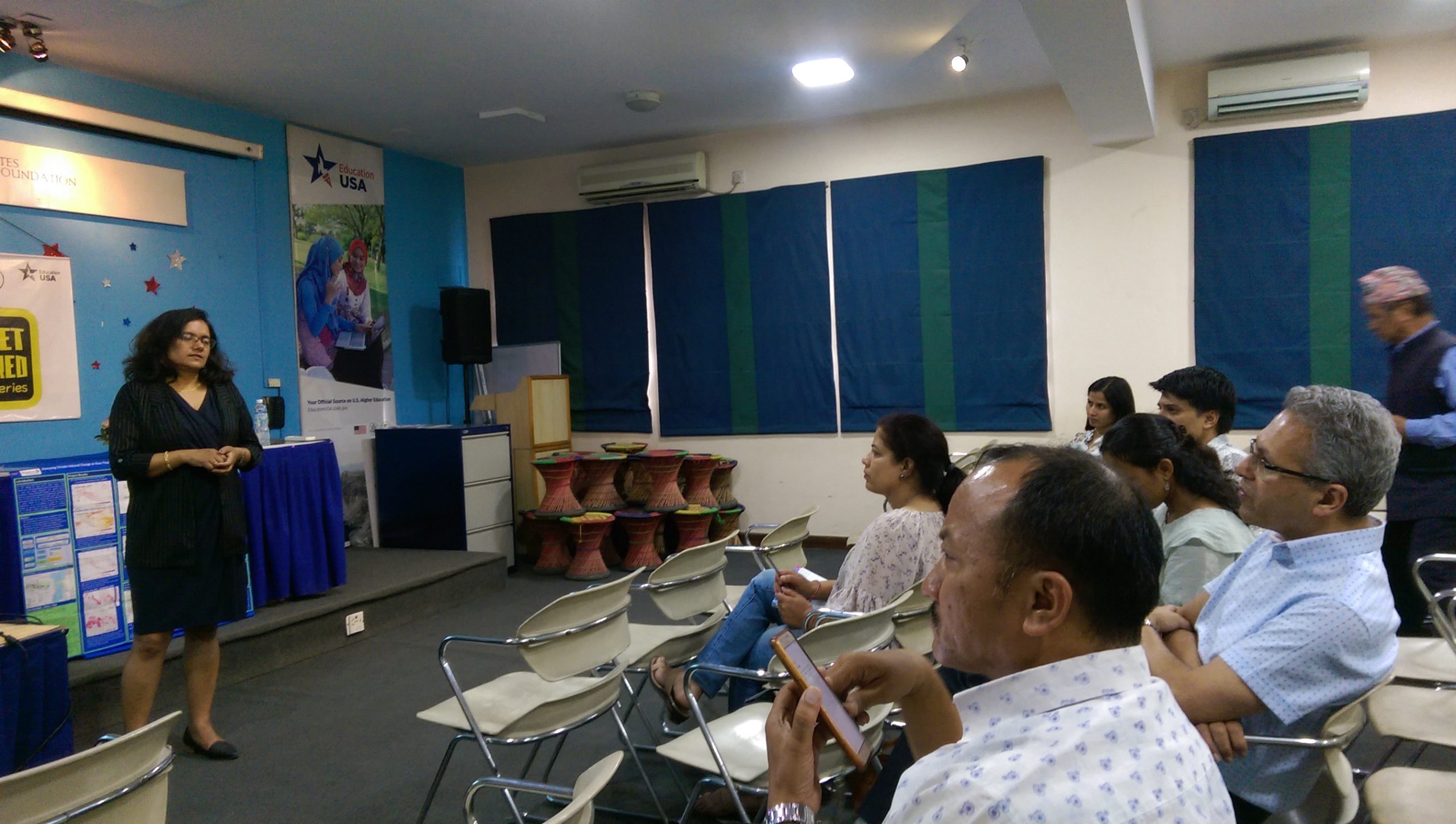
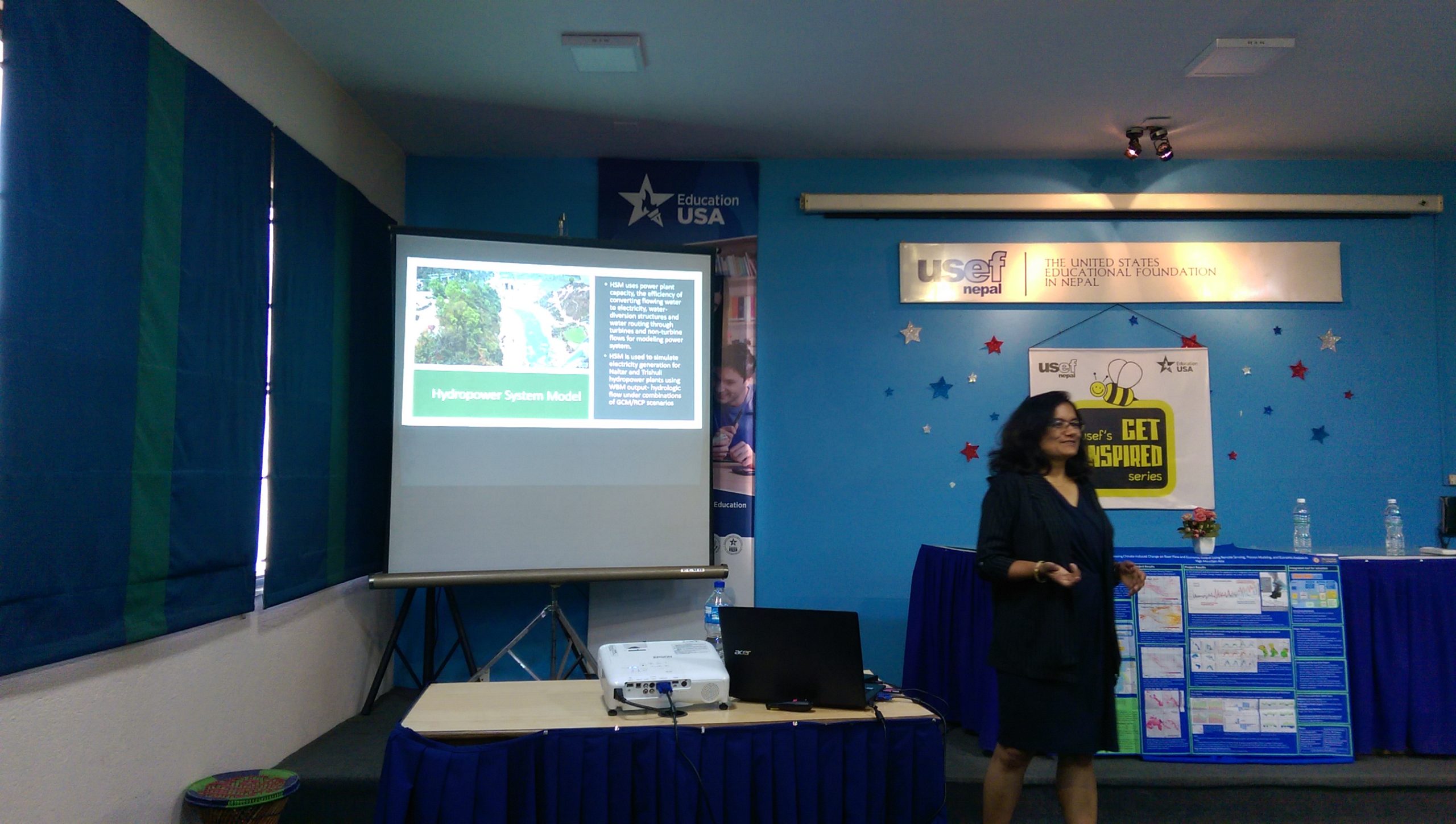
 As the saying goes, change is the only thing permanent in this world. But the impact of the same change can be felt differently by those who are affected. The case in point is the differential impacts of climate change on the hydropower economics.
In this episode of Fulbright Lecture Series, Dr. Shruti K. Mishra of Argonne National Laboratory and a Fulbrighter, presented findings of a collaborative study conducted with her colleagues on the economic impacts of climate-led changes in river flow in two drainage basins, one each from Karakoram and Central Himalaya region.
The study used an integrated assessment framework to estimate the changes in economic value of the hydropower generation from hydropower plants on the rivers fed by snow and glacier melt in the two sub-basins.
The event took place at USEF-Nepal Auditorium, Gyaneshwor.
 Abstract
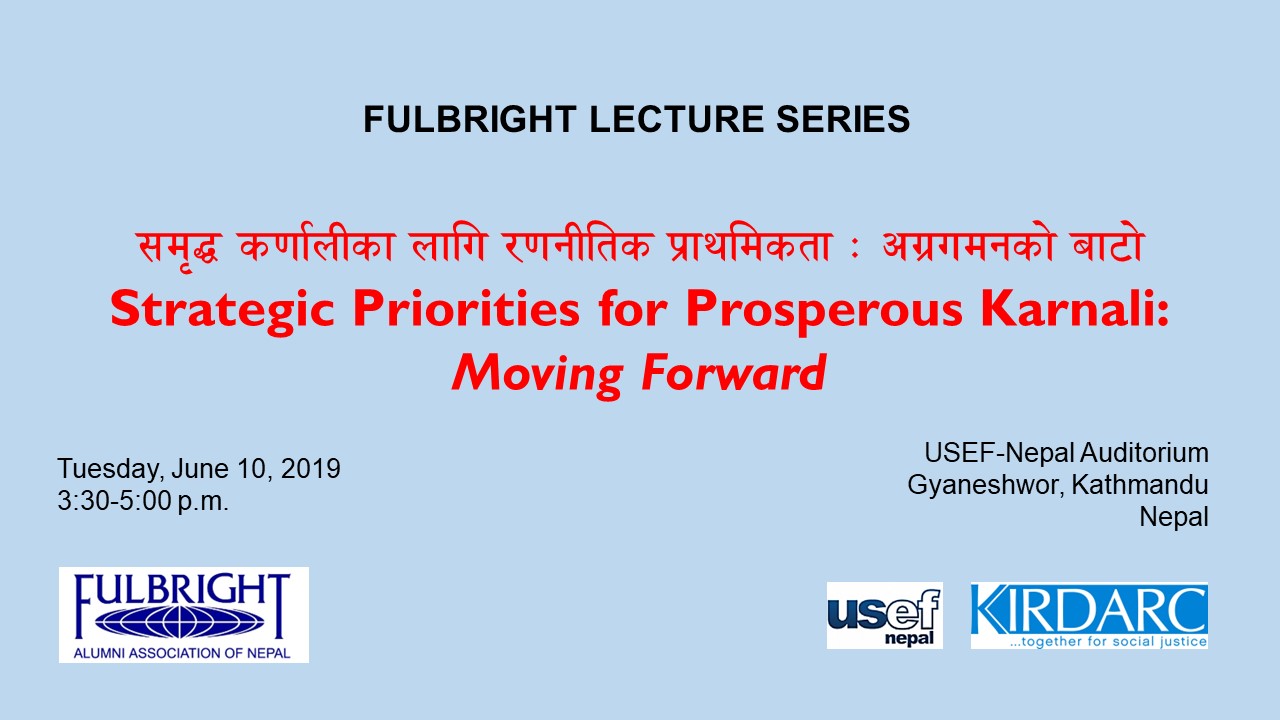
 Despite being blessed with natural resources and development potentials in hydropower, high-value agro-products, and adventure/ eco-tourism, the image of Karnali remains that of an impoverished region. Now that the country has already started exercising federalism, Karnali is yearning to move away from the status quo and move forward towards prosperity.
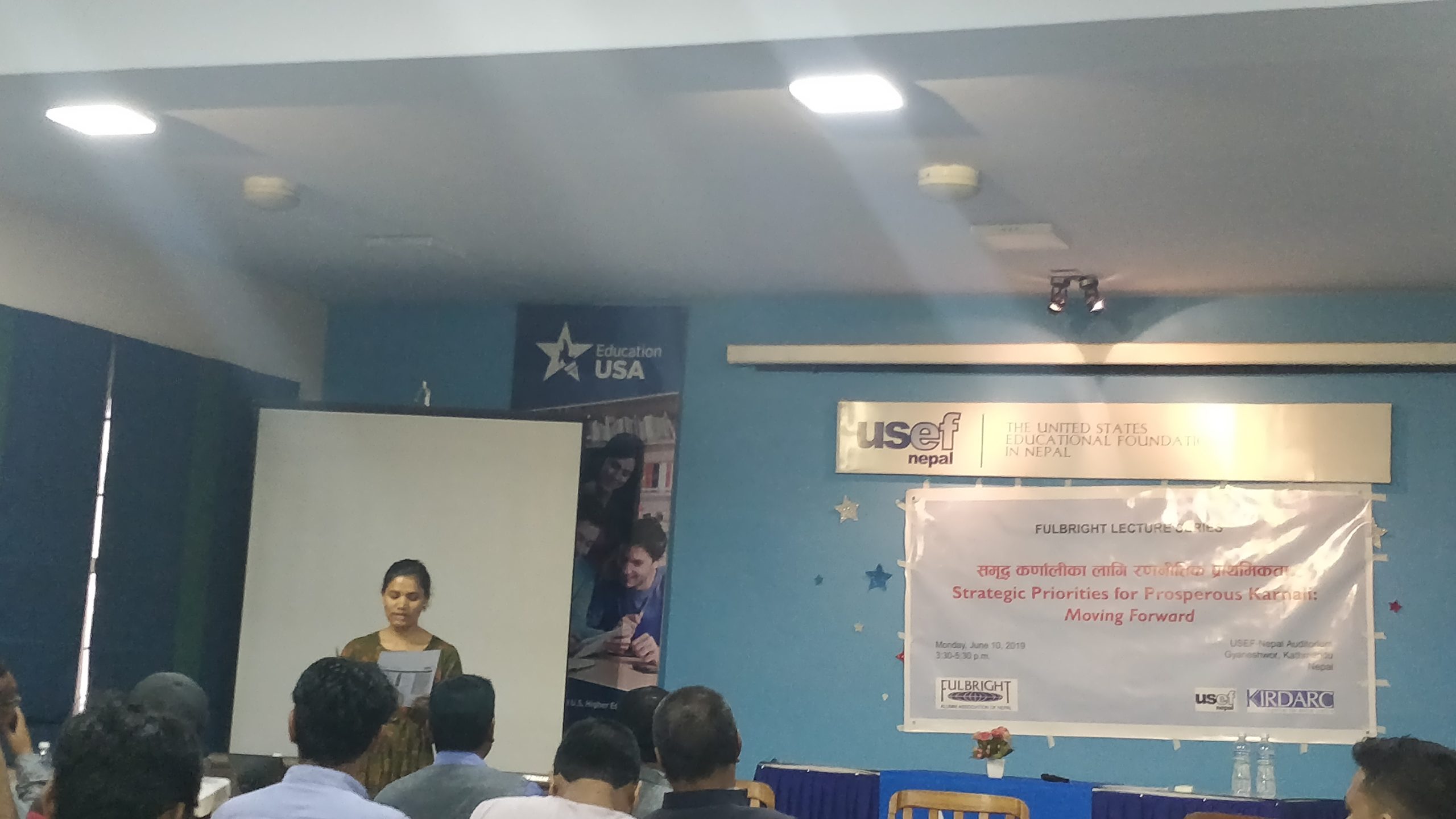
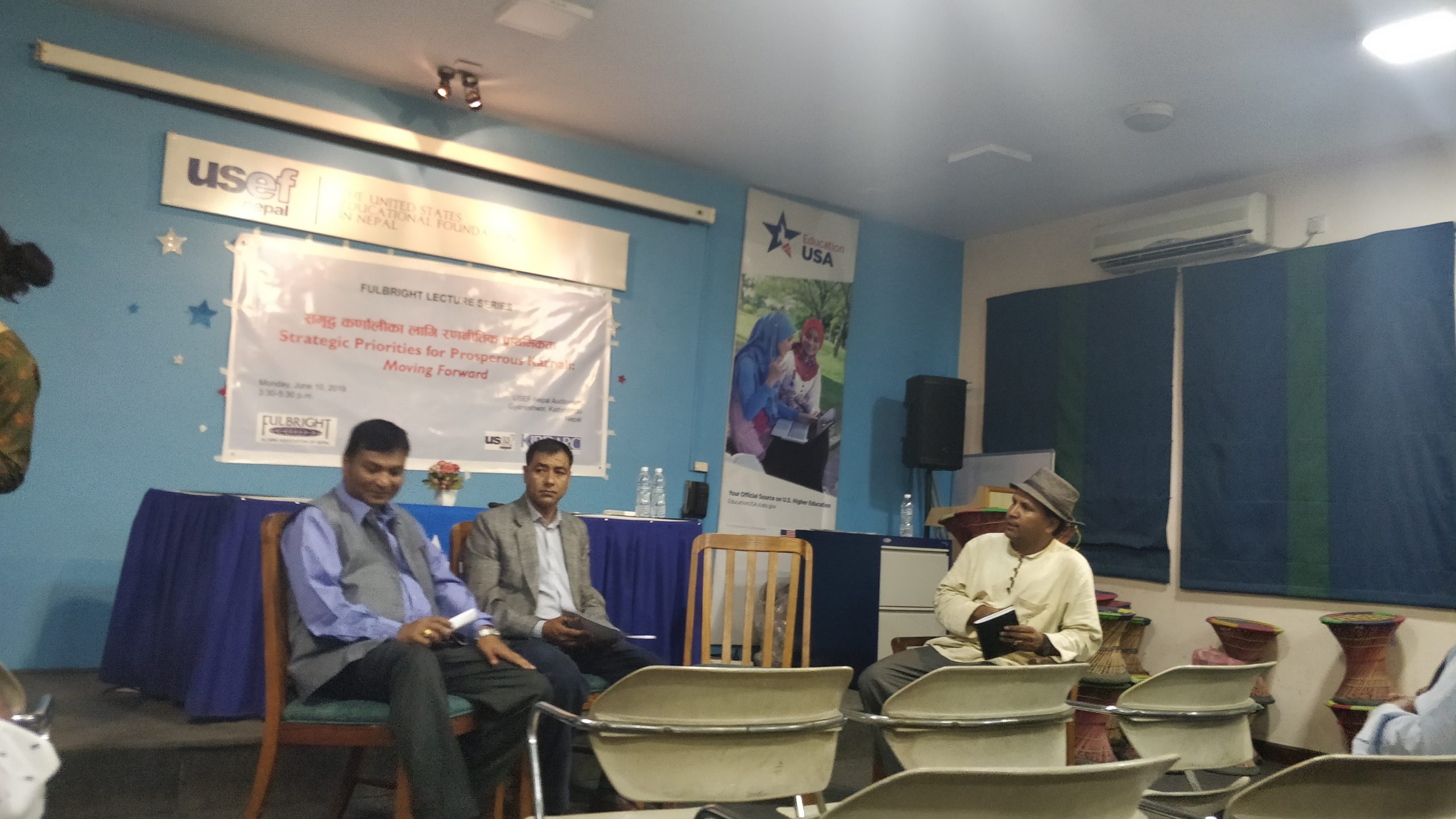
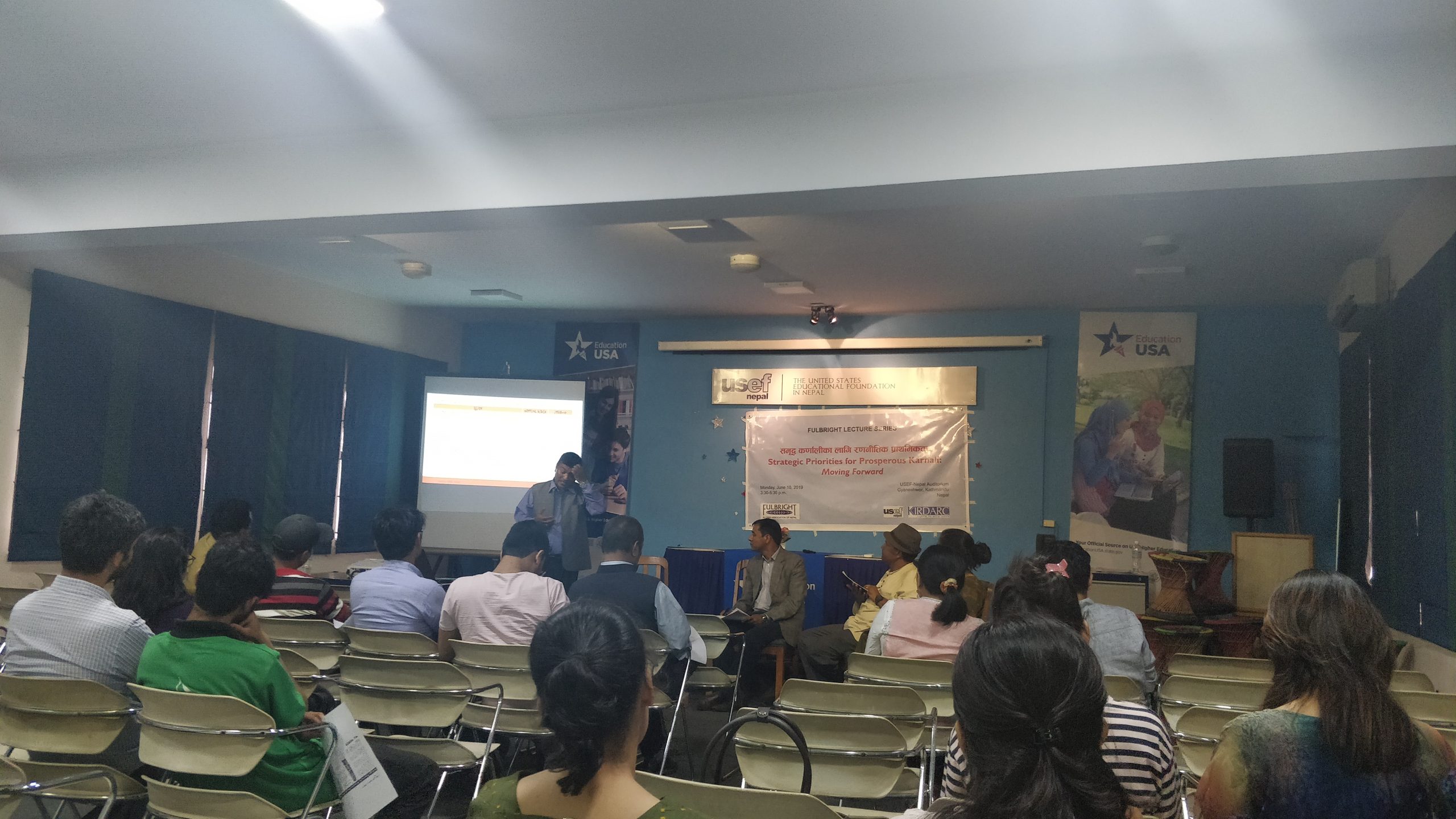
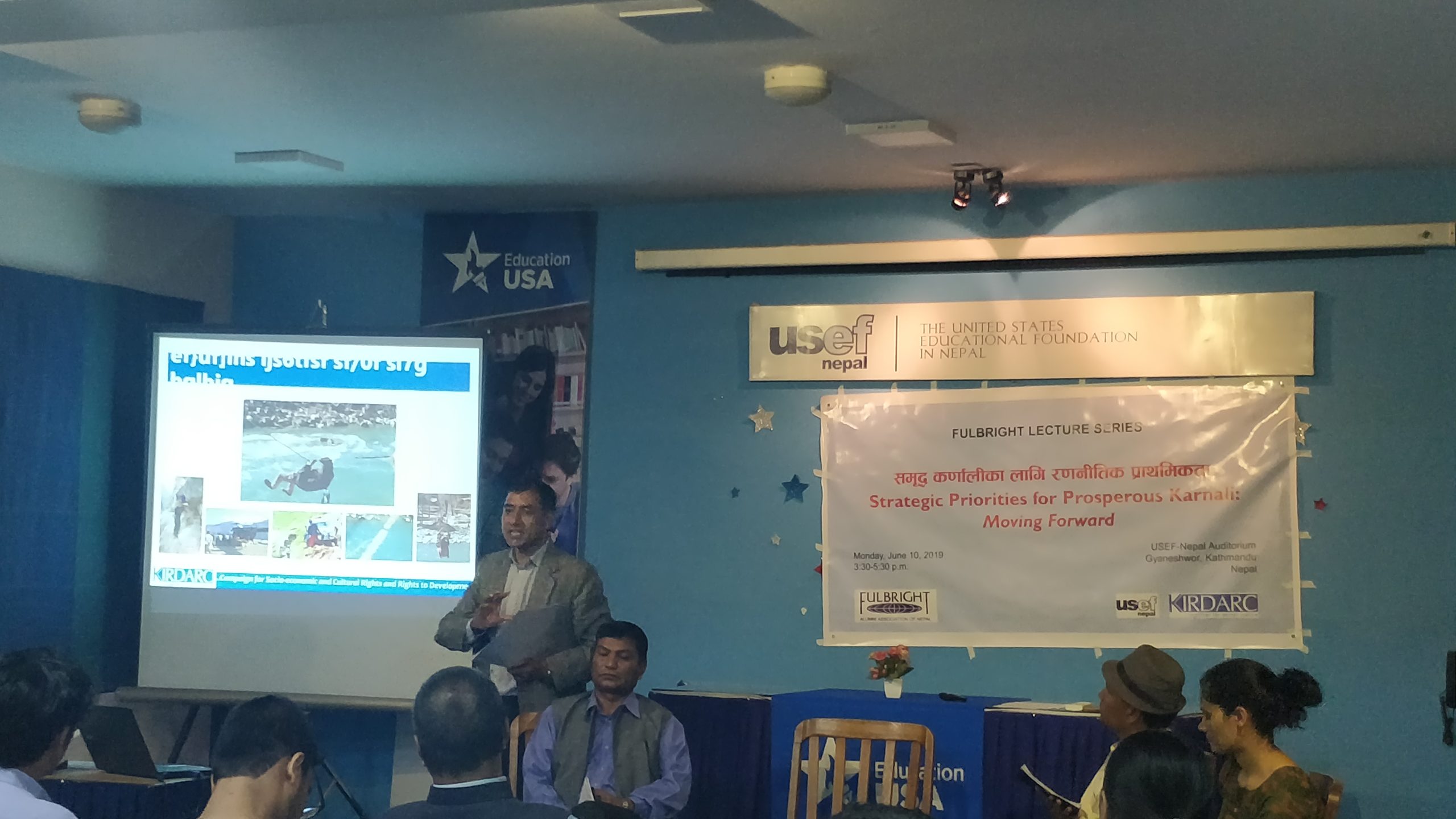
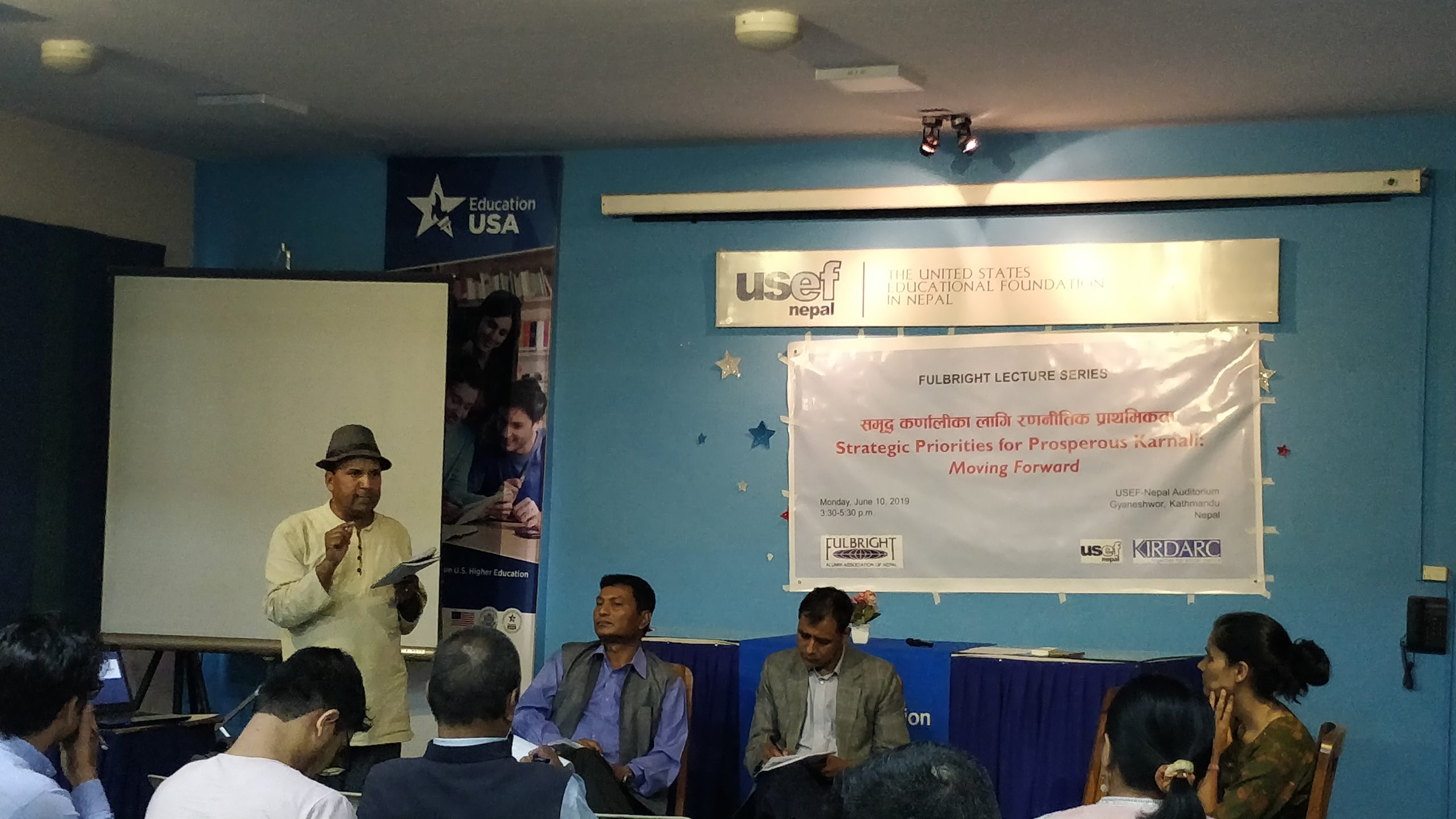
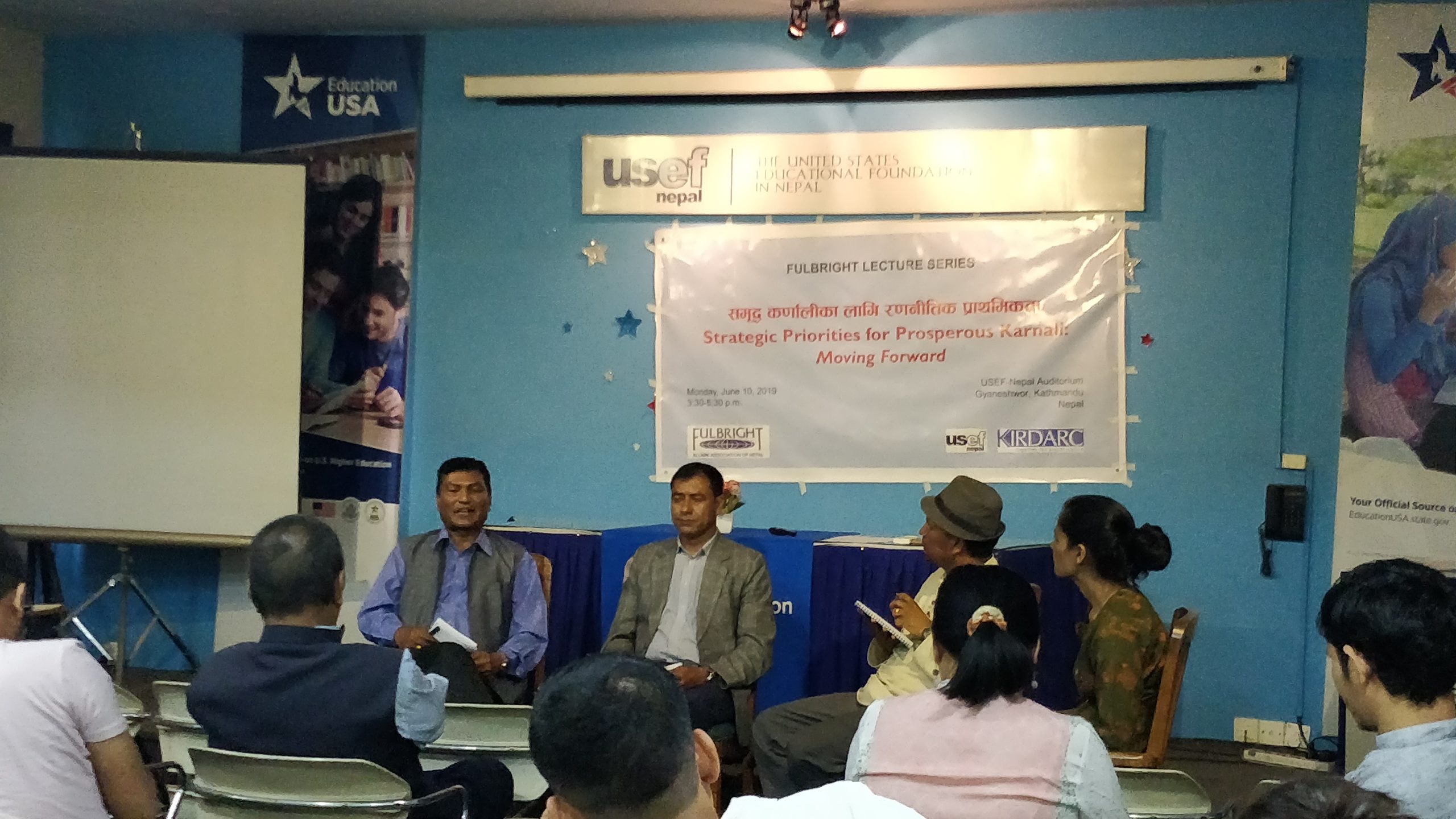
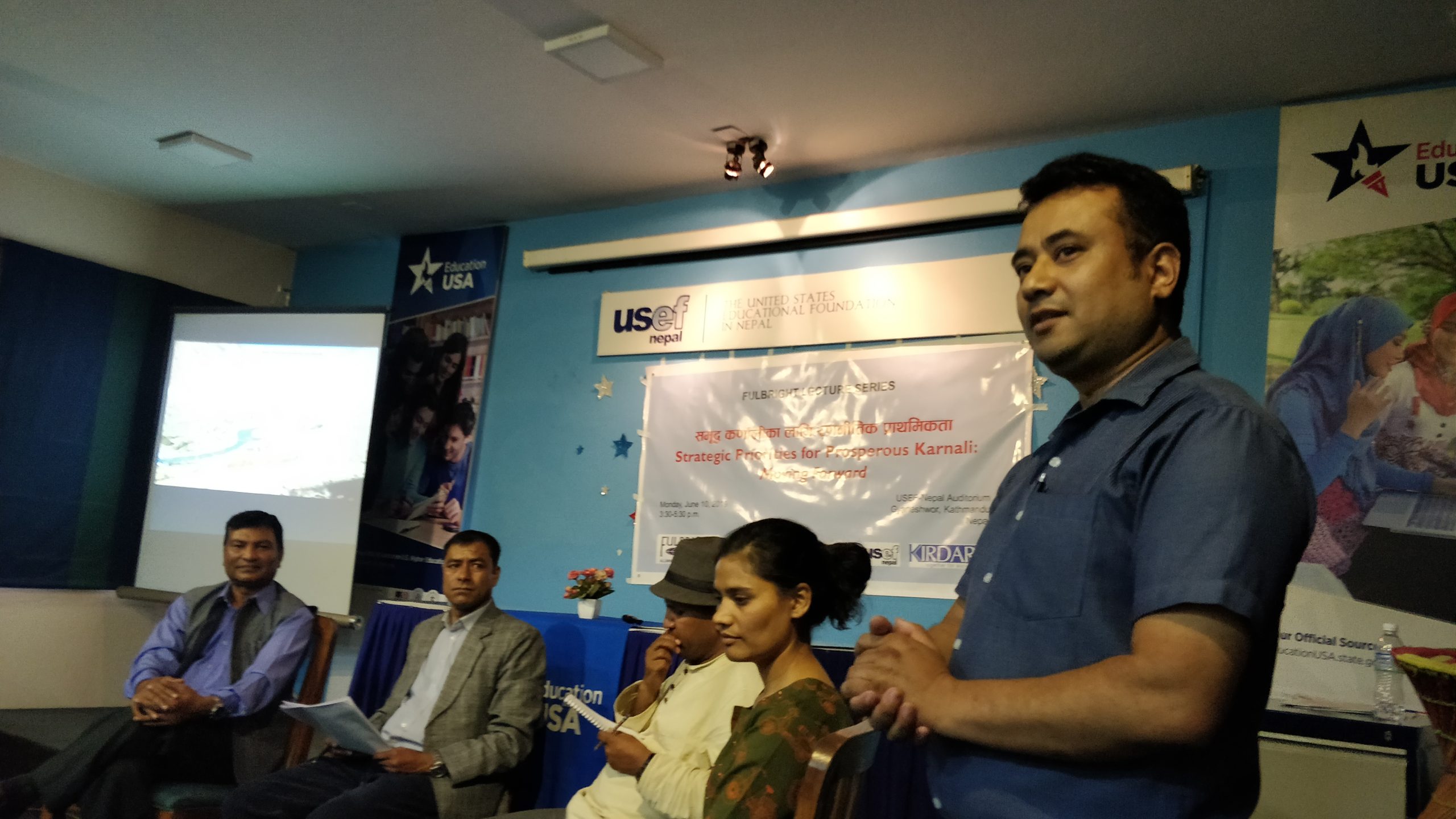
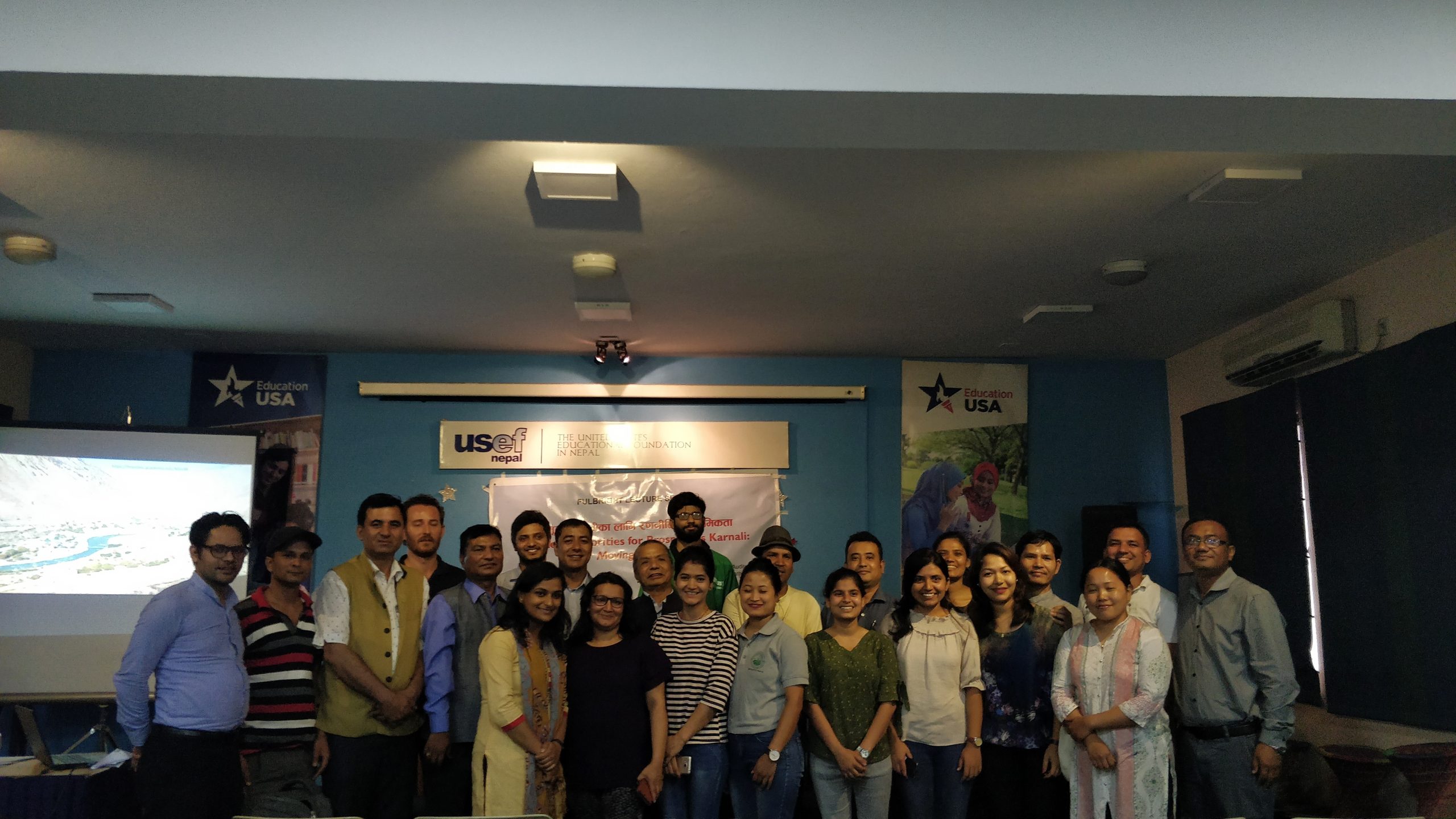
To help identify strategic priorities for the development of Karnali, Fulbright Alumni Association of Nepal (FAAN) organized a panel discussion in Kathmandu on "Strategic Priorities for Prosperous Karnali: Moving Forward" as part of Fulbright Lecture Series.
The panelists included Dr. Man Bk, Secretary, Ministry of Social Development, Karnali Province and Fulbright Scholar, Mr. Gobinda B. Shahi, Program Director, KIRDARC, and Mr. Govind Nepali, Activist. Dr. Purna Nepali, Executive Member of FAAN, welcomed the panelists and participants.
Ms. Rashmi KC, Education Consultant and Executive Member of FAAN, moderated the discussion.
In his closing remark, Dr. Kirti Kusum Joshi, President of FAAN, thanked panelists for their insightful presentations and participants for their feedback. Dr. Joshi hoped that the event was useful in identifying what went wrong and what remains right for Karnali, and to identify strategic priorities accordingly.
The event was organized in partnership with USEF-Nepal and Karnali Integrated Rural Development and Research Center (KIRDARC). The event took place at USEF-Nepal Auditorium, Gyaneshwor.

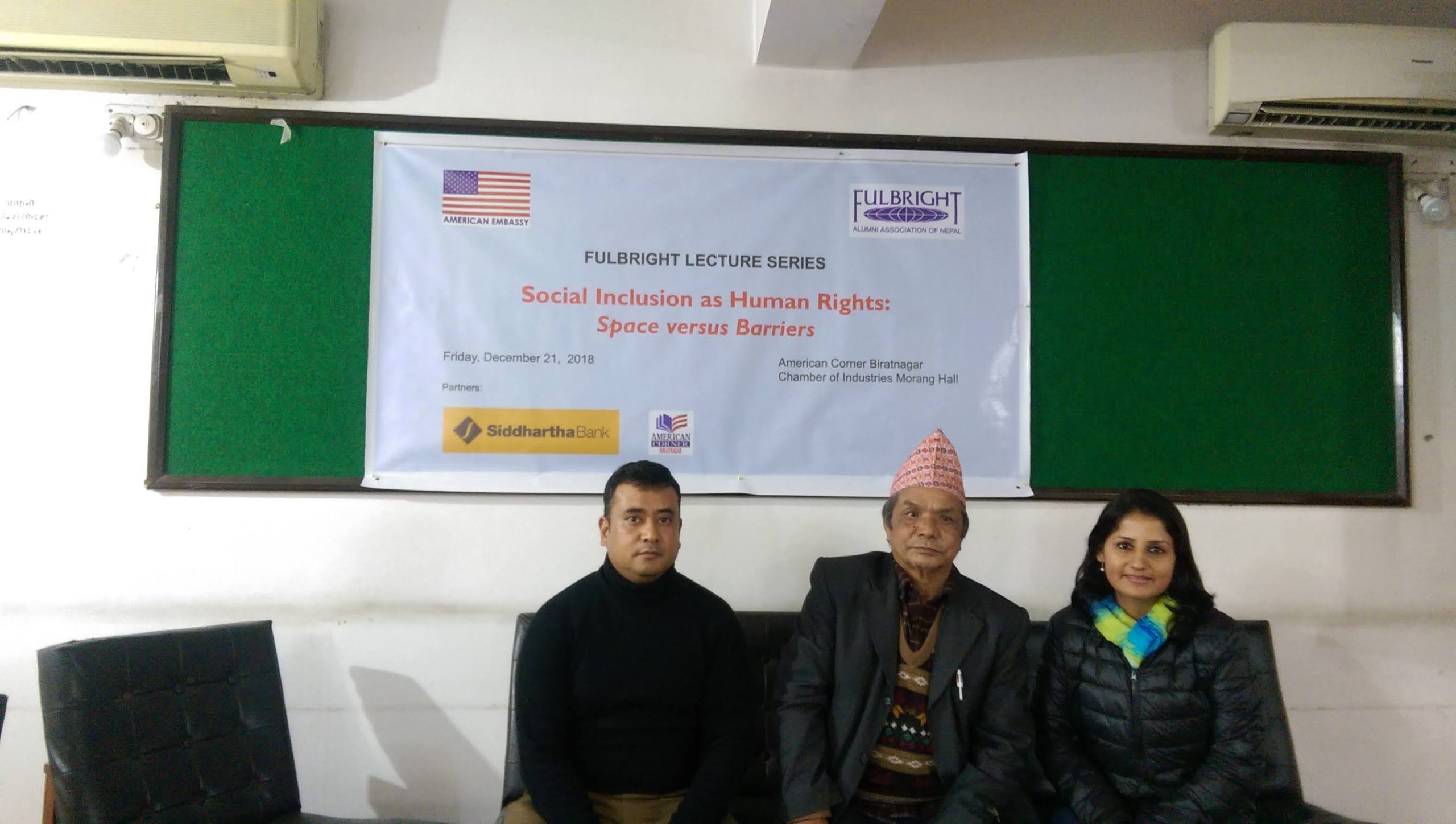
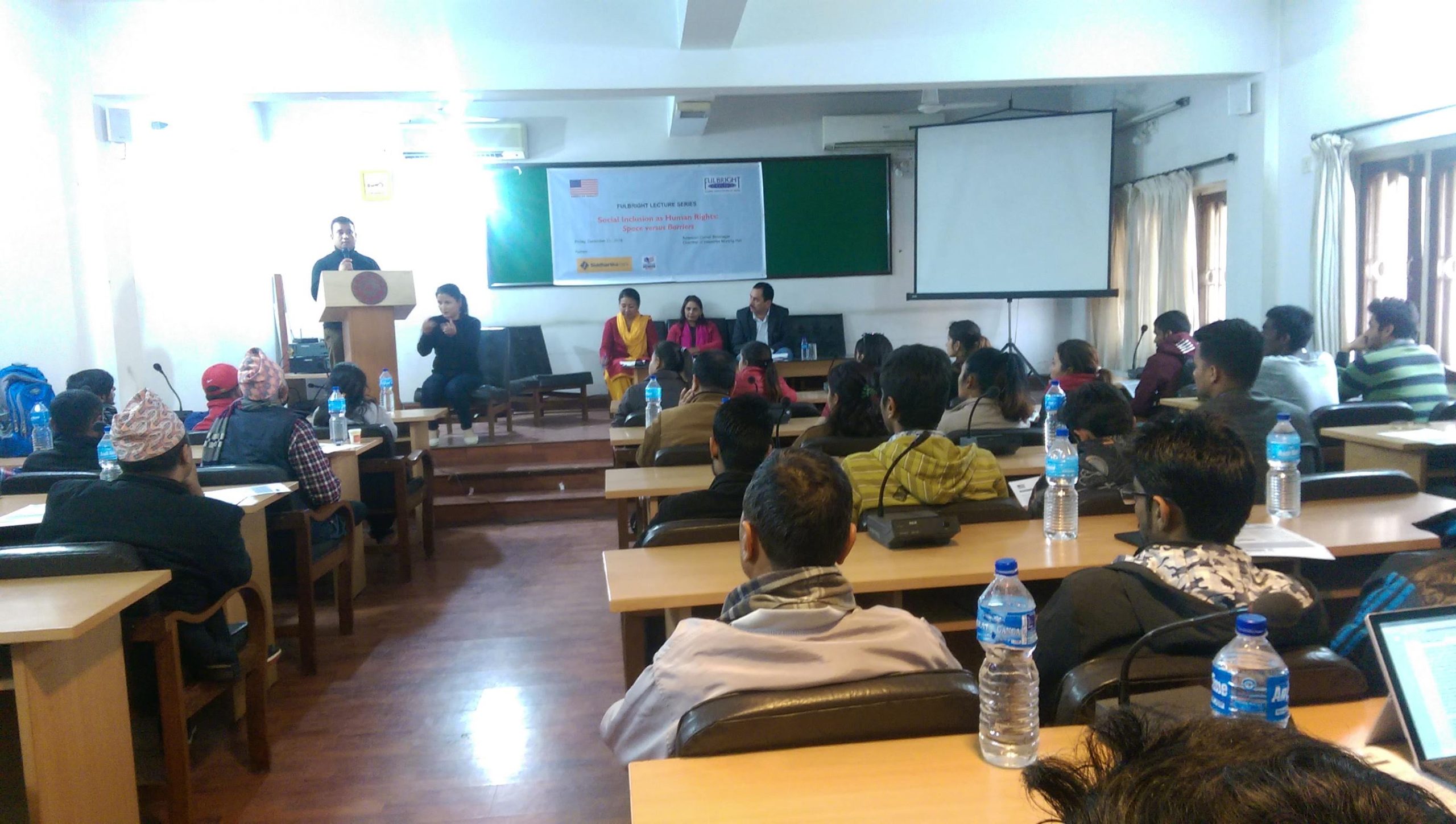
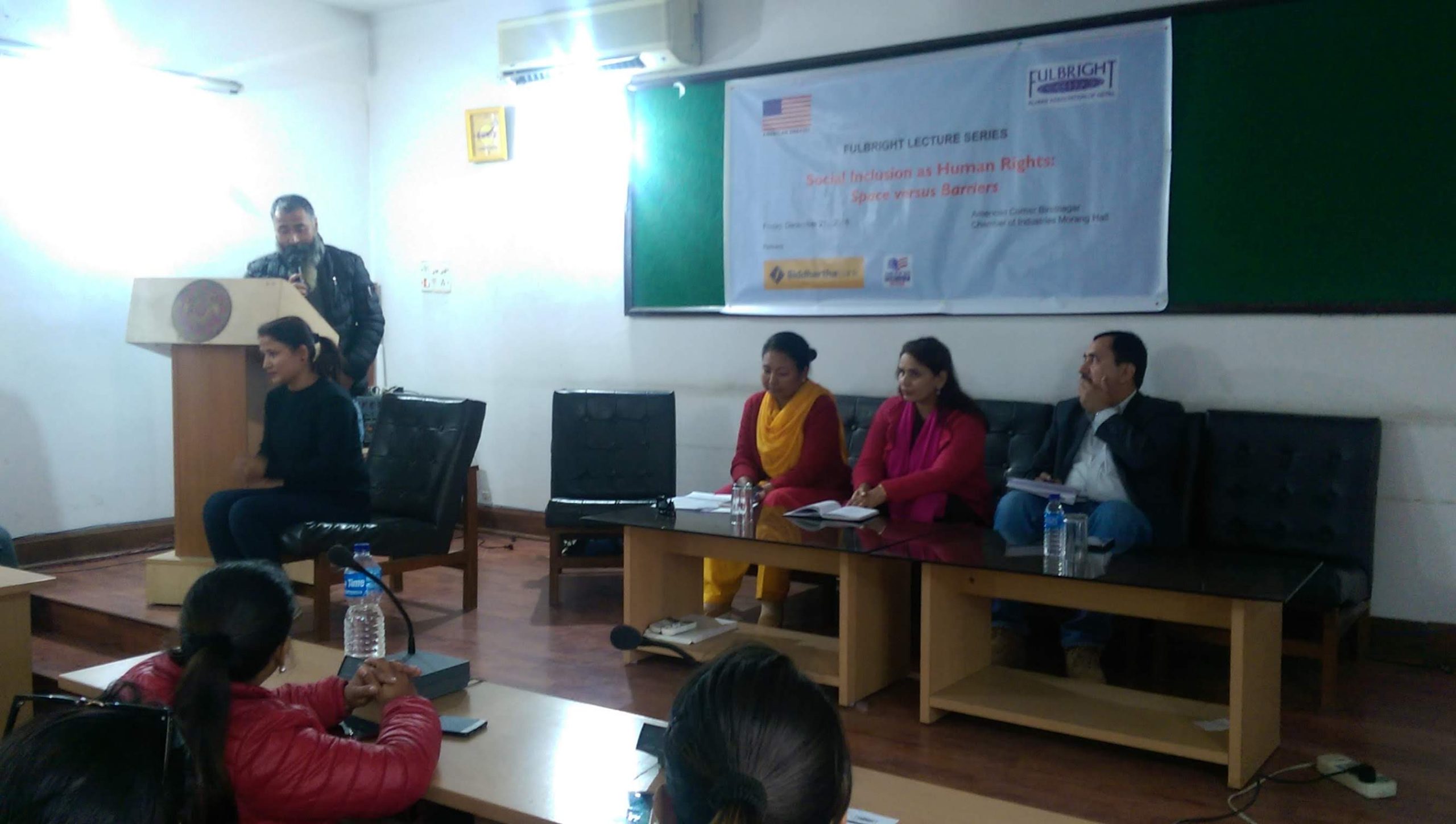
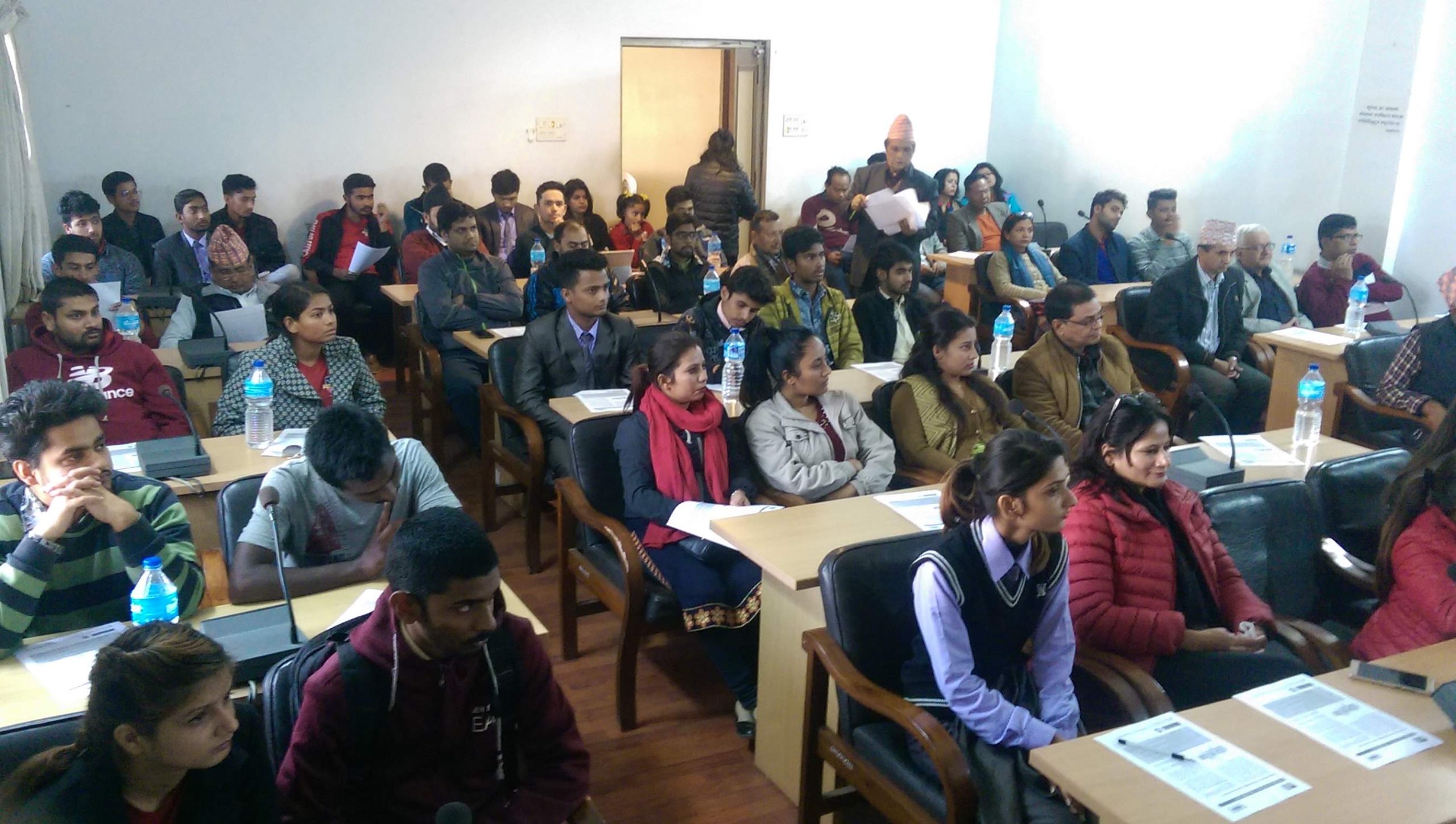
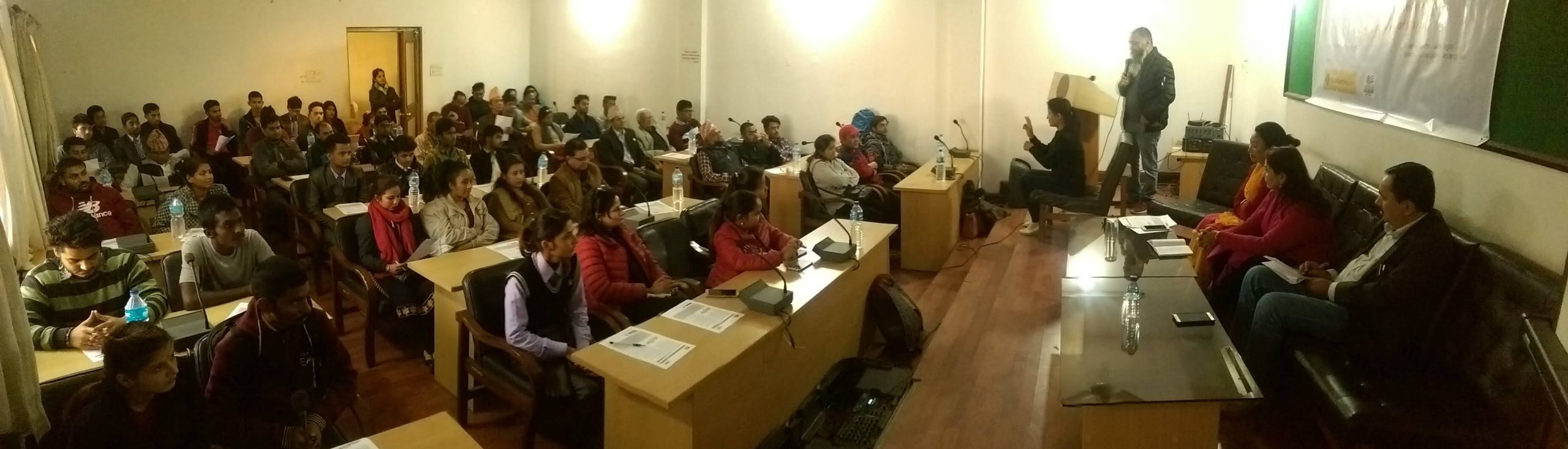
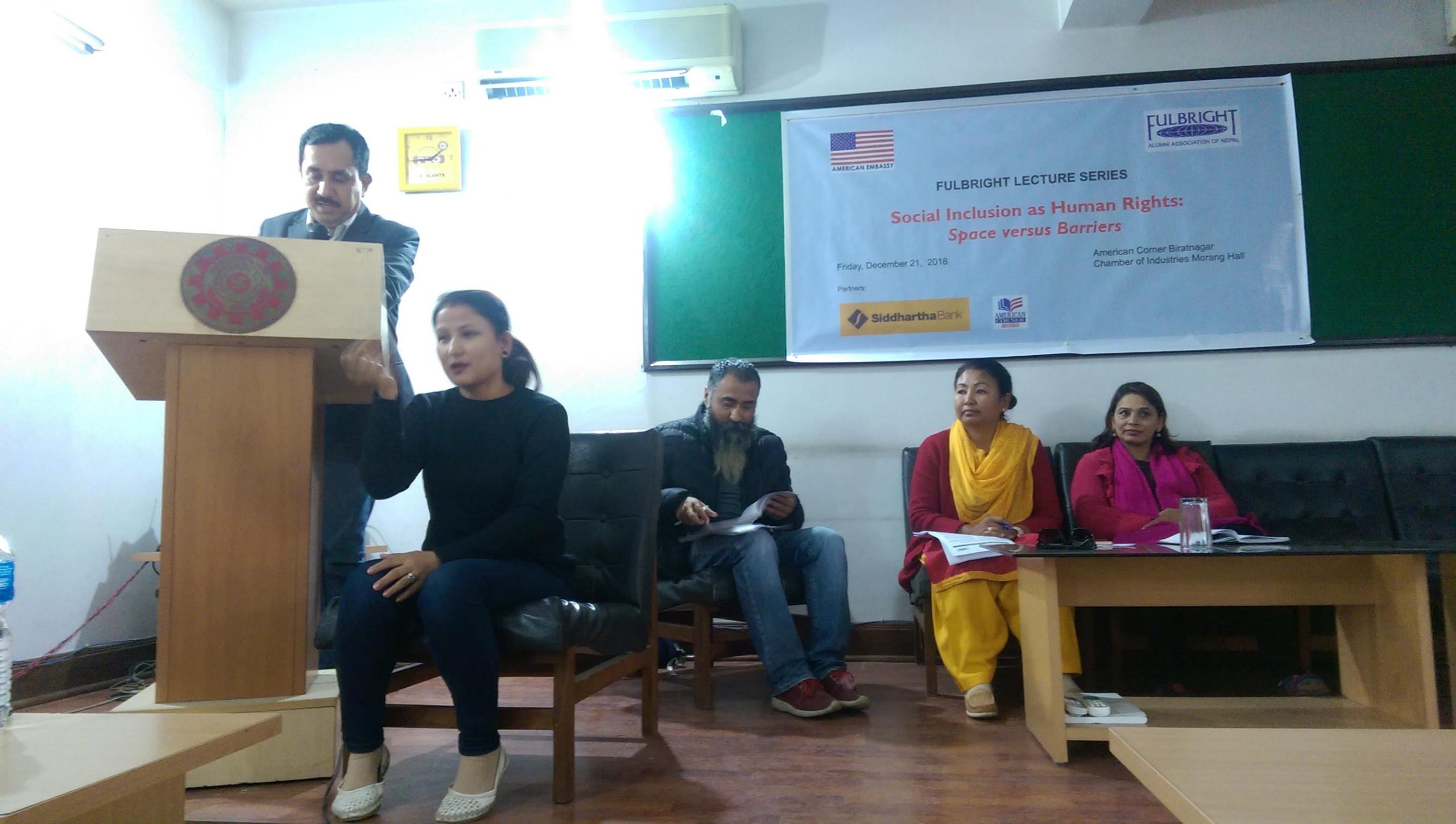
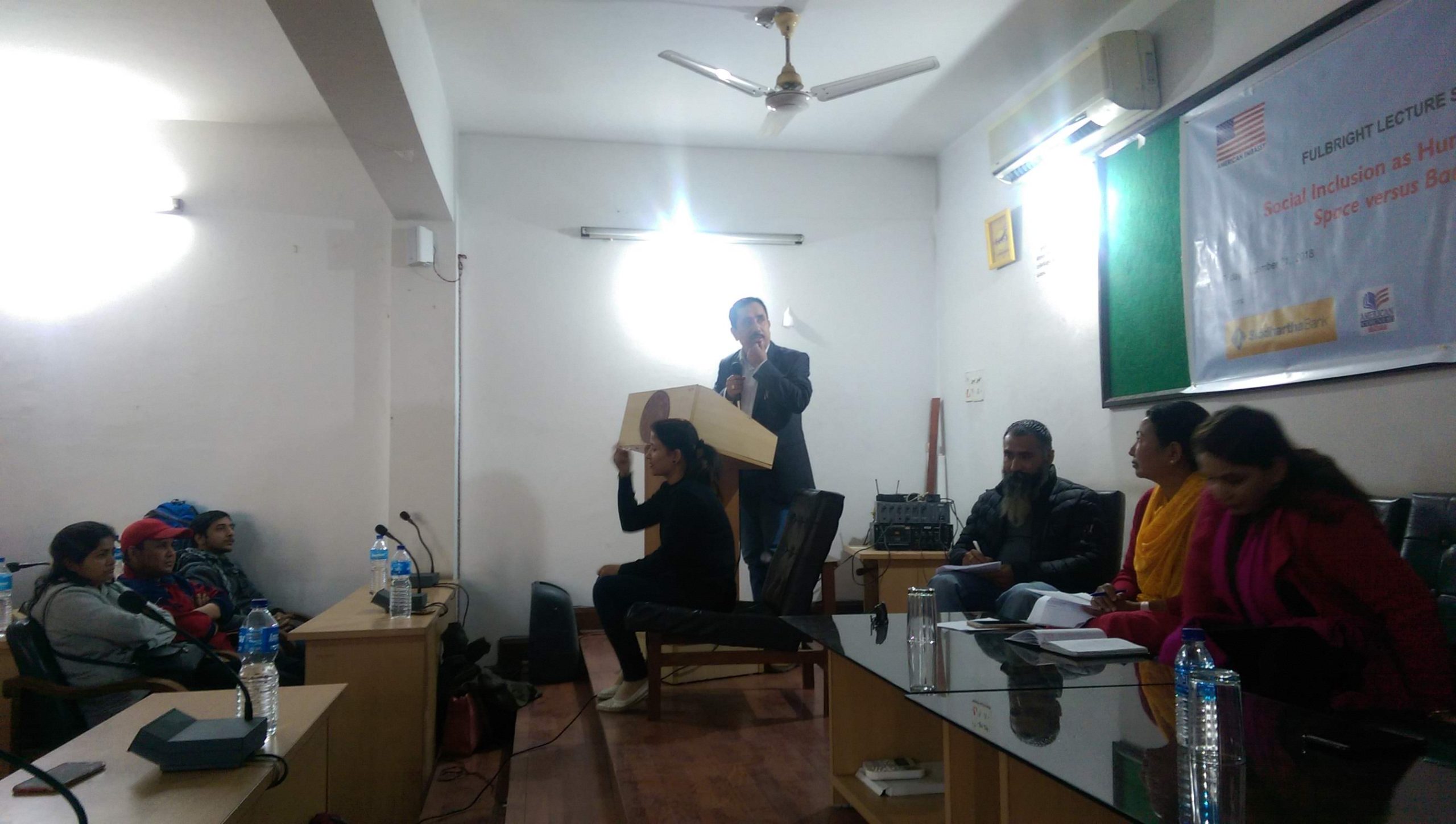
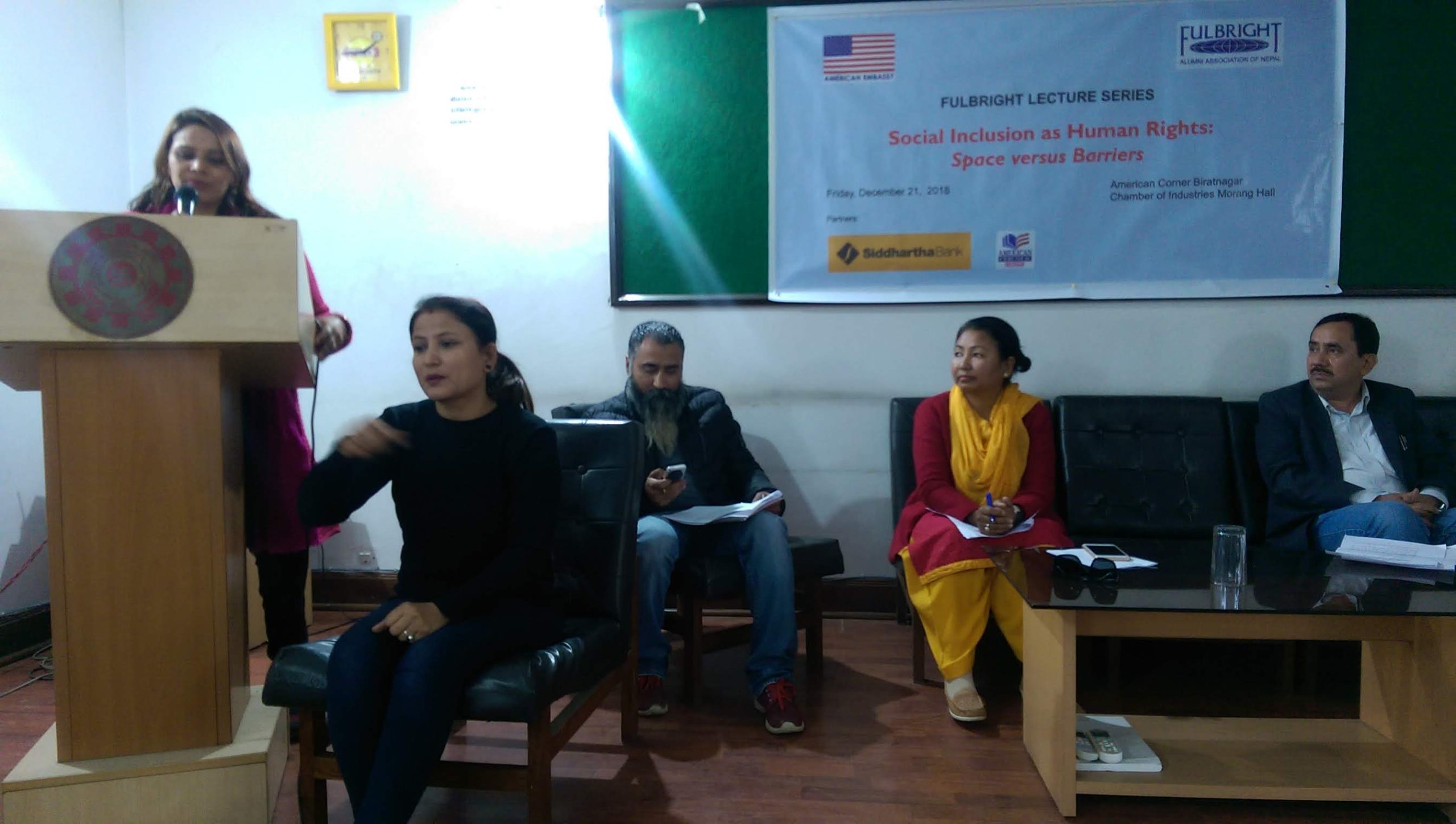
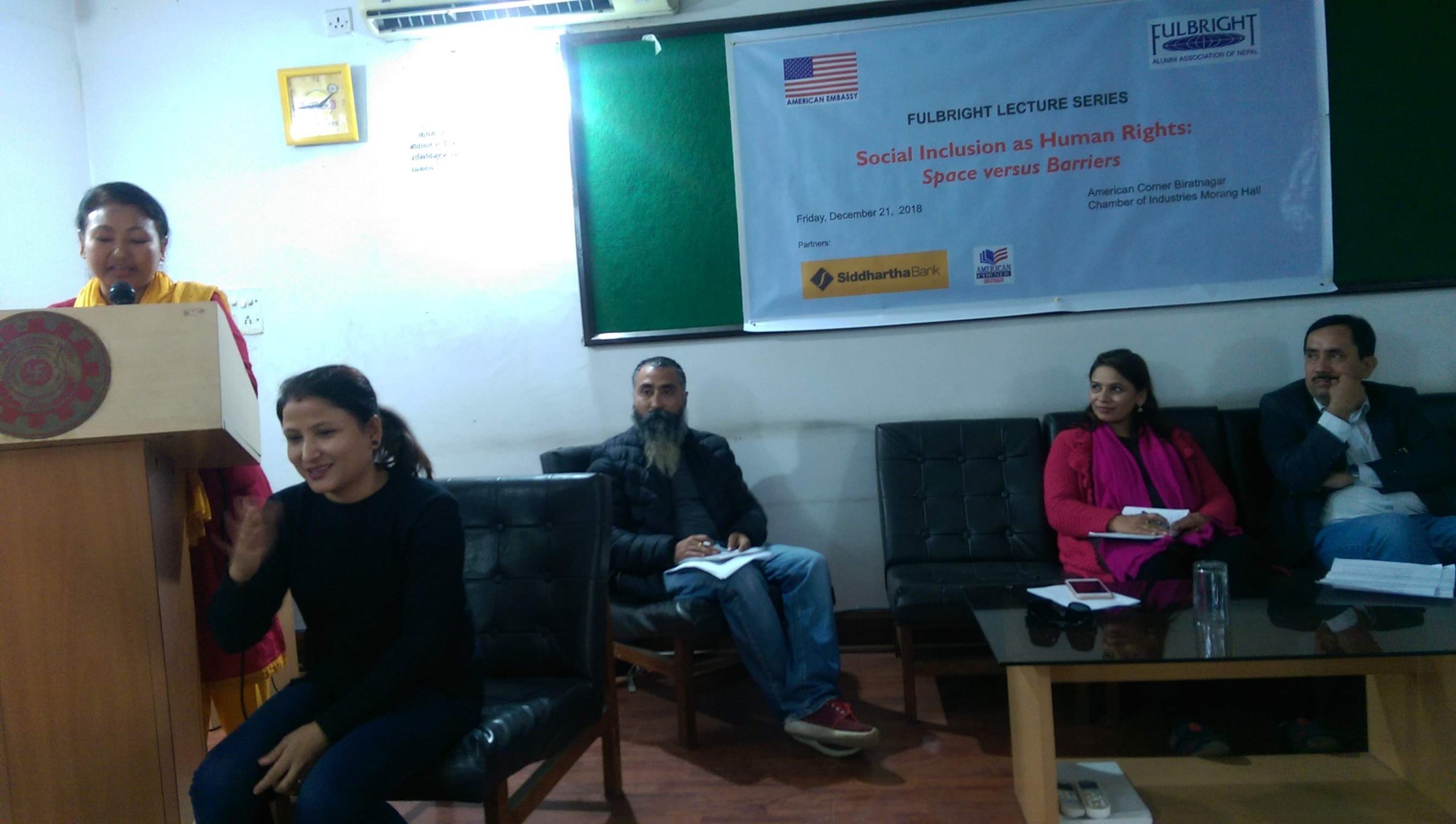
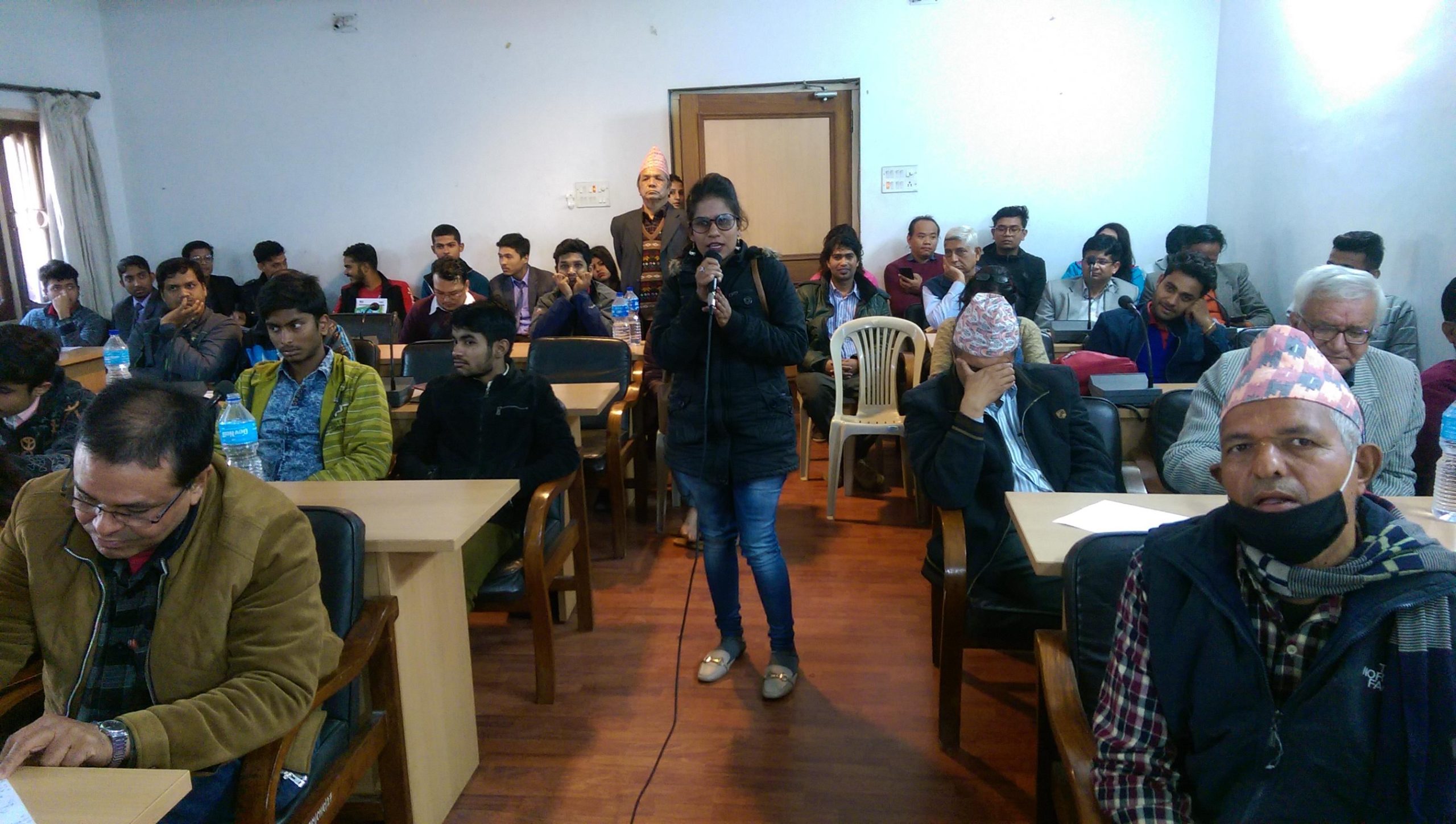
In the December 2018 edition of Fulbright Lecture Series, Fulbright Alumni Association of Nepal (FAAN) presented a panel discussion in Biratnagar on " Social Inclusion as Human Rights: Space versus Barriers " featuring Prof. Sami Lama, Professor, B.P. Koirala Institute of Health Sciences, College of Nursing, Dharan, Mr. Somraj Thapa, Provincial Coordinator, INSEC, Biratnagar, and Ms. Nirmala Dhital, Chairperson, Nepal Disabled Women Association, Kathmandu as panelists.
Mr. Basanta Adhikari, Founding Chairperson, Bikalpa-an Alternative moderated the discussion.
The program started with a welcome speech by Dr. Kirti K. Joshi, General Secretary of FAAN. The panelists shared their views on social inclusion from the perspective of human rights. A total of 69 participants actively took part in the event. The discussion provided following insights:
- Poverty is not the sole reason behind conflicts. The September 11 attack in New York and the Maoist conflicts in Nepal (in which Magar and Dalits participated significantly), among others, are testimonials. Humans seek respect and dignity.
- Nepal is strong on human rights but on paper. Implementation is weak.
- Persons with disability (PWDs) suffer from weak access to services and information. In many cases, they are made to compete with persons without disability on equal grounds.
- Political rights are more important than all other rights, but political representation of PWDs is gloomy.
- Plans and policies should be formulated to suit the least privileged groups in the society.
- In the case of social inclusion seen from the lens of human rights, we often talk about "state versus community". It is high time that we also talk about "community versus community".
- To look at social inclusion from the lens of human rights is complication. This is because social inclusion demands special treatment for some whereas human rights support equal treatment or free competition for all. It is, therefore, important to ask at what stage social inclusion is essential. In most cases, social inclusion is needed the most for capacity building.
Supported by the U.S. Embassy in Nepal (under Enriching by Outreaching project – the December episode was the last one to be supported under this project), the event was organized in partnership with Siddhartha Bank Limited with management support from Biratnagar American Corner. The event took place at Biratnagar American Corner (Chamber of Industries Morang building), Biratnagar.
In the November 2018 edition of Fulbright Lecture Series, Fulbright Alumni Association of Nepal (FAAN) presented a panel discussion in Surkhet on " Ensuring Children’s Rights: Towards a Better Future" featuring - Dr. Man BK, Secretary, Ministry of Social Development, Karnali Province and Fulbright alum, Mr. Mukunda Giri, Director, SOS Children’s Village, Surkhet, and Ms. Rachana Sunar, Child Rights Activist as panelists.
Ms. Rashmi KC, Life Member of FAAN, moderated the discussion.
The discussion started with a presentation from the Ministry of Social Development on the status of children in Karnali province. After the presentation, children status report in Karnali published by the Ministry was launched by the three panelists. Every participant got a copy of the report.
The panel discussion then focused on the ways to ensure children’s rights in Karnali province and on the role of Ministry of Social Development. The panelists shared their views on ways to engage parents in ensuring children’s rights, and on engaging teachers to safeguard children from vulnerability inside schools. Ms. Rachana Sunar shared how she has been working to rescue abandoned Dalit children in the locality.
About 55 participants attended the discussion including teachers, child club members, members from Social Development Ministry, NGOs, and local elected representatives.
Supported by the U.S. Embassy in Nepal (under Enriching by Outreaching project), the event was organized in partnership with Siddhartha Bank with management support from local partner Anmol Foundation, Surkhet. The event took place at SOS Children’s Village, Surkhet.
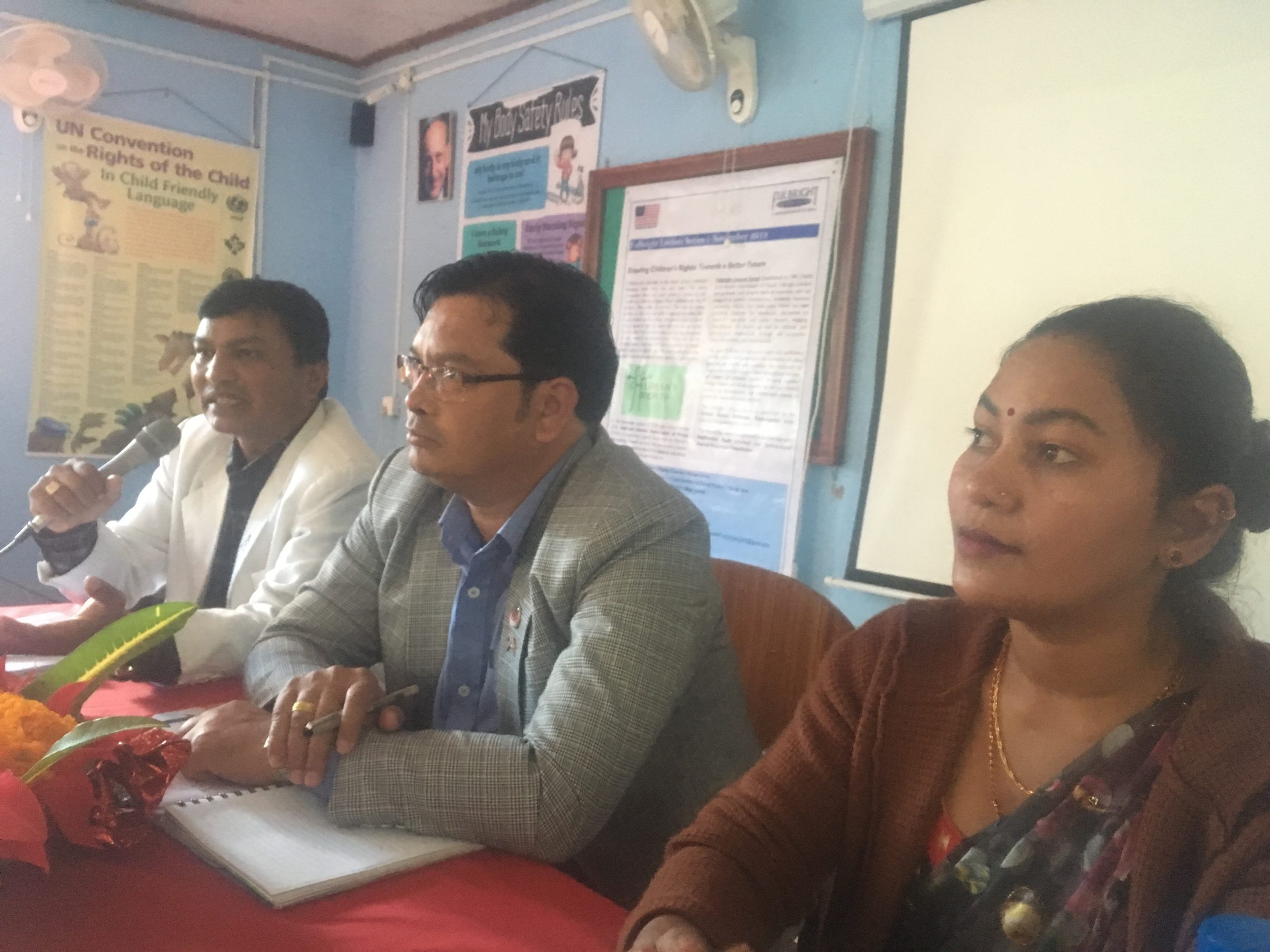
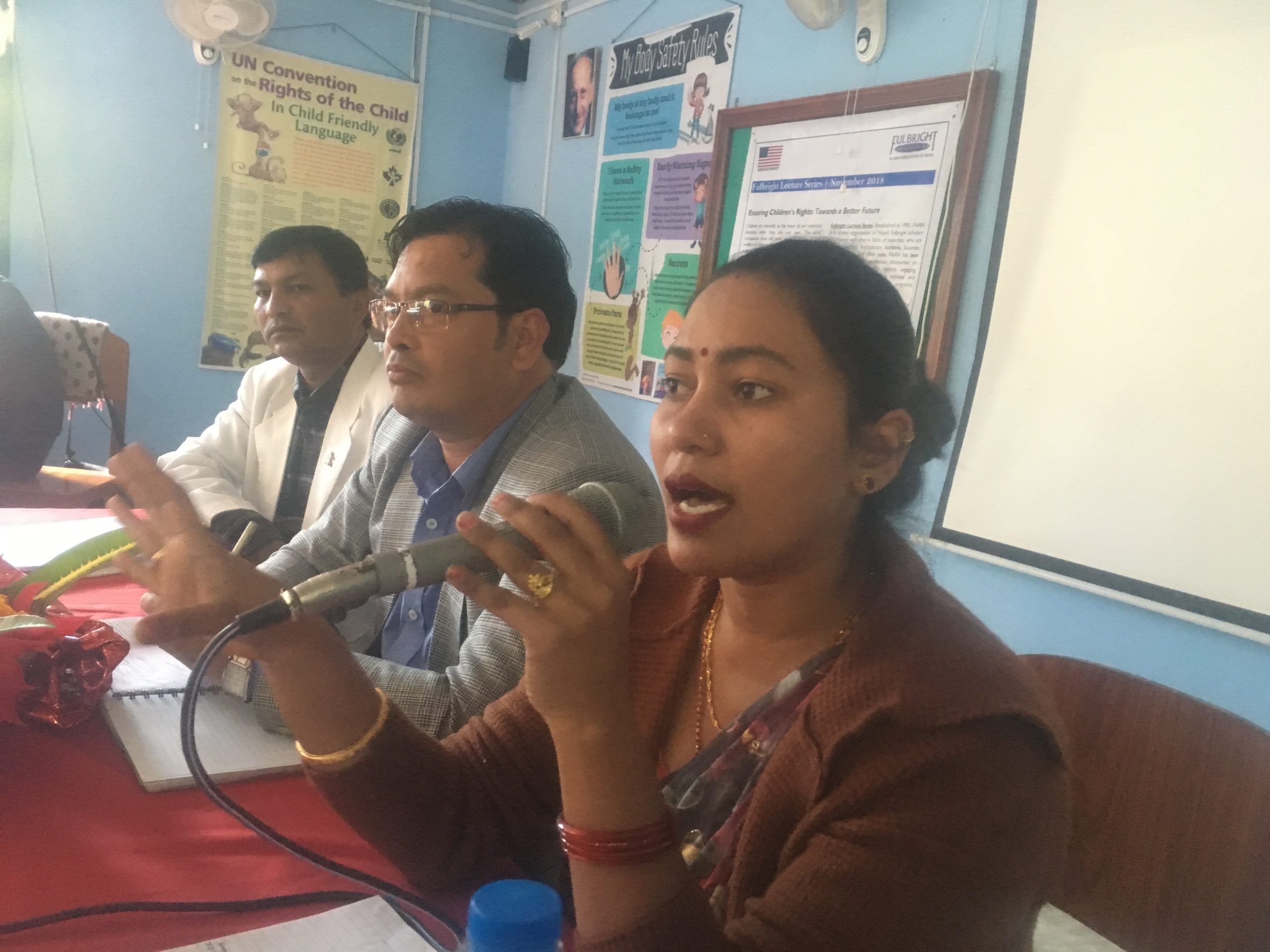
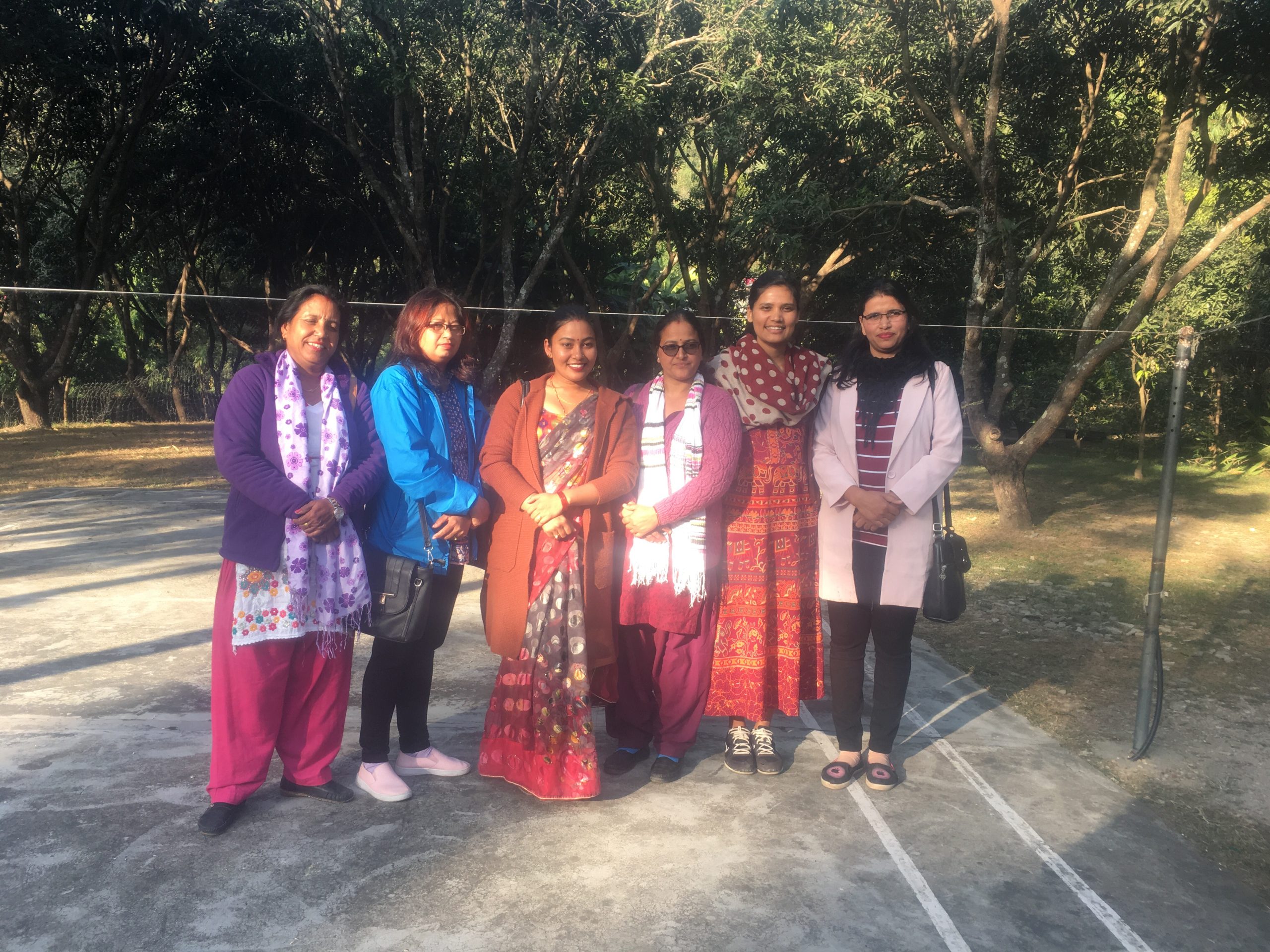
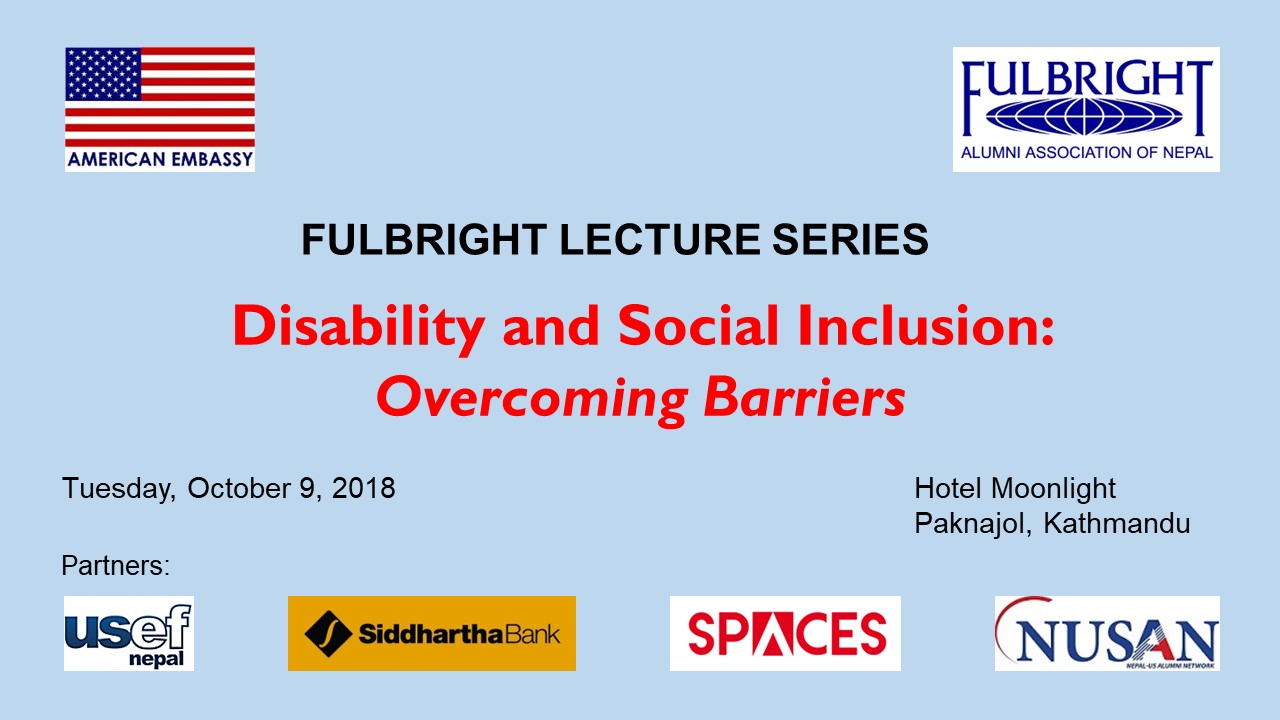
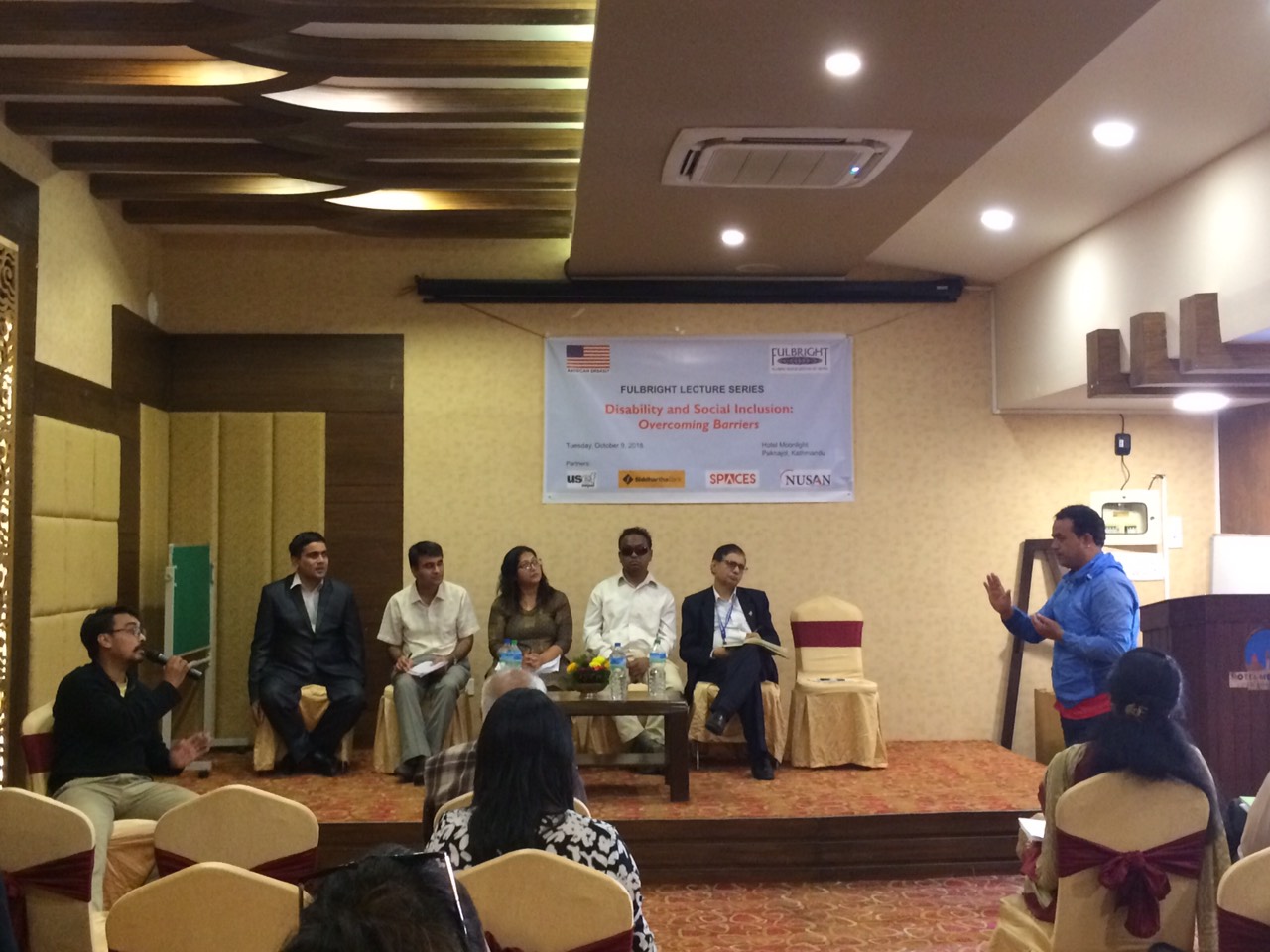
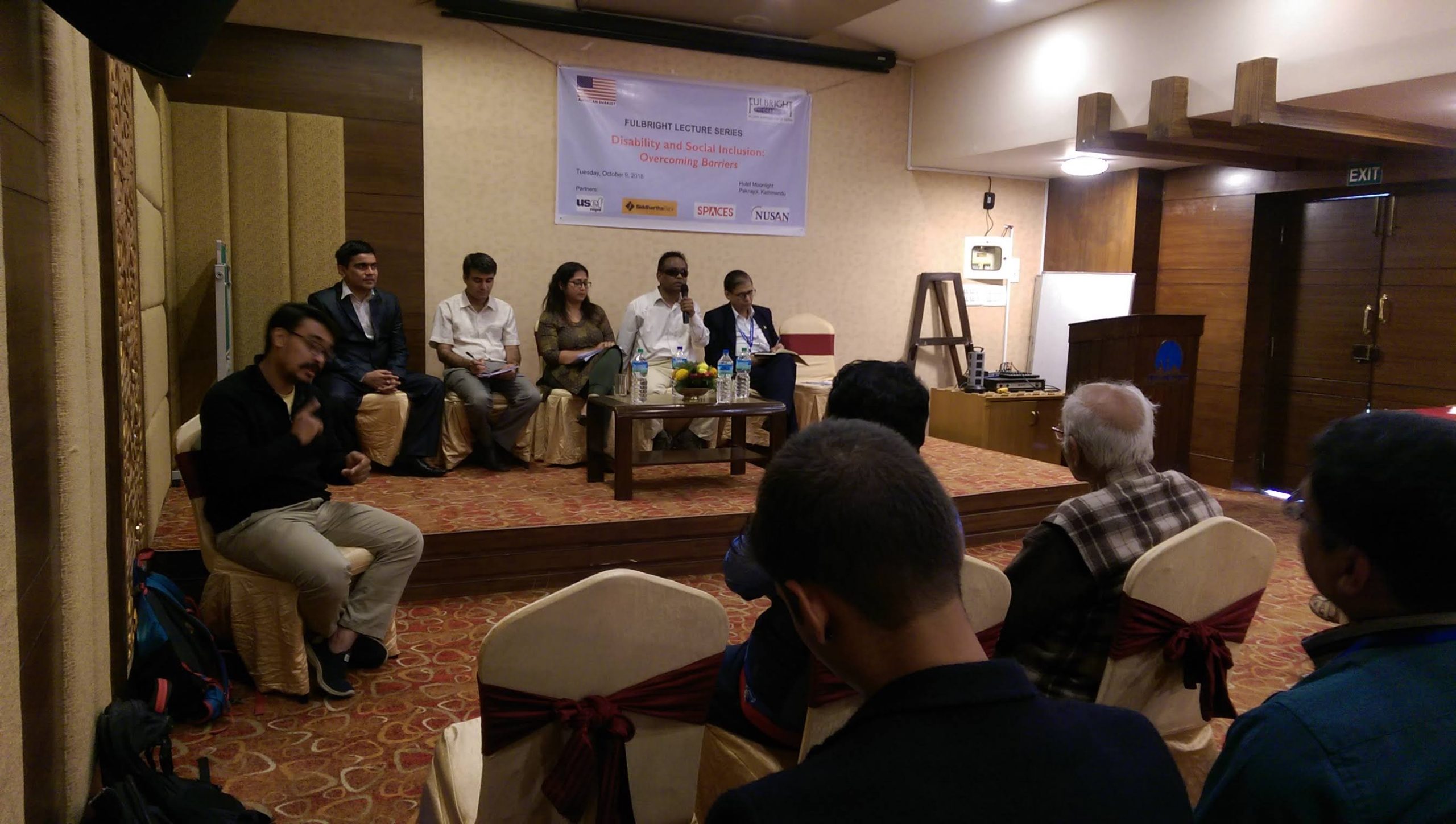
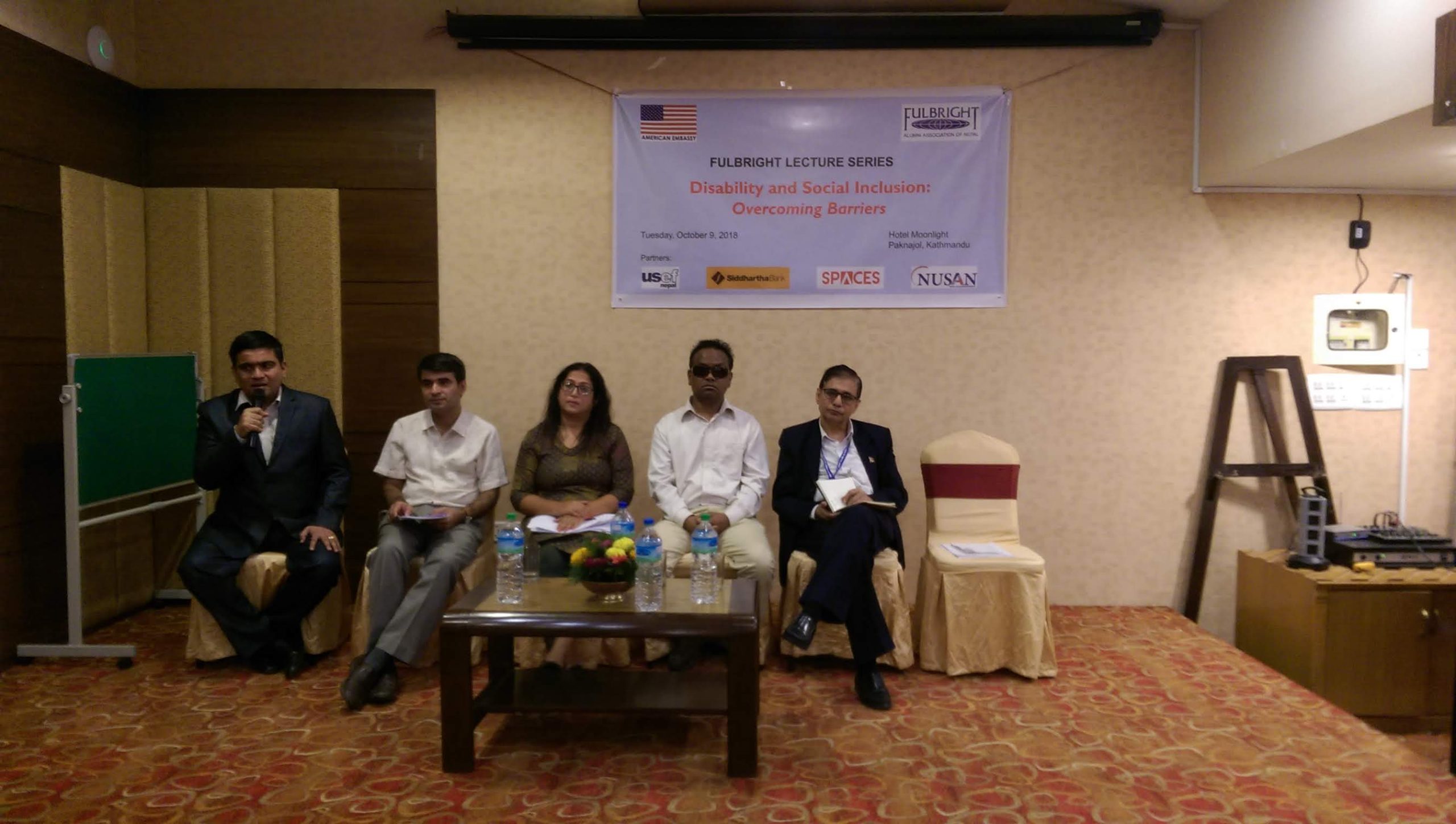
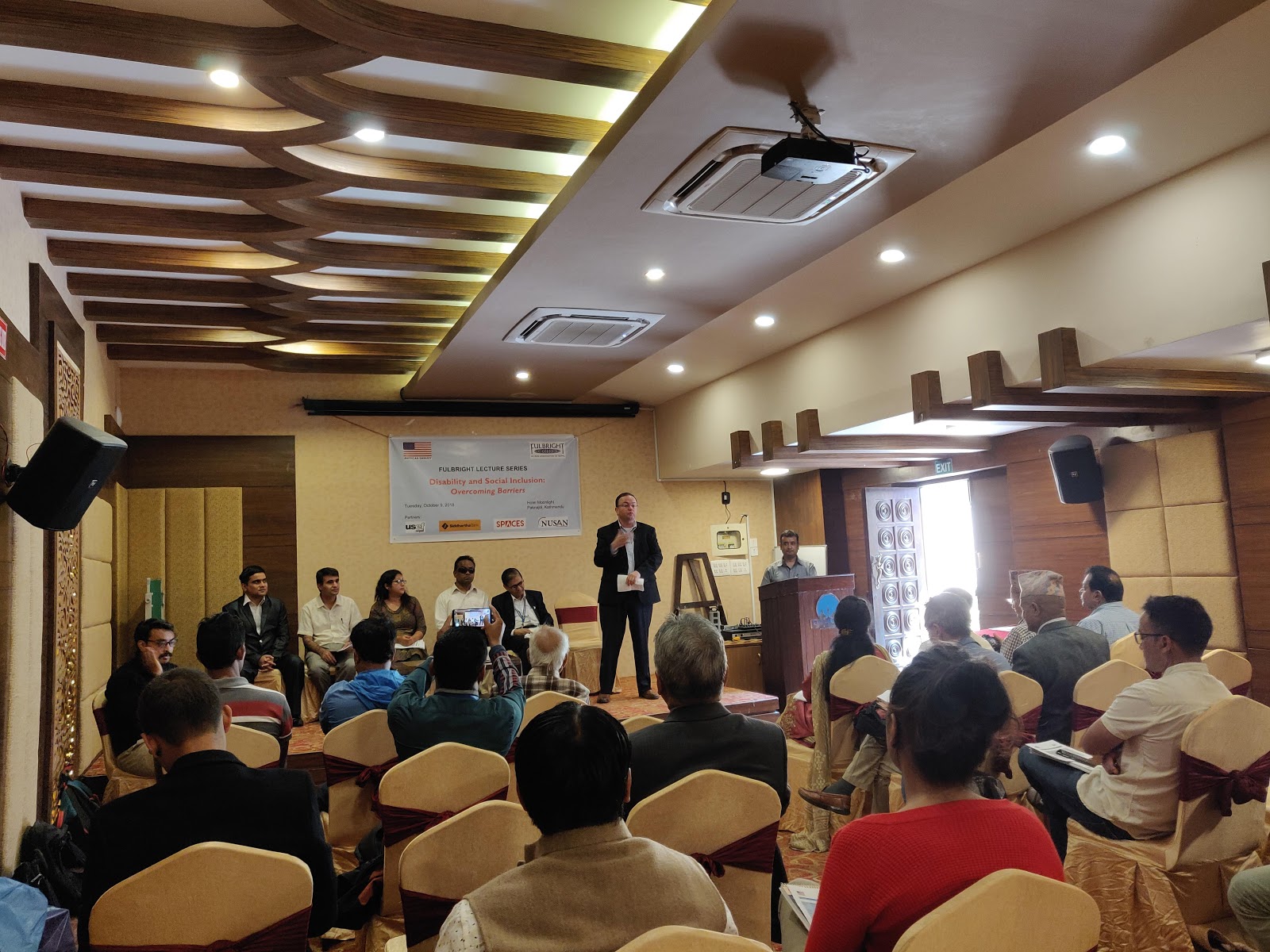
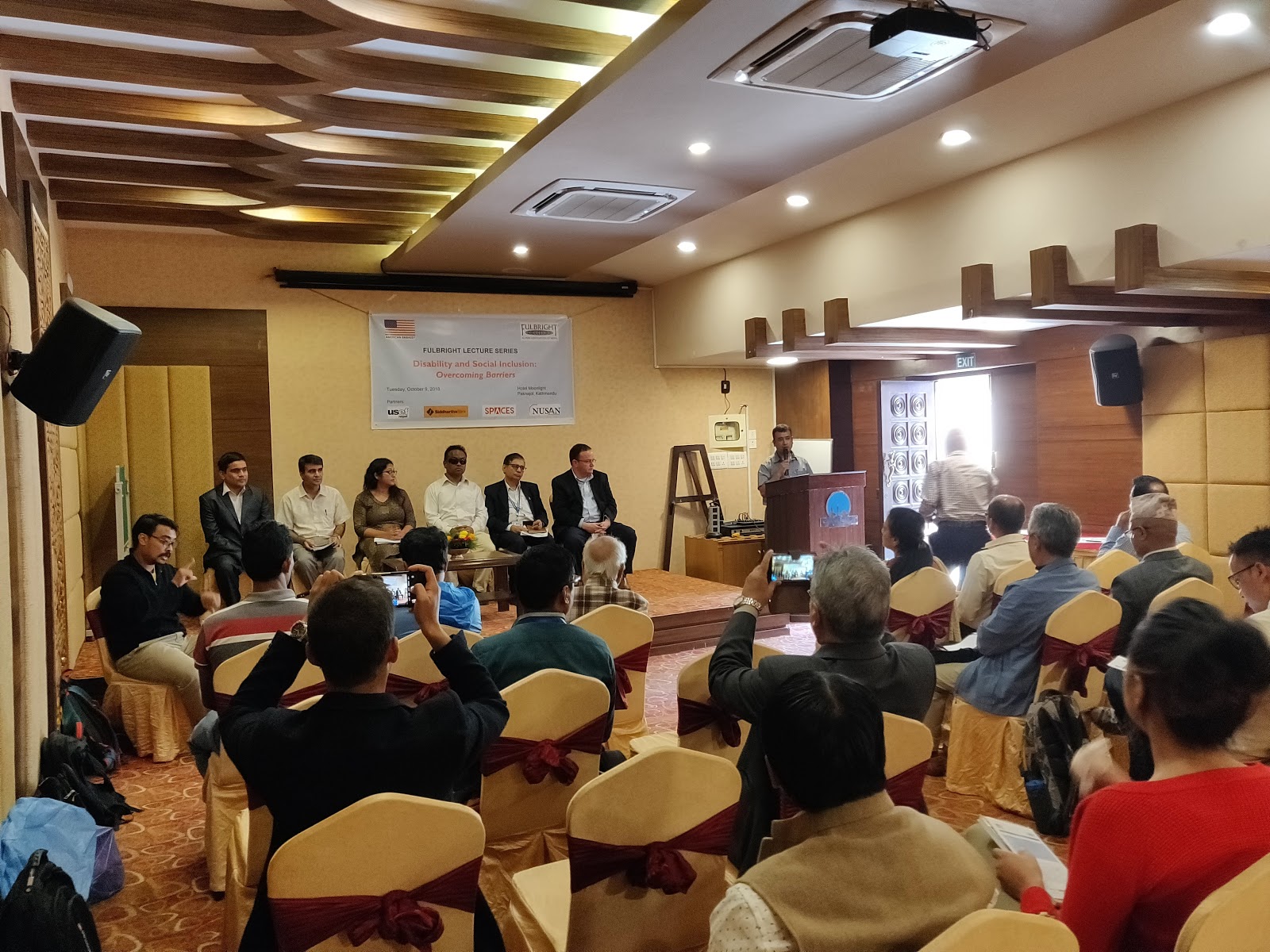
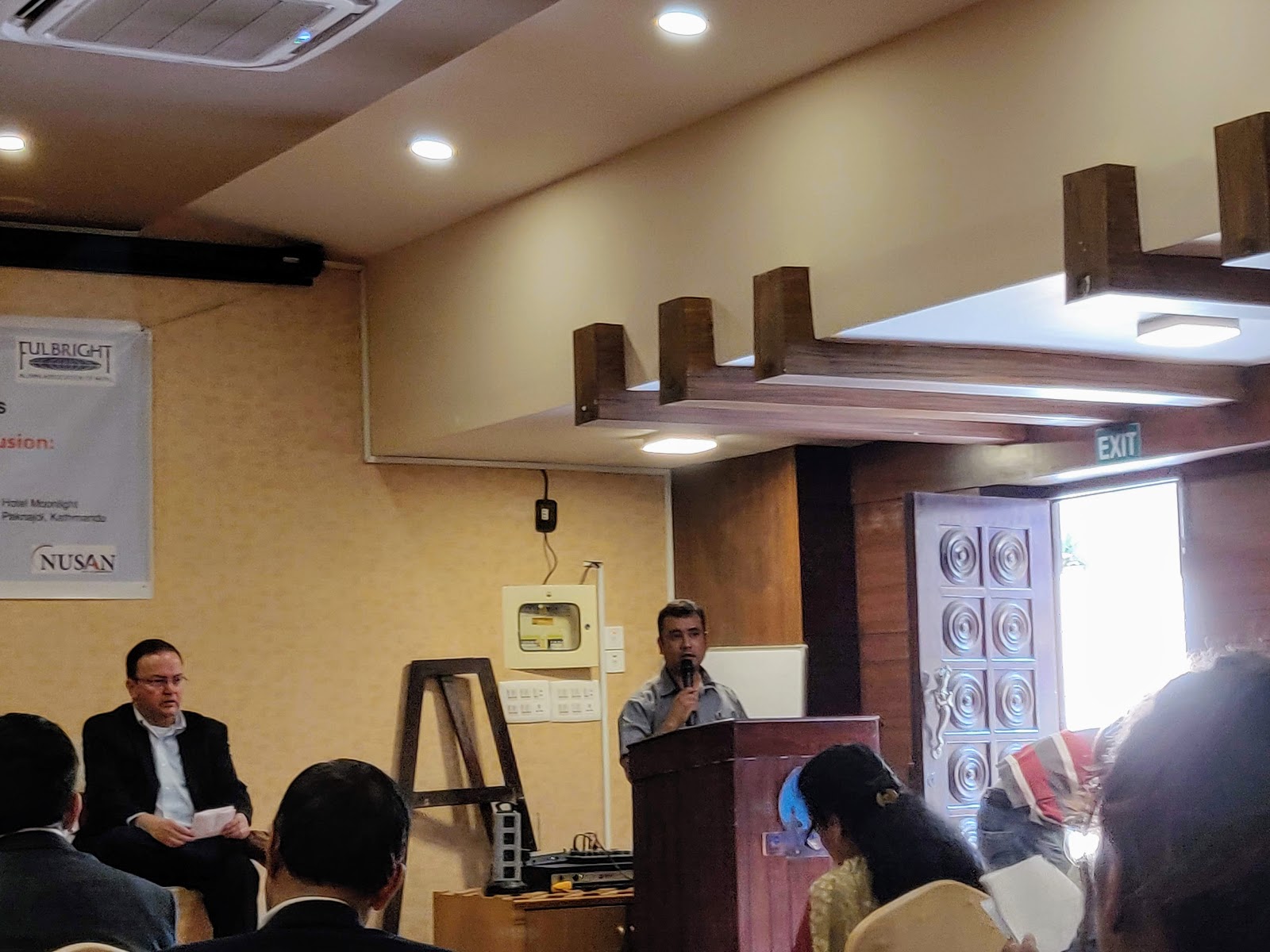
In the October 2018 edition of Fulbright Lecture Series, Fulbright Alumni Association of Nepal (FAAN) presented a panel discussion in Kathmandu on "Disability and Social Inclusion: Overcoming Barriers" featuring Mr. Keshav Bhattarai, Under Secretary, Ministry of Women, Children and Senior Citizen, Mr. Pawan Ghimire, Chairman, Cricket Association of Blind and IVLP alum, Ms. Pooja Bhandari, Advocate/ GESI and Advocacy Officer, Women Act, and Mr. Milan Bagale, Accessibility Specialist, National Federation of the Disabled - Nepal (NFD-N) as panelists.
Mr. Bimal Paudel, Project Coordinator, ‘Accessibility for Inclusion’, NFD-N, moderated the discussion.
The program started with a welcome speech by Dr. Kirti K. Joshi, General Secretary of FAAN followed by a remark by guest Mr. Paul Thomas, Public Affairs Officer, U. S. Embassy in Nepal. Mr. Thomas appreciated the role of FAAN in providing platform for intellectual discourses on common concerns and policy matters engaging Fulbrighters, civic society, NGOs, professionals, and persons from different walks of life. He also lauded the role of NFD-N in promoting disability rights. As the Public Affairs Officer, Mr. Thomas said he would look forward to working with Nepali organizations and groups for promoting social inclusion in Nepal.
The panel discussion began with the different definitions of disability as perceived by different stakeholders and as appeared in public, academic, and legal discourses. Major takeaways from the discussion included the following:
- Disability is a social construct.
- We are all differently abled.
- Inclusive Infrastructure does not mean "disability friendly" but infrastructure that is accessible to all.
- Among different disabilities, psychosocial and intellectual disabilities are the most invisible ones.
- Not every person with disability is born that way. An "able-bodied" person can also become a person with disability.
- Persons acquiring disability later in life have harder times adjusting to the new reality, and face social avoidance from friends and relatives.
- Medical model of disability still dominates public discourse on how disability is to be dealt.
- Let inclusion be a habit.
Supported by the U.S. Embassy in Nepal (under Enriching by Outreaching project), the event was organized in partnership with USEF-Nepal, Siddhartha Bank, media partner SPACES magazine, and NUSAN. The event took place at Hotel Moonlight, Pakanajol.
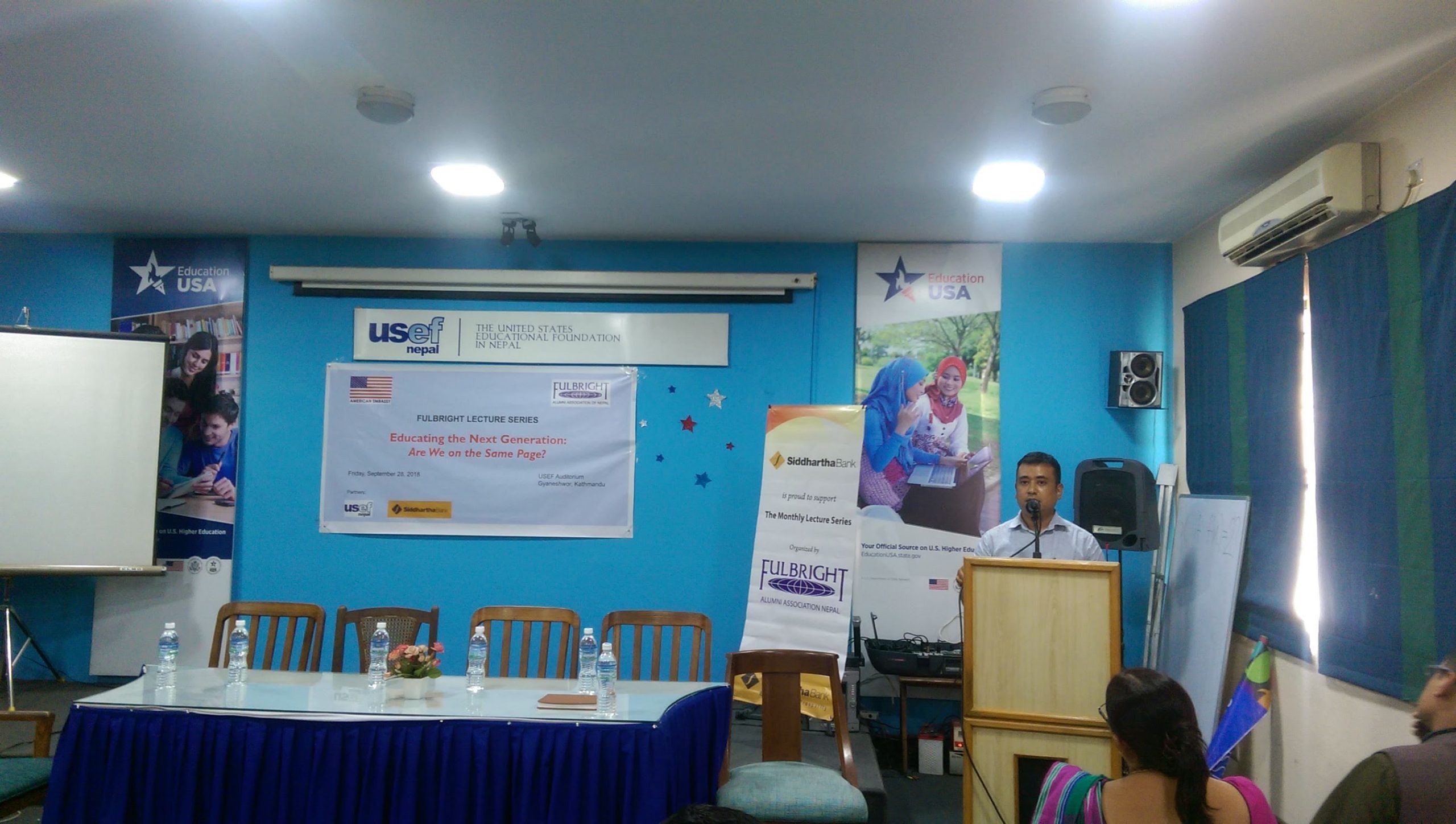
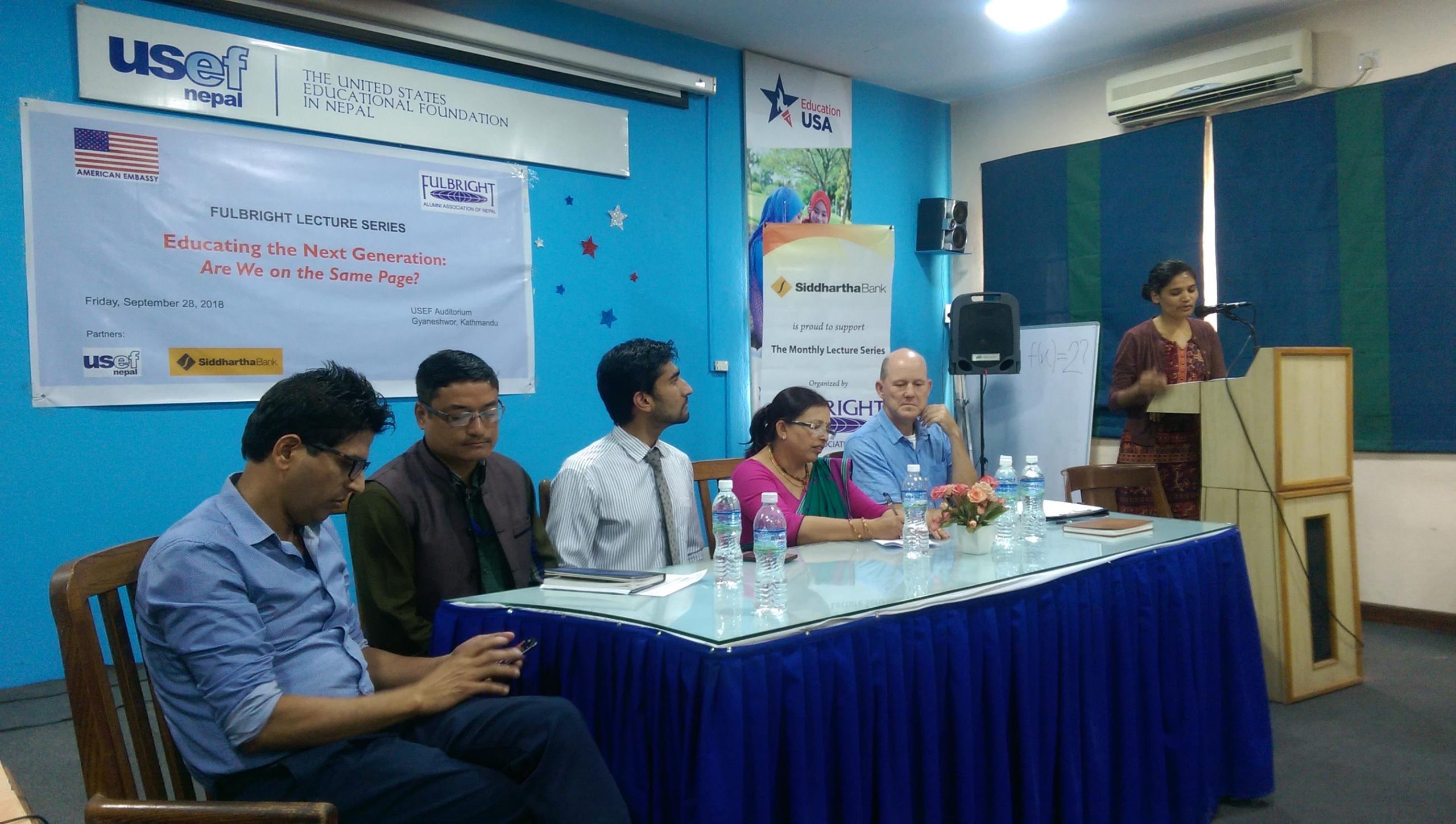
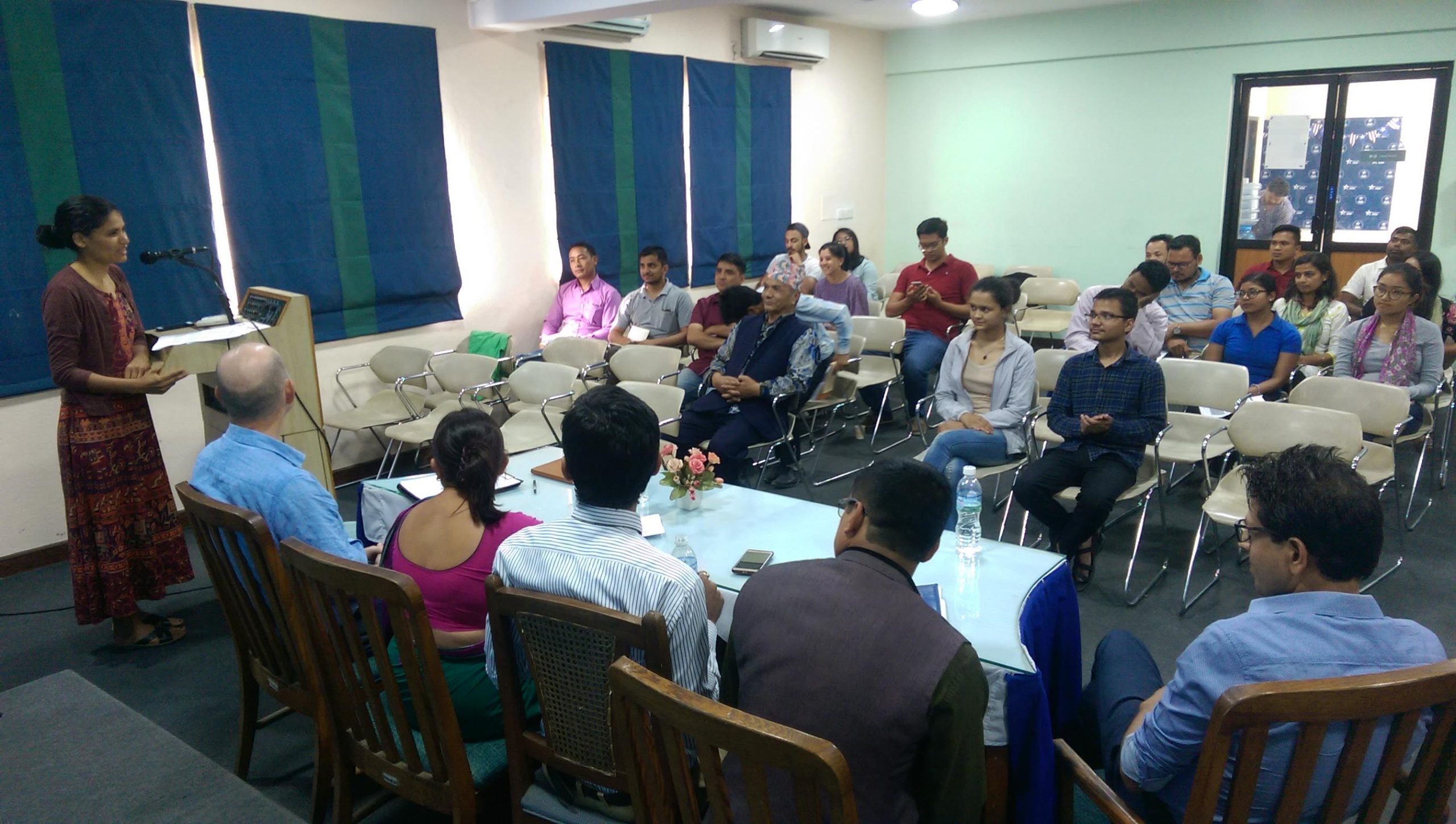
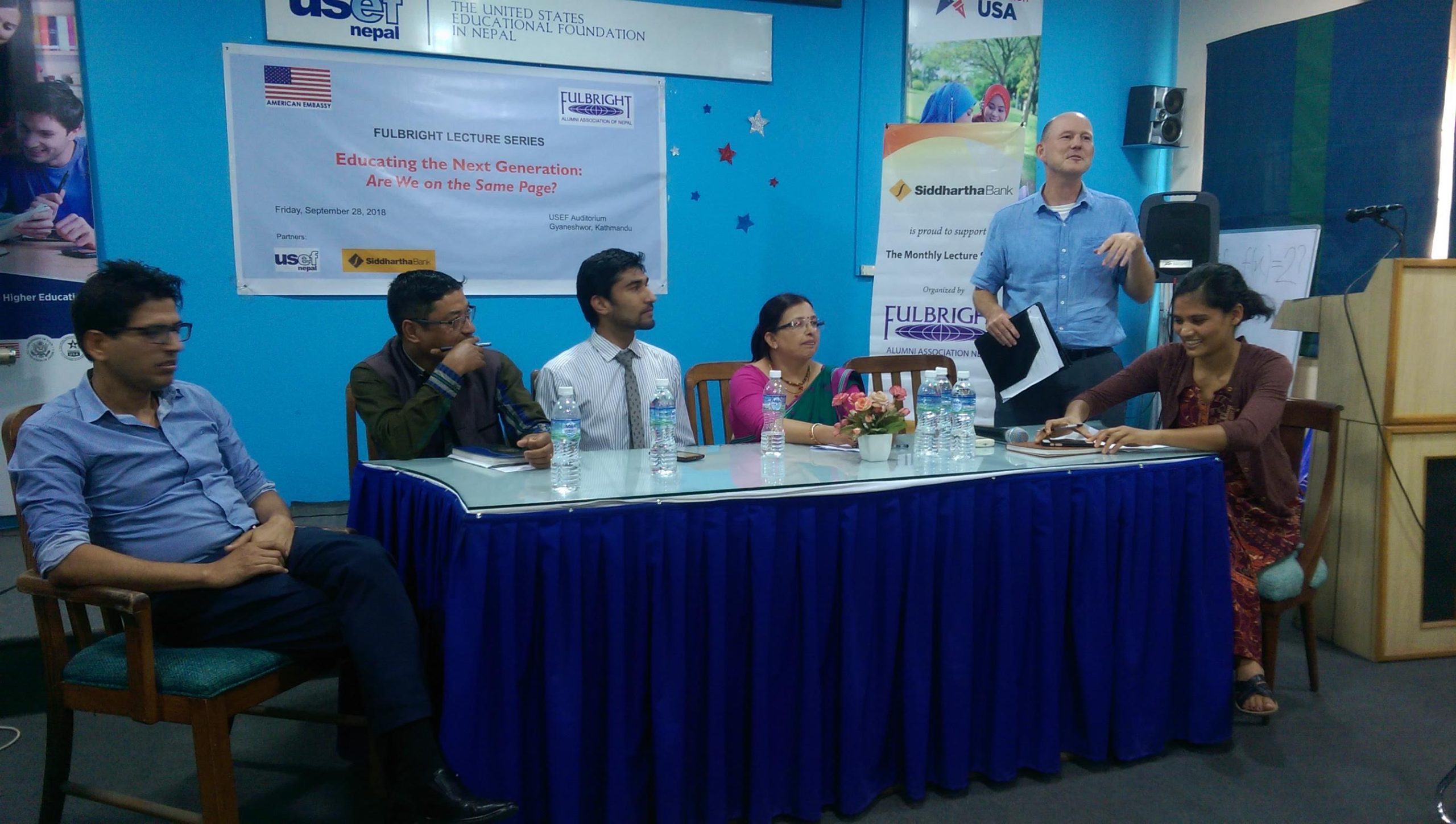
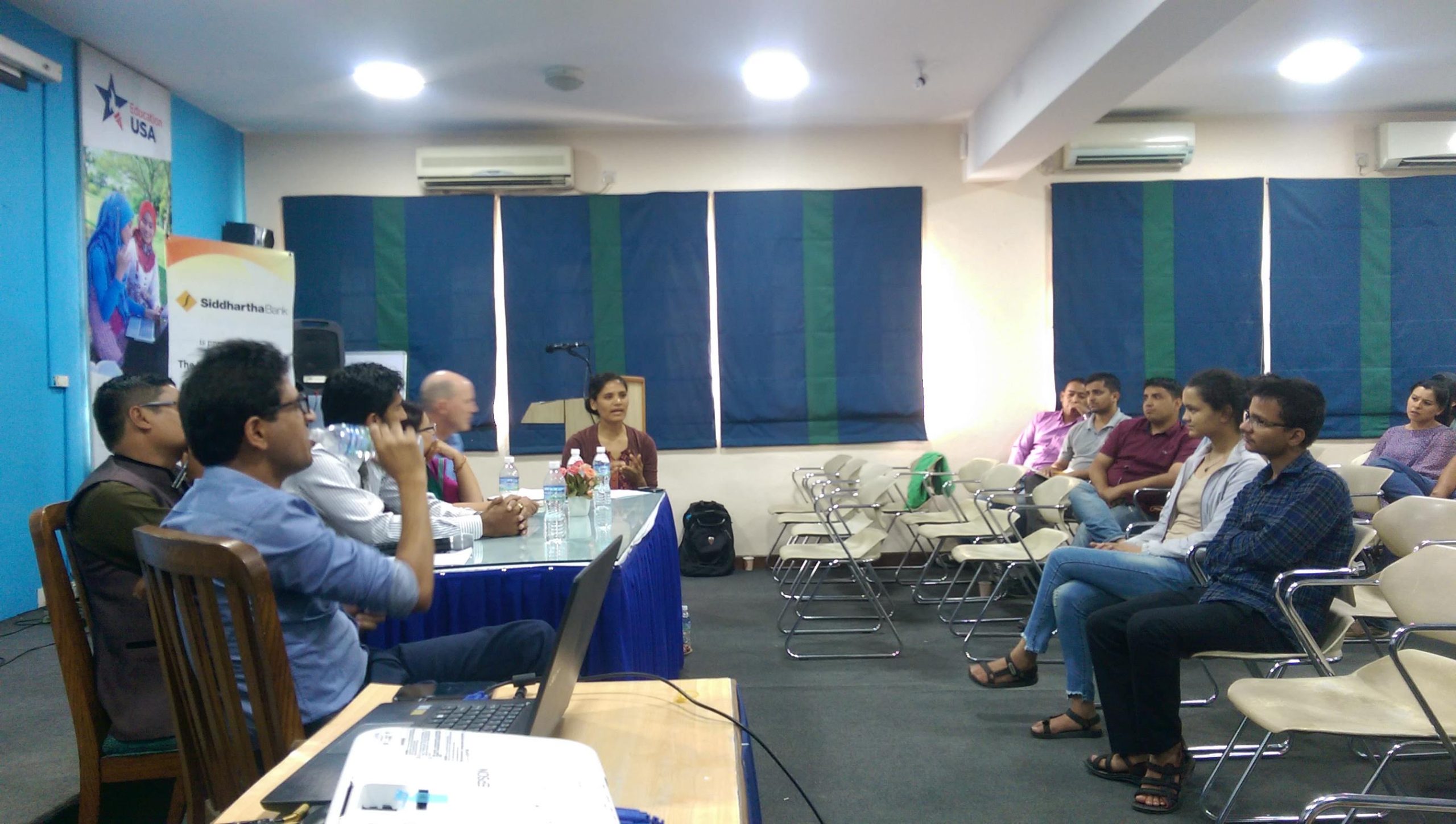
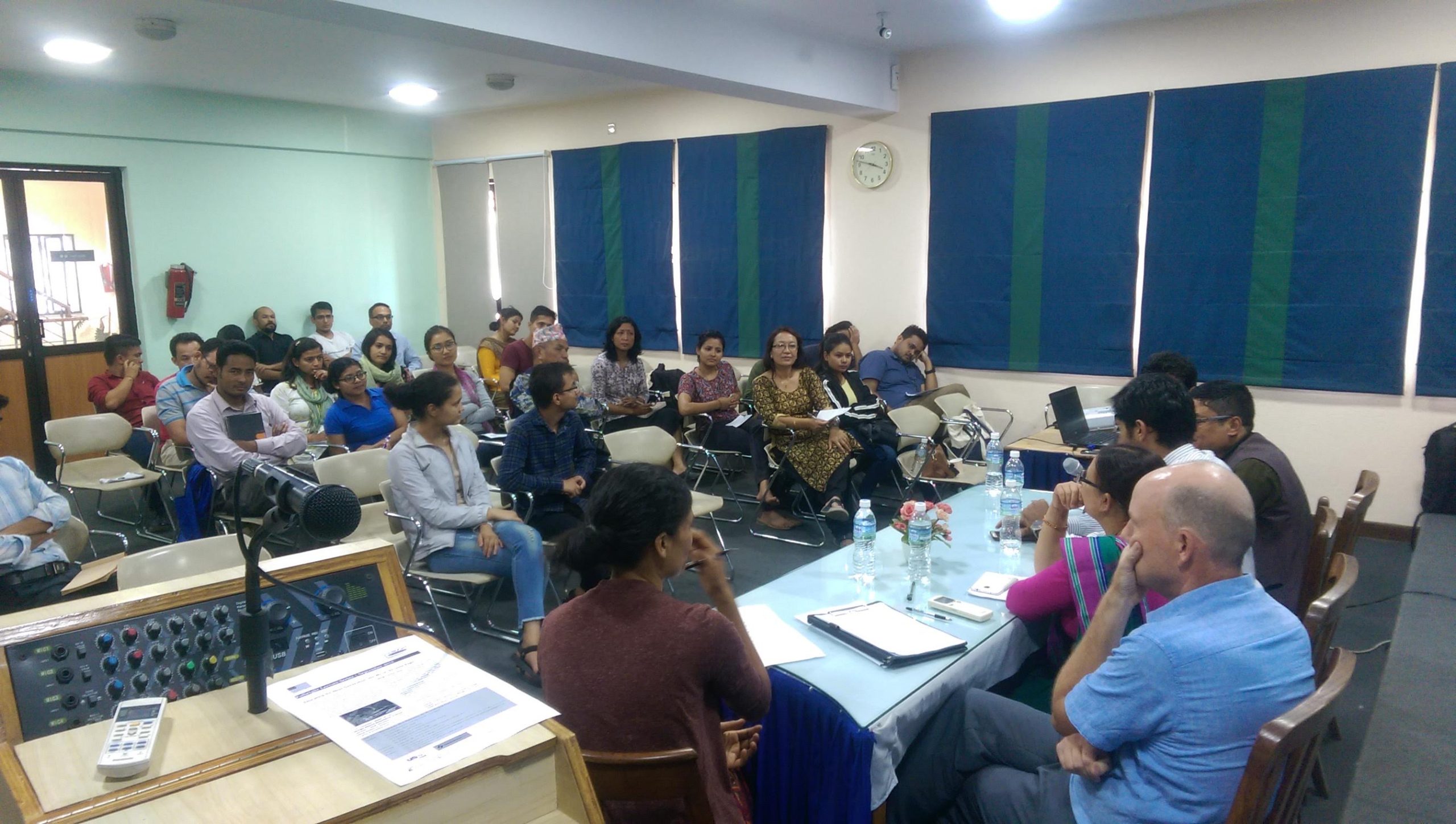
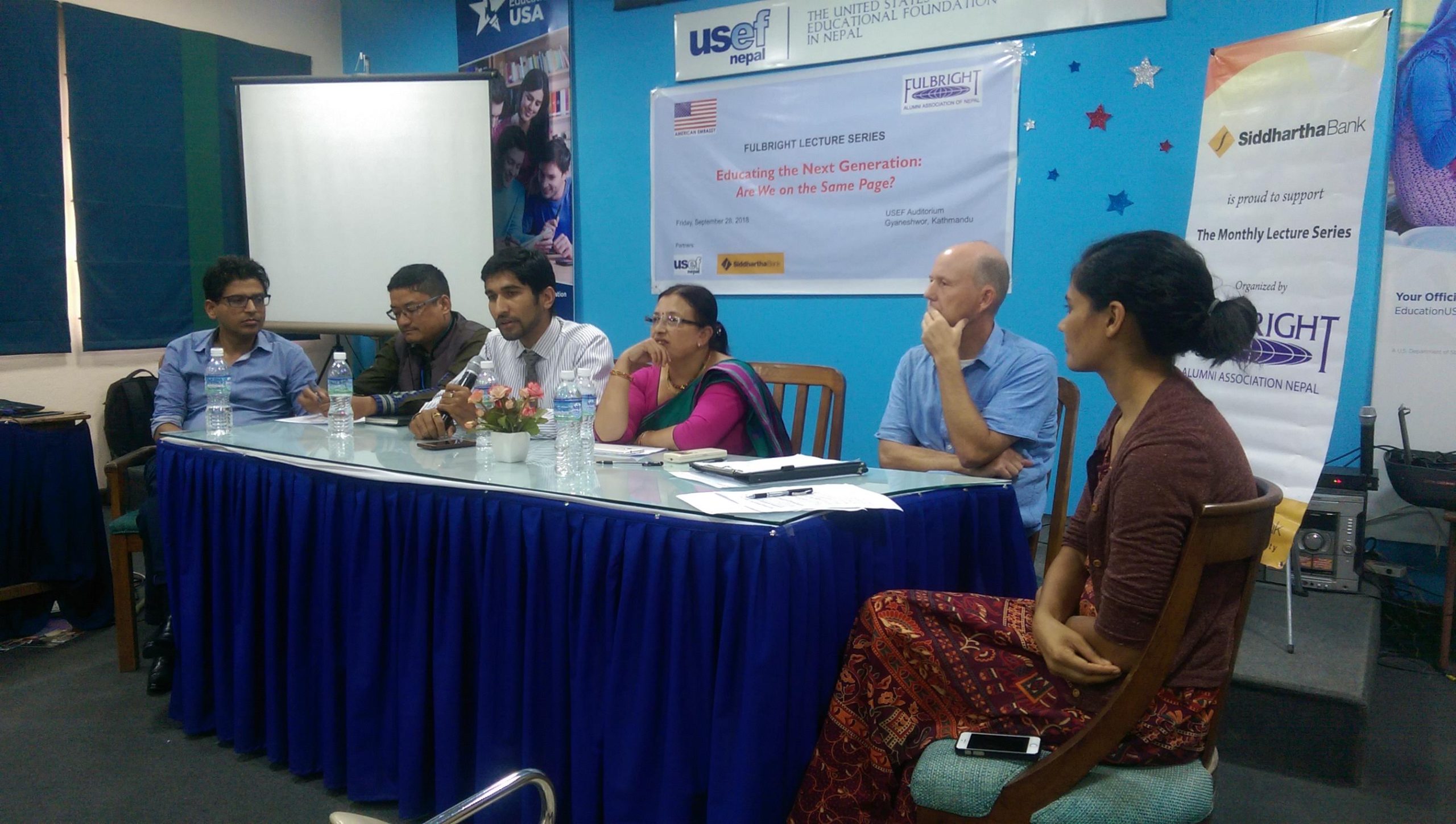
In the September 2018 edition of Fulbright Lecture Series, Fulbright Alumni Association of Nepal (FAAN) presented a panel discussion in Kathmandu on "Educating the Next Generation: Are We on the Same Page?" featuring Dr. Thomas Robertson, Executive Director, USEF-Nepal, Ms. Gita Kafle of Nandi School, Mr. Udit Bhatta of Vajra Academy, Mr. Niroj Shrestha of A School for Community, Pharping, and Mr. Narottam Aryal of King’s College as panelists.
Ms. Rashmi KC, Life Member of FAAN, moderated the discussion.
The program started with a welcome speech by Dr. Kirti K. Joshi, General Secretary of FAAN. The panelists shared their views, philosophies, and initiatives in educating our next generation.
Supported by the U.S. Embassy in Nepal (under Enriching by Outreaching project), the event was organized in partnership with USEF-Nepal and Siddhartha Bank. The event took place at USEF-Nepal Auditorium, Gyaneshwor.
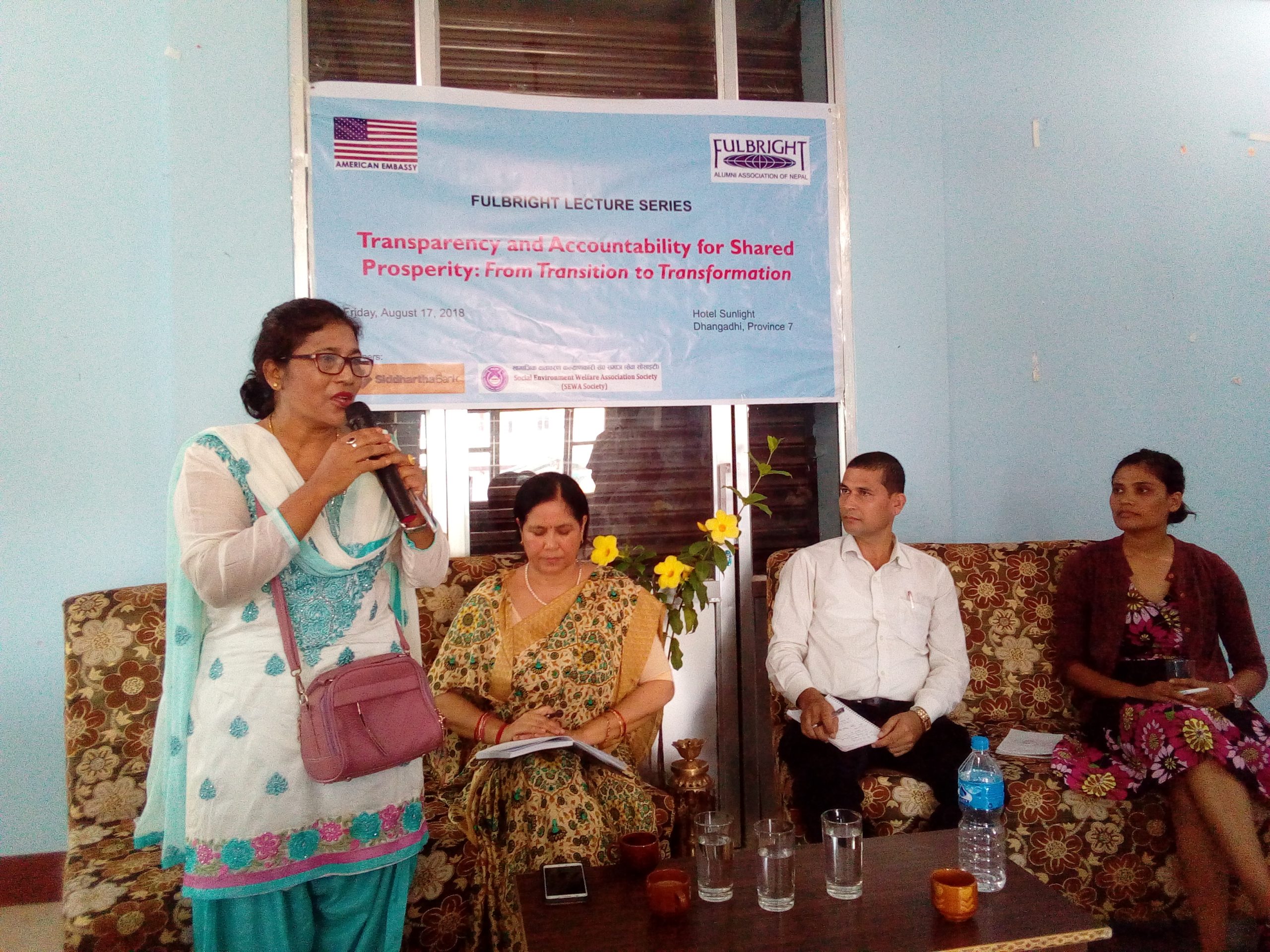
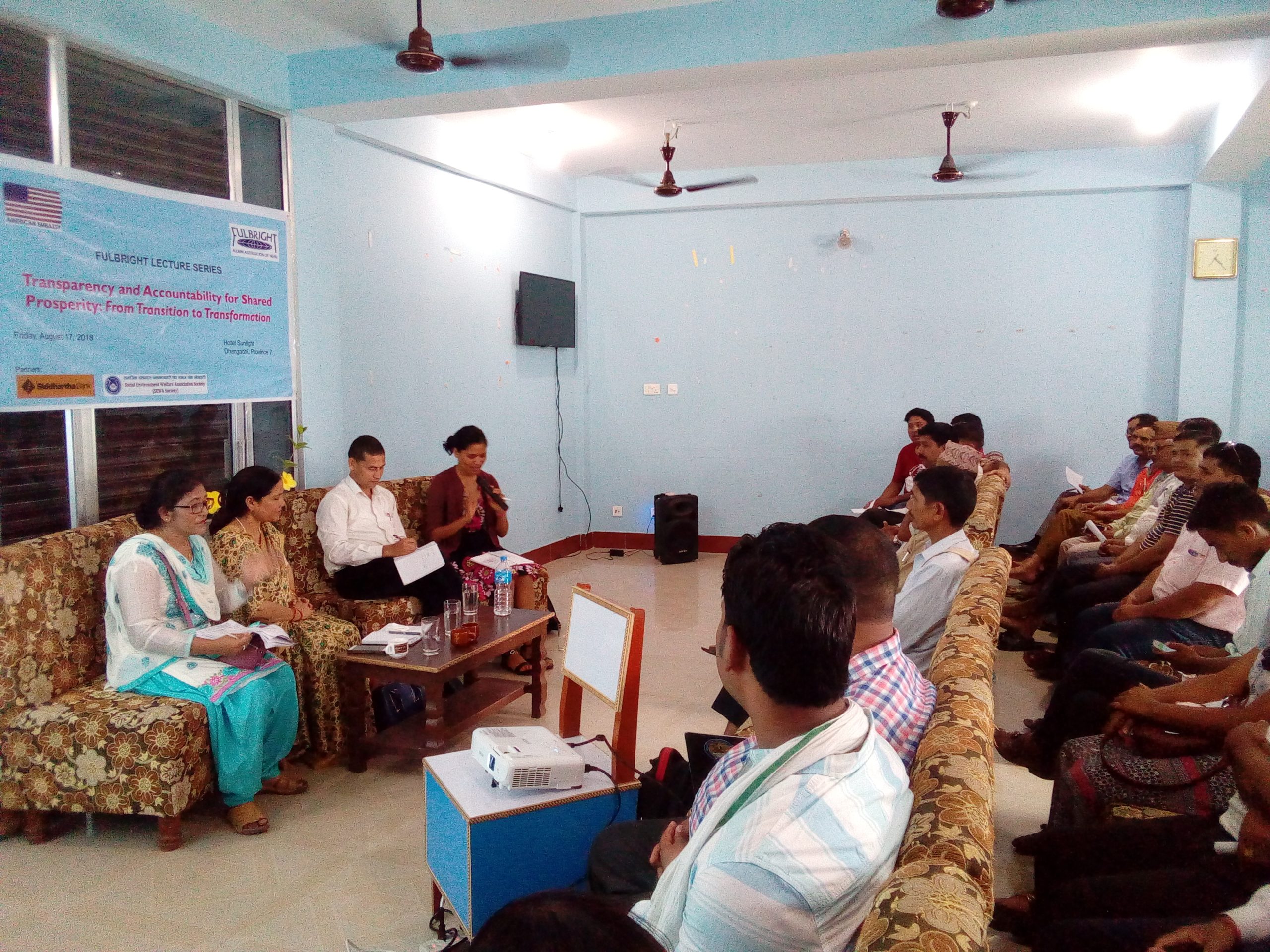
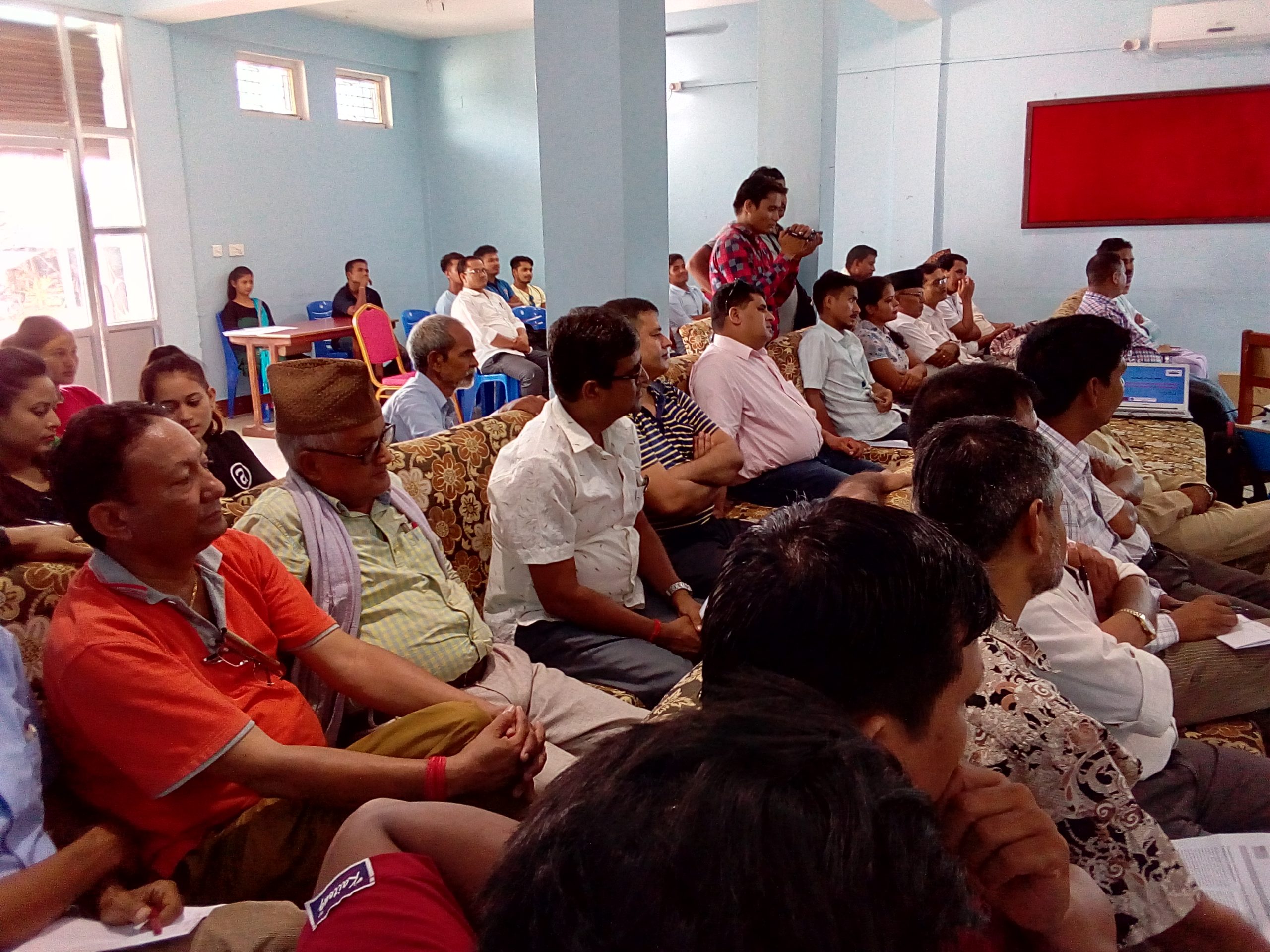
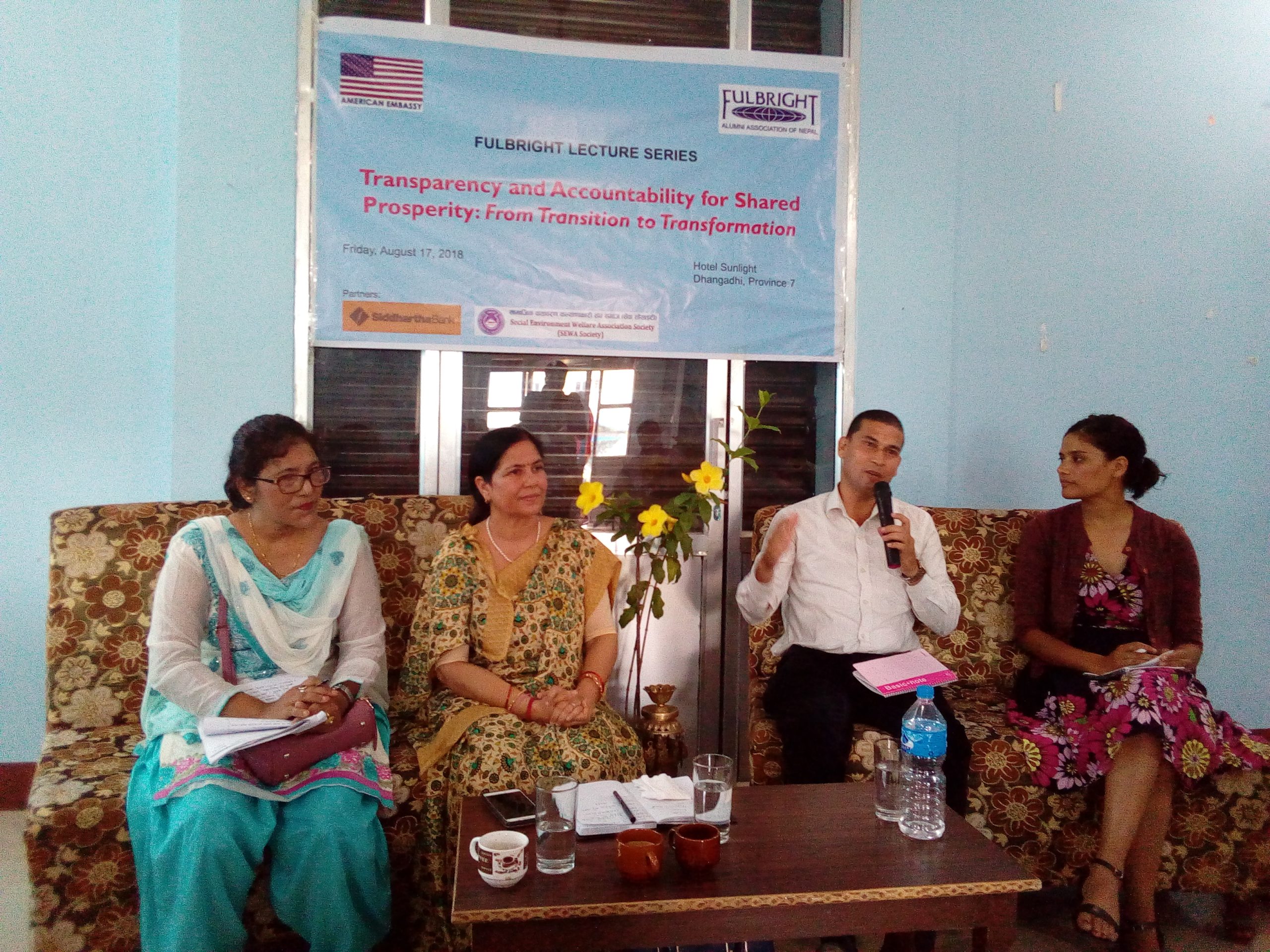
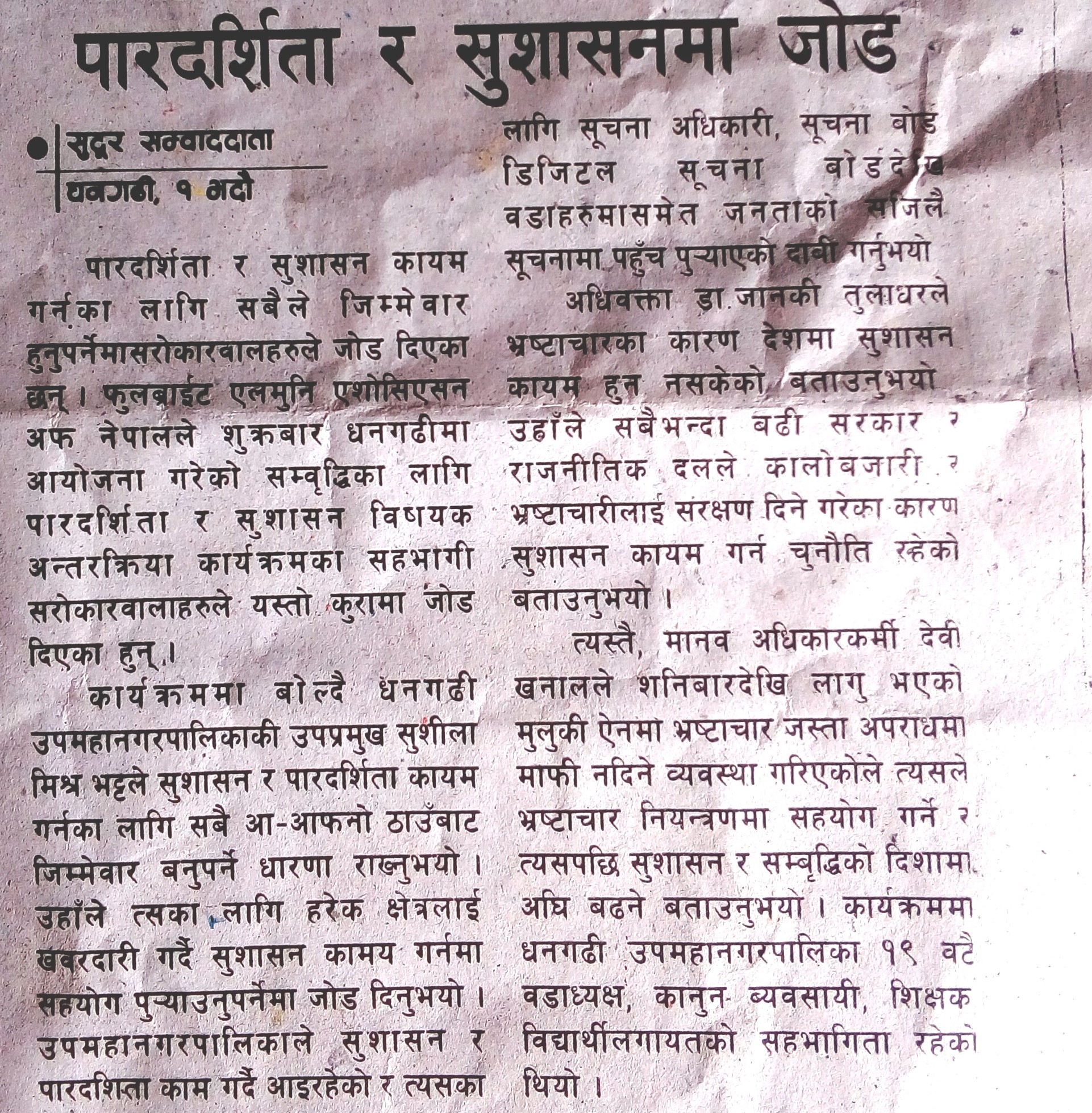
In the August 2018 edition of Fulbright Lecture Series, Fulbright Alumni Association of Nepal (FAAN) presented a panel discussion in Pokhara on "Transparency and Accountability for Shared Prosperity: From Transition to Transformation" featuring Ms. Sushila Mishra Bhatt, Deputy-Mayor, Dhangadhi Sub-Metropolitan City, Dr. Janaki Tuladhar, Lawyer/social activist; Sub-Secretary, District Bar Kailali, and Mr. Debi Khanal, Human rights activist; Vice-President, NGO Federation Province 7 as panelists.
Ms. Rashmi KC, Life Member of FAAN, moderated the discussion. Mr. Bikal Shrestha, IVLP alum, contributed as the event coordinator.
Panelist Dr. Janaki Tuladhar introduced transparency and accountability through a brief presentation to get the panel discussion started. After that the moderator asked questions to the panelists on the concept of transparency and accountability, opportunities and challenges in the current federal transition, and day-to-day practices of Dhangadhi Sub-Metropolitan City, NGOs and District Bar, Kailali. The panelists agreed that Dhangadhi is one of the best examples of transparent and accountable local governments.
After the discussion, participants actively asked many questions to the panelists on local level issues related to transparency and accountability. The majority of the questions were directed to the Deputy Mayor. She responded to the questions very eloquently and made promises to improve the scenario of education in the sub-metropolitan city.
Supported by the U.S. Embassy in Nepal (under Enriching by Outreaching project), the event was organized in partnership with Siddhartha Bank Limited with management support from local partner Social Environment Welfare Association Society (SEWA Society), Dhangadhi. The event took place at The Sunlight Hotel, Dhangadhi.

In the July 2018 edition of Fulbright Lecture Series, Fulbright Alumni Association of Nepal (FAAN) presented a panel discussion in Pokhara on "Cultural Heritage in a Changing Society: What Future Does Our Past Have?" featuring Mr. Tirtha Shrestha, poet, culturist, Ex- Member Secretary of Nepal Academy of Fine Arts, Secretary of Bindhyabasini Dharmik Pratisthan; Mr. Tulsi Prabhas, culture researcher; Mr. Minkaji Gurung, culturist (Gurung culture) as panelists.
Ms. Prerana Marasini, Executive Member of FAAN, moderated the discussion.
Nearly 70 people attended the program. The discussions revolved around preserving both tangible and intangible cultural heritage. Key takeaways from the discussion in panelists' words:
Mr. Tirtha Shrestha: "There’s a disconnect between culture and tourism in Nepal. It’s unfortunate that majority of the literature on culture and history are written by non-Nepalis. We haven’t really tried to see what we have. To encourage the young generation towards preserving our cultural heritage, we should give it space in school curriculum. We cannot transfer our cultural legacy to young generation by building concrete houses with imported architecture."
Mr. Tulsi Prabas: "There’s surficial attraction now seen to preserve our cultural heritage but unless we are able to connect it to people’s livelihood, we cannot see greater results in the future. There’s a need of clear policy to preserve our cultural heritage."
Mr. Minkaji Gurung: "It’s unfortunate in our community that youth invest millions of rupees to be recruited in British Army. We need to create role models so that they can stay in the country and help promote or preserve our culture. We could create a cultural village in order to preserve the diversity of Nepali cultures."
There were overwhelming questions from people from different backgrounds and age. Young students asked what the experts expected from them to contribute in the preservation. There were also questions and comments around social assimilation – for example how musical instruments played by a certain community is being used by another community to make money, and how people have embraced different food cultures.
Supported by the U.S. Embassy in Nepal (under Enriching by Outreaching project), the event was organized in partnership with Siddhartha Bank Limited with management support from local partner Pokhareli Yuwa Sanskritik Pariwar, Pokhara. The event took place at Amrit Kakshya, FNCCI Hall, Pokhara.
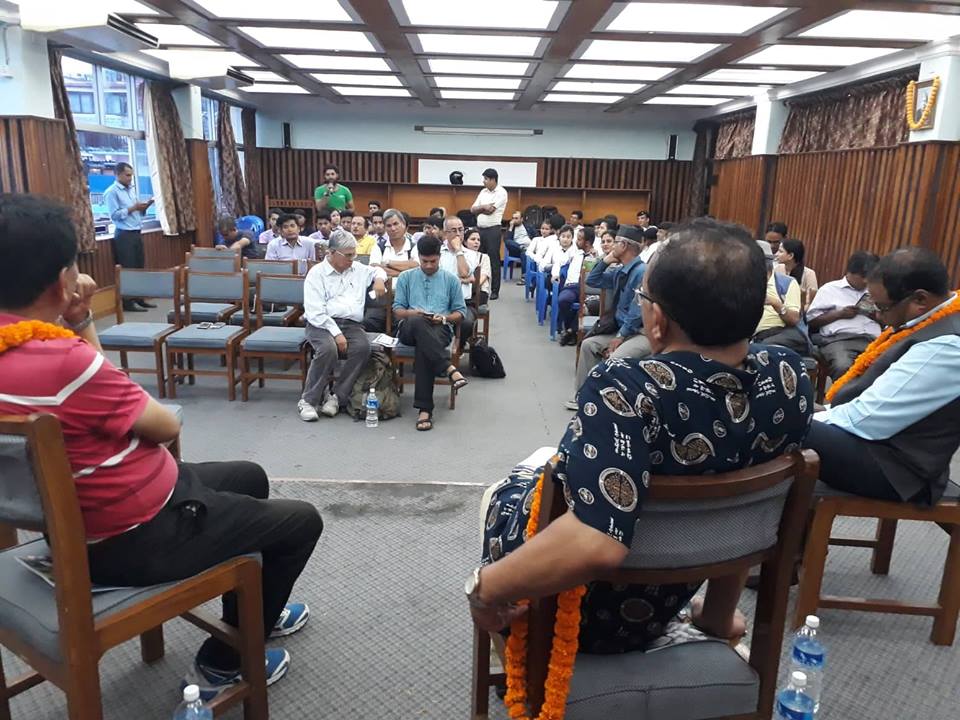
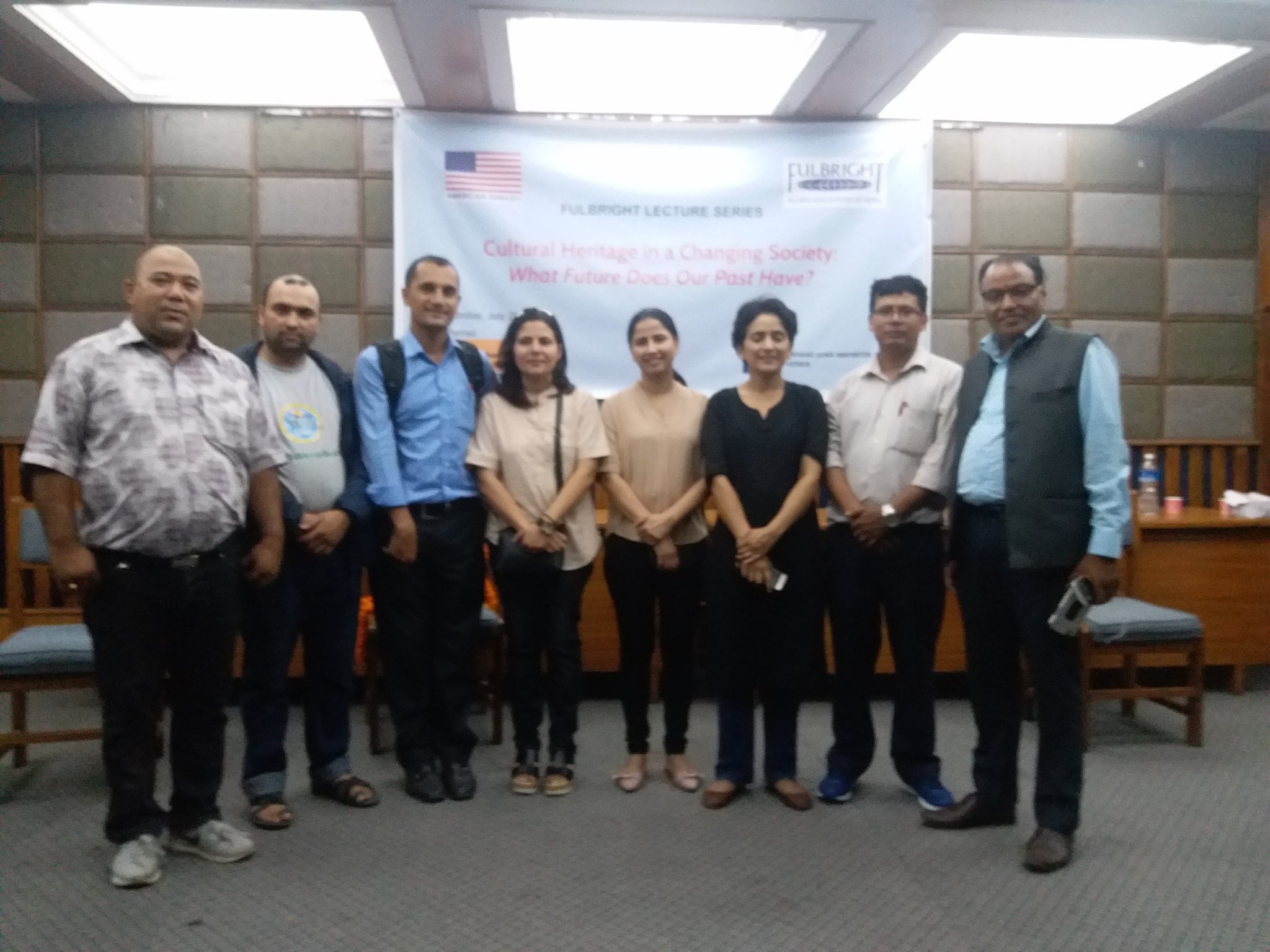
In the June 2018 edition of Fulbright Lecture Series, Fulbright Alumni Association of Nepal (FAAN) presented a panel discussion in Butwal on " Promoting Good Governance in Federal Nepal: Chasing the Elusive Dream" featuring Dr. Man B.K., Secretary for State Assembly of State No. 5 (Joint Secretary, Government of Nepal)/ Fulbright Visiting Scholar (2016-17), Mr. Ramesh Adhikari, Member, Provincial Planning Commission/ Retired Joint Secretary, Government of Nepal/ IVLP Alumni, and Mr. Bishnu Khanal, Senior Officer, Butwal Sub-metropolitan City as panelists.
Ms. Rashmi KC, Life Member of FAAN, moderated the discussion.
Discussions and question-answer sessions covered the concept of good governance, opportunities and challenges in the current federal transition, and day-to-day practices of Province 5 and Butwal sub-metropolitan city. The panelists shared their expertise, knowledge and experiences which made the discussion very rich. The discussion ended with the conclusion that good governance has its own challenges in the current context, but if we trust each other and build skilled human resources with values and morals, good governance will not be an elusive dream but rather a reality.
Supported by the U.S. Embassy in Nepal (under Enriching by Outreaching project), the event was organized in partnership with the USEF-Nepal and Siddhartha Bank Limited with management support from local partner National Institute of Entrepreneurship Development. The event took place at Hotel Siddhartha Cottage, Butwal.
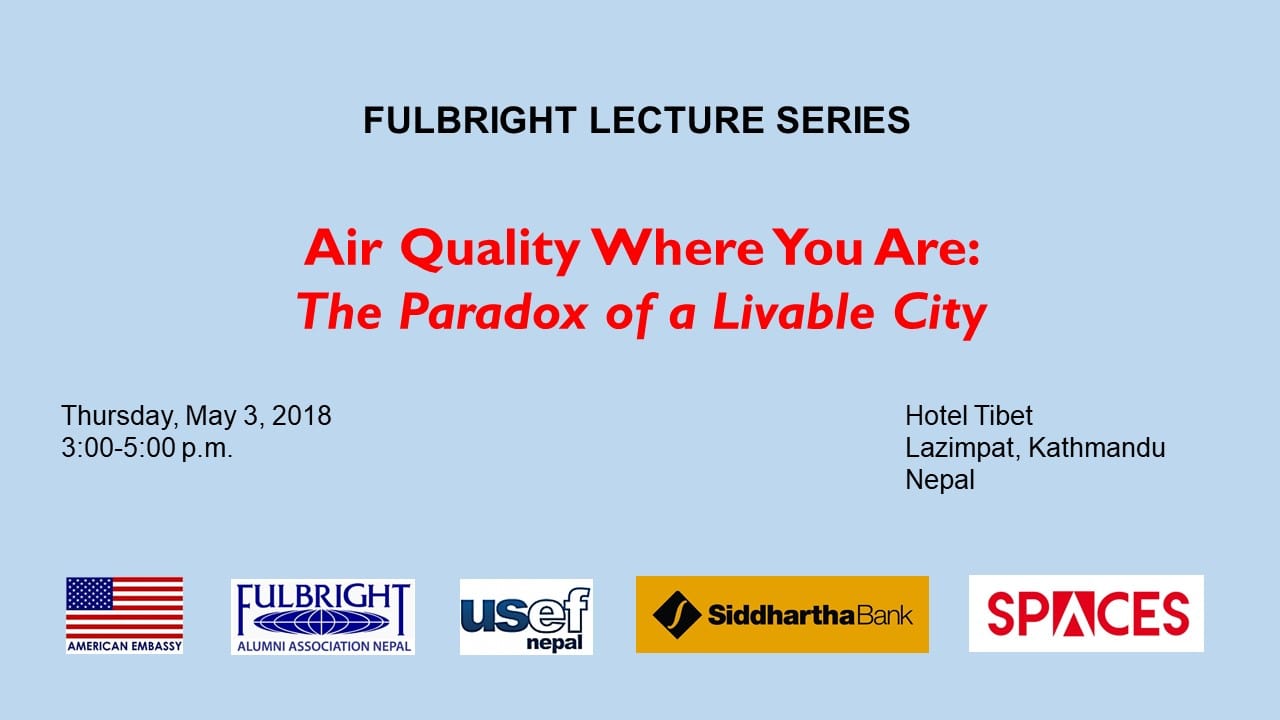
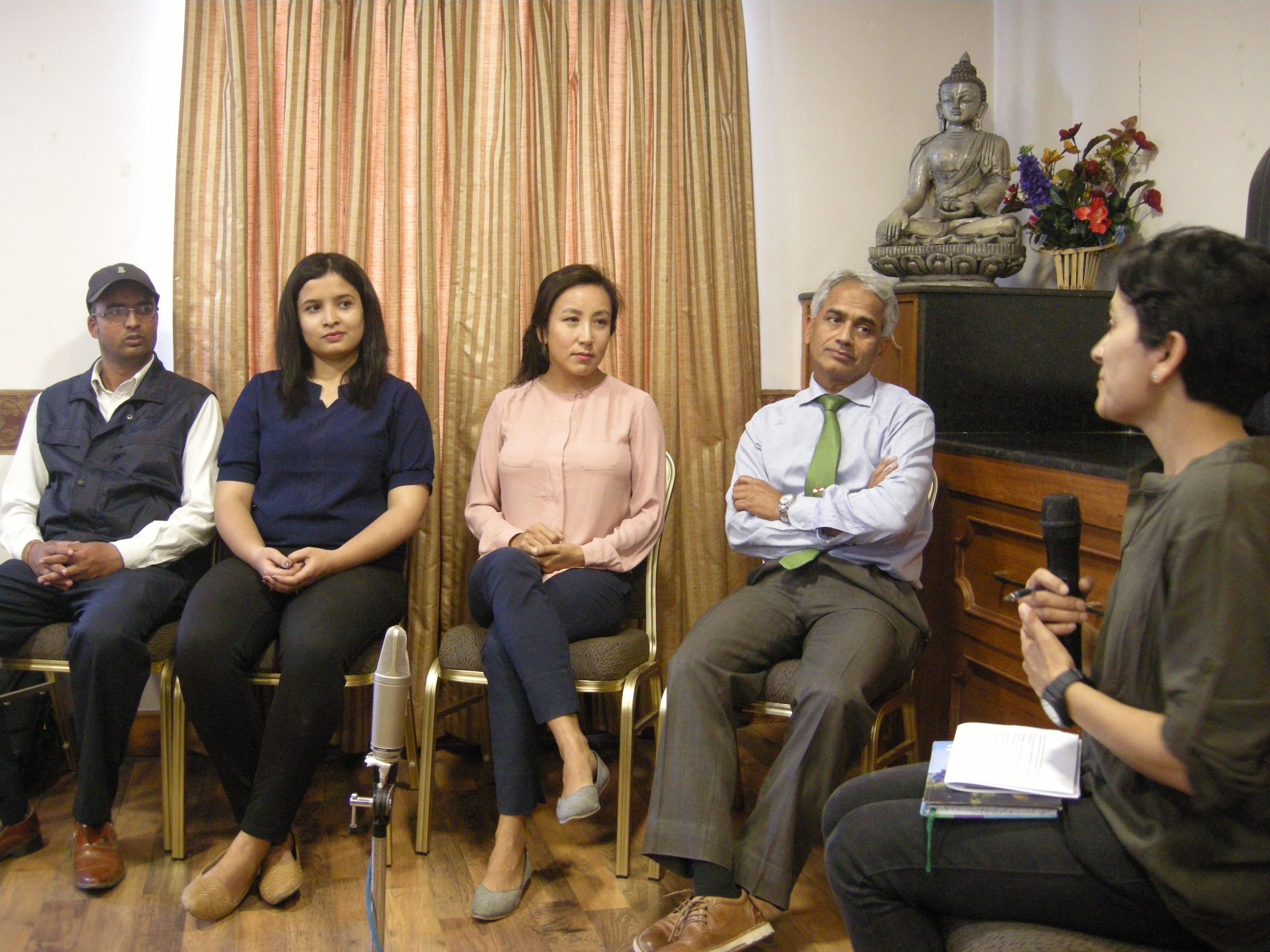
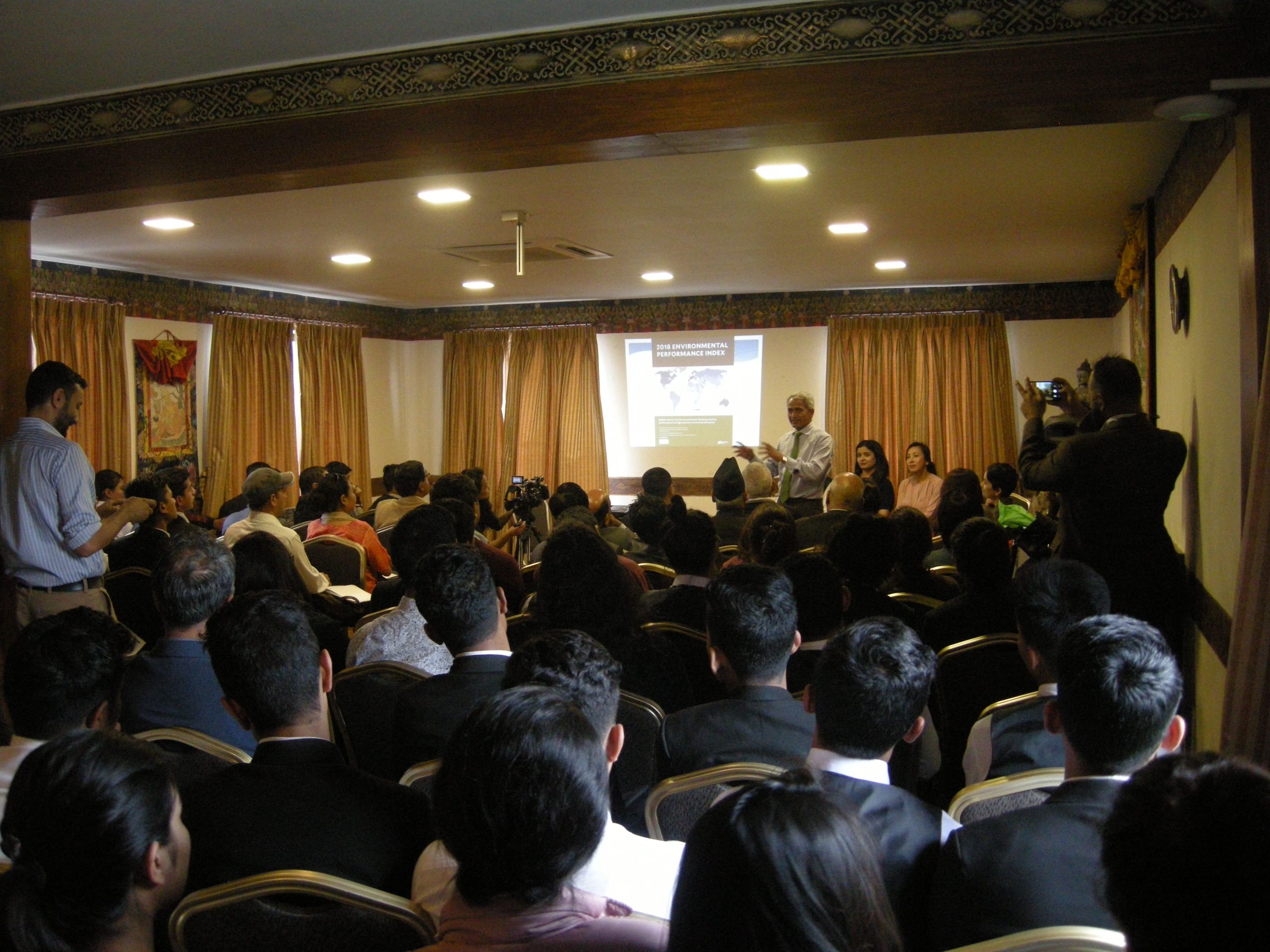
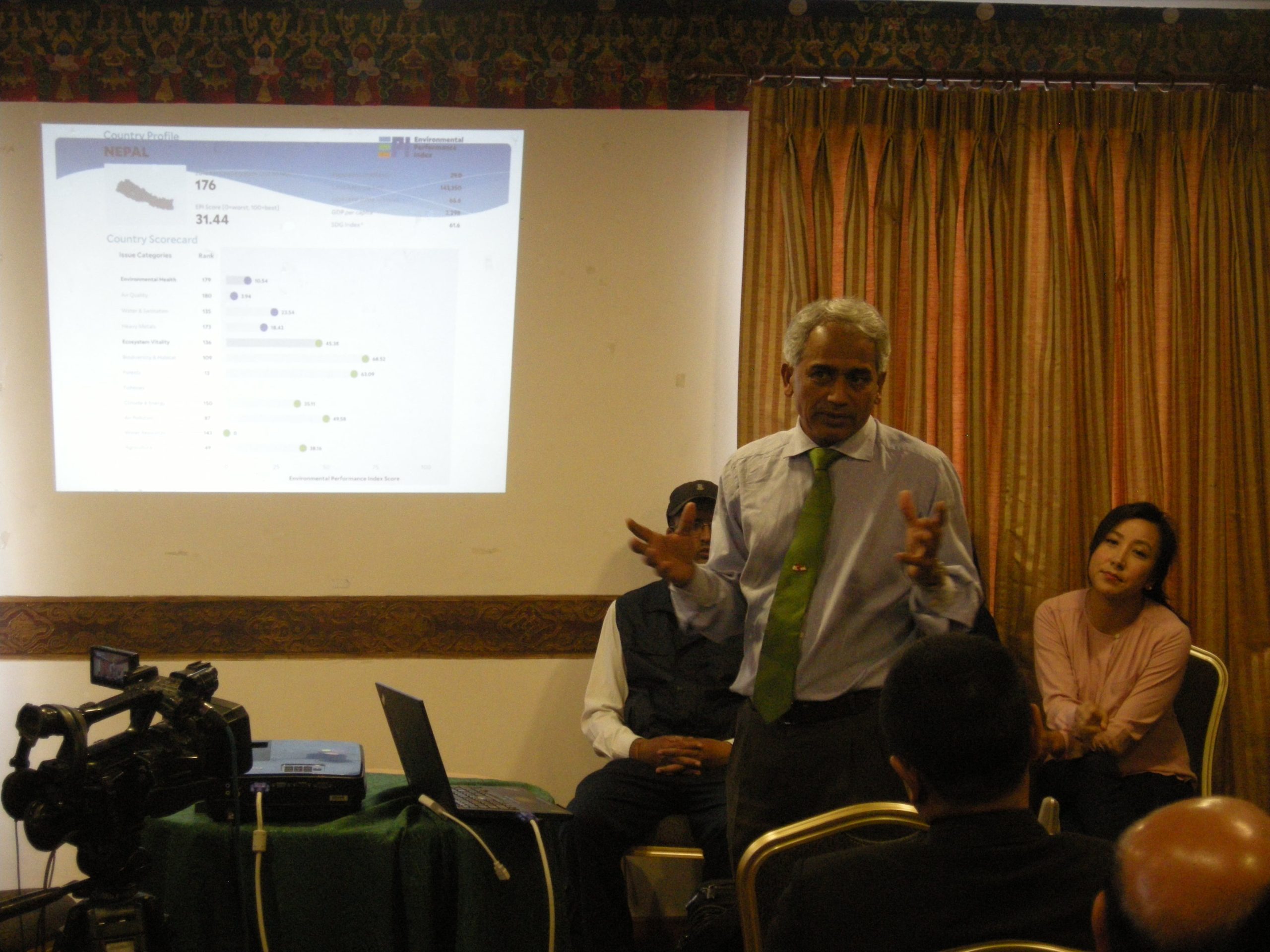
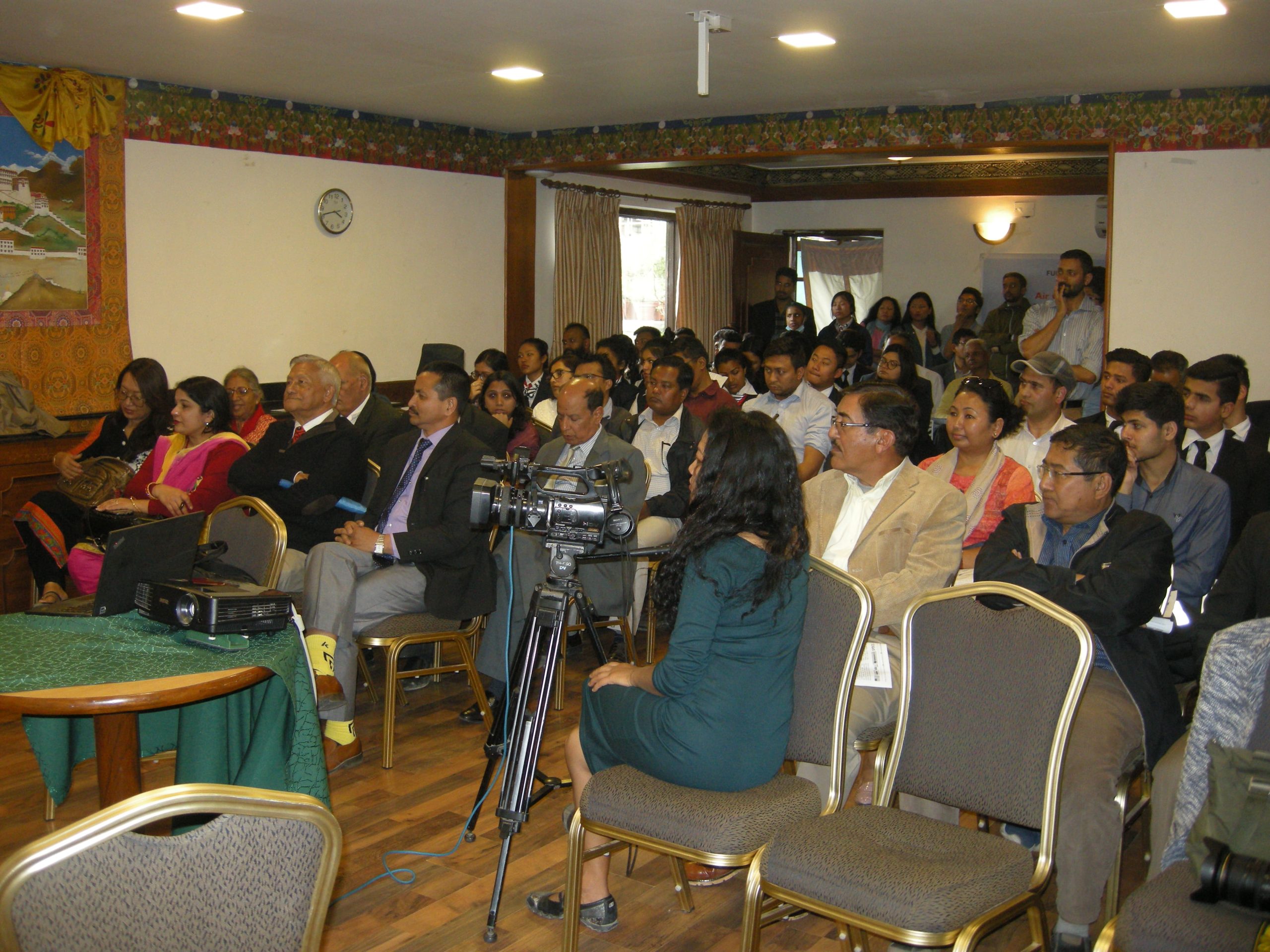
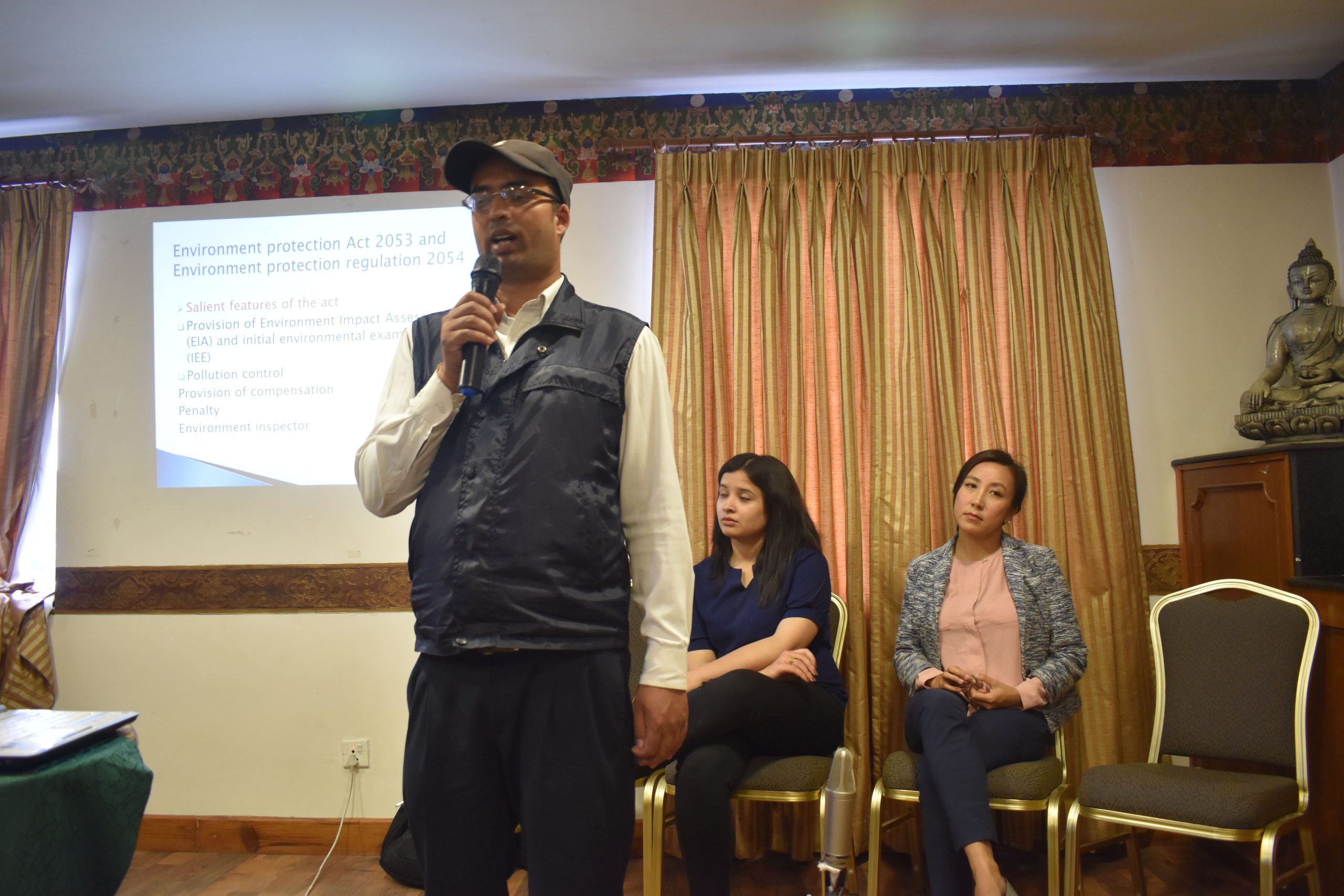
https://www.youtube.com/watch?v=RdKO4B77WYkIn the May 2018 edition of Fulbright Lecture Series, Fulbright Alumni Association of Nepal (FAAN) presented a panel discussion on "Air Quality Where You Are: The Paradox of a Livable City" coinciding with the Air Quality Awareness Week (April 30 to May 4).
The panelists included Dr. Bhagawan Koirala, Professor & Chief Cardiac Surgeon, MCVTC, TUTH, Mr. Govinda P. Lamichhane, Environment Inspector, Dept. of Environment, Ministry of Forest and Environment, Dr. Anobha Gurung, Postdoctoral Fellow, Air Pollution and Health, ICIMOD, and Ms. Nishma Adhikari, Creative Director, Bidhee Pvt Ltd.
Ms. Prerana Marasini, Media and Communications Lead, Oxfam, and FAAN EC member moderated the discussion.
Supported by the U.S. Embassy in Nepal (under Enriching by Outreaching project) and Siddhartha Bank Limited, the event was organized in partnership with the USEF-Nepal and media partner SPACES magazine The event took place at Hotel Tibet, Lazimpat.

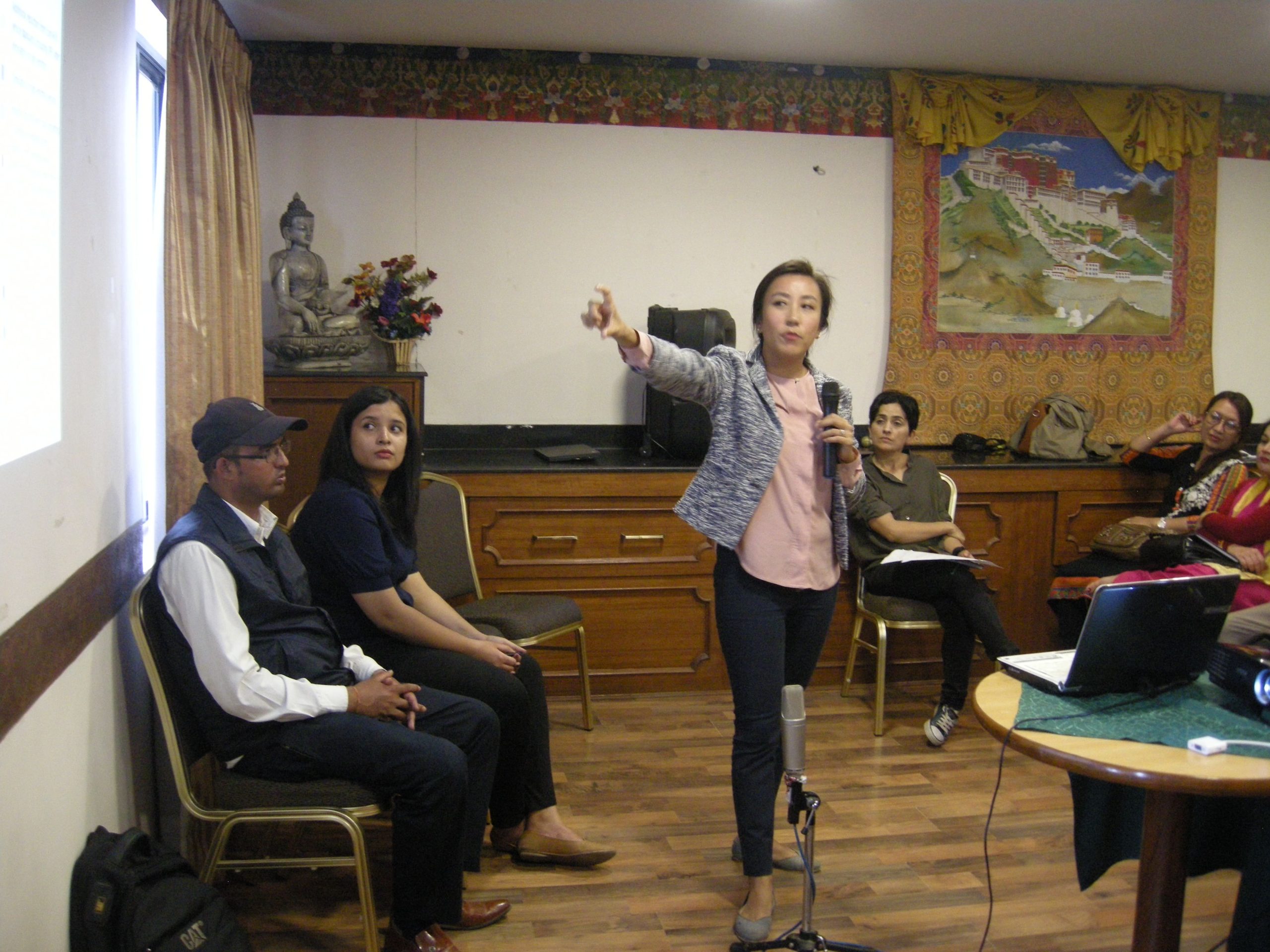
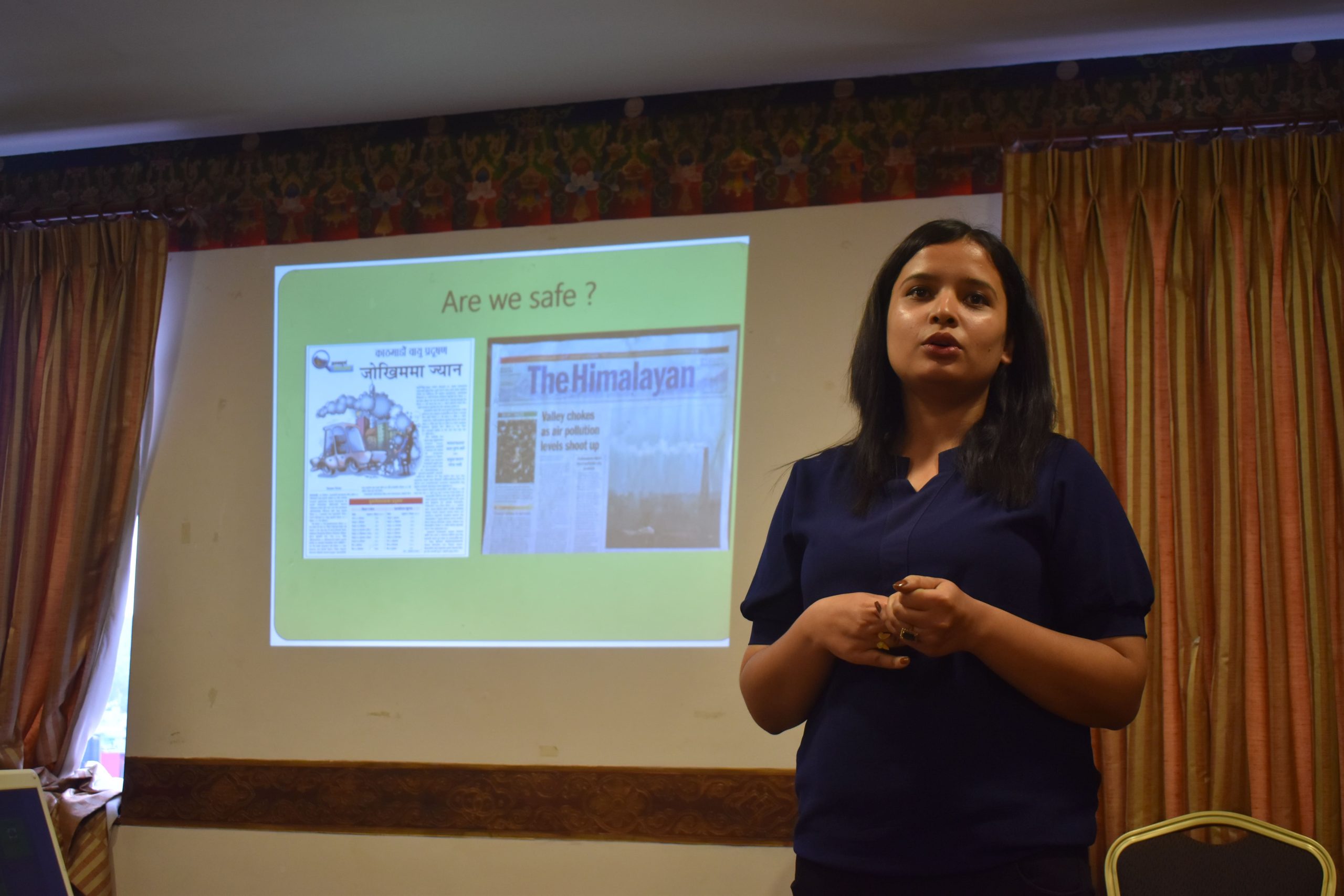
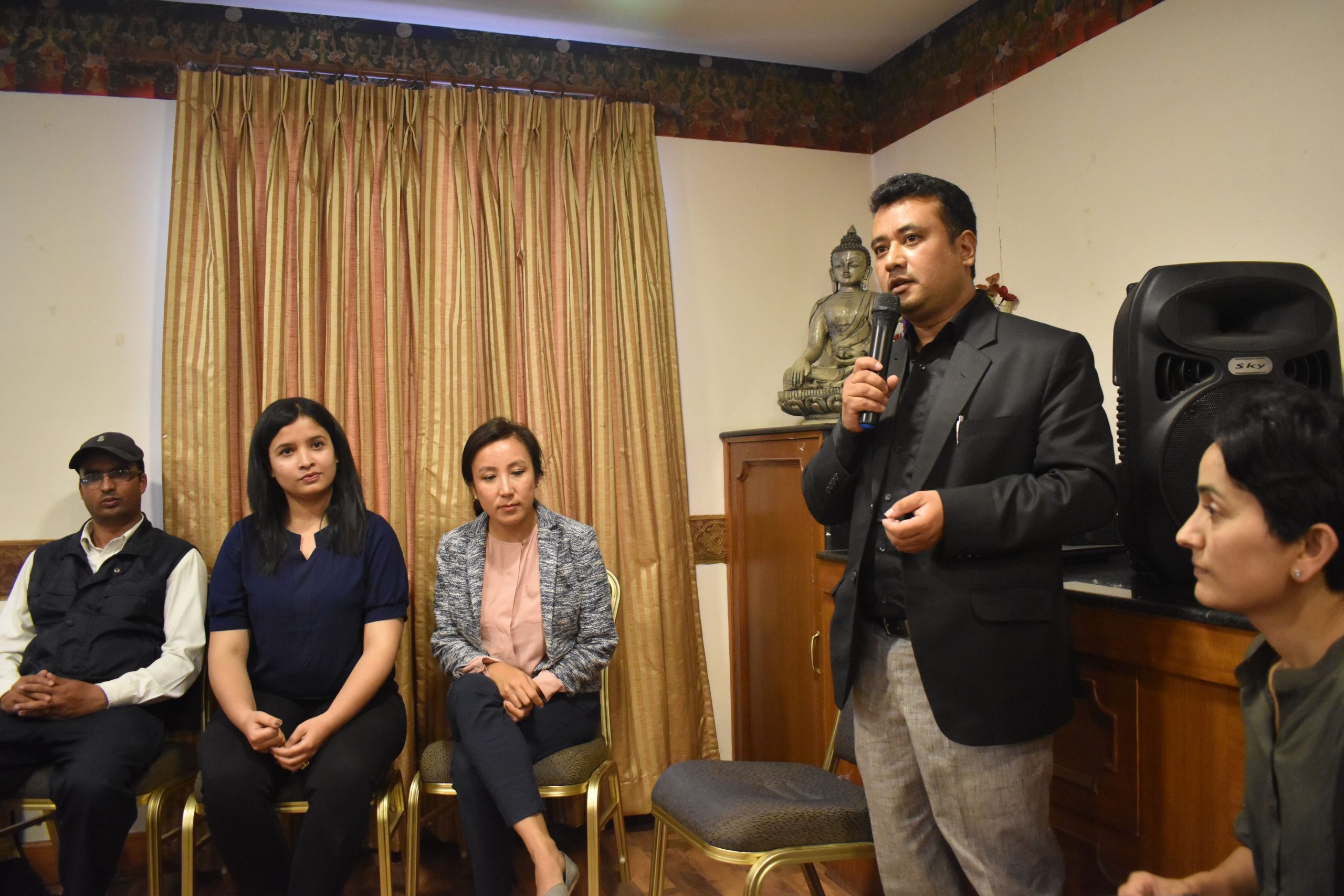
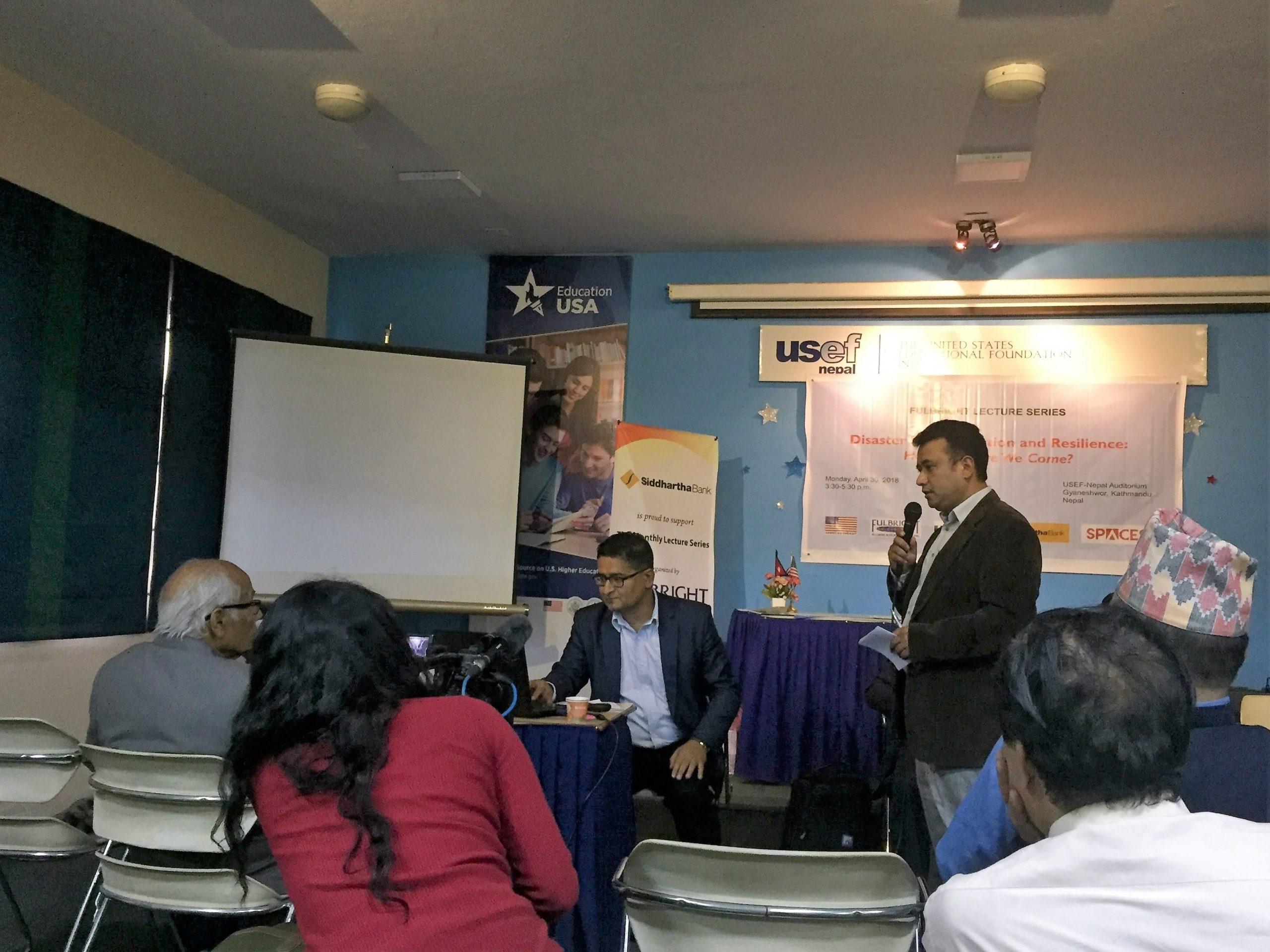
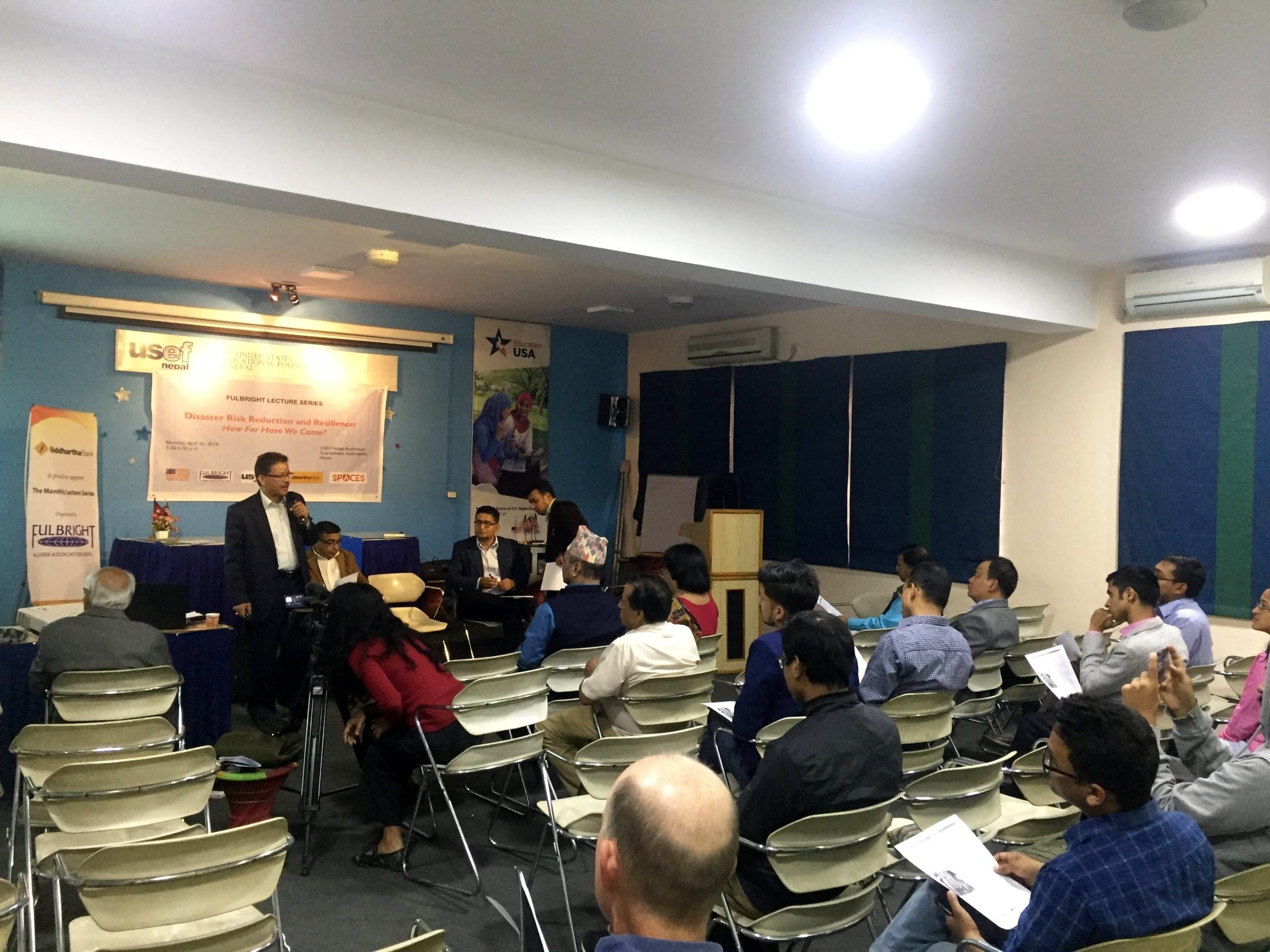
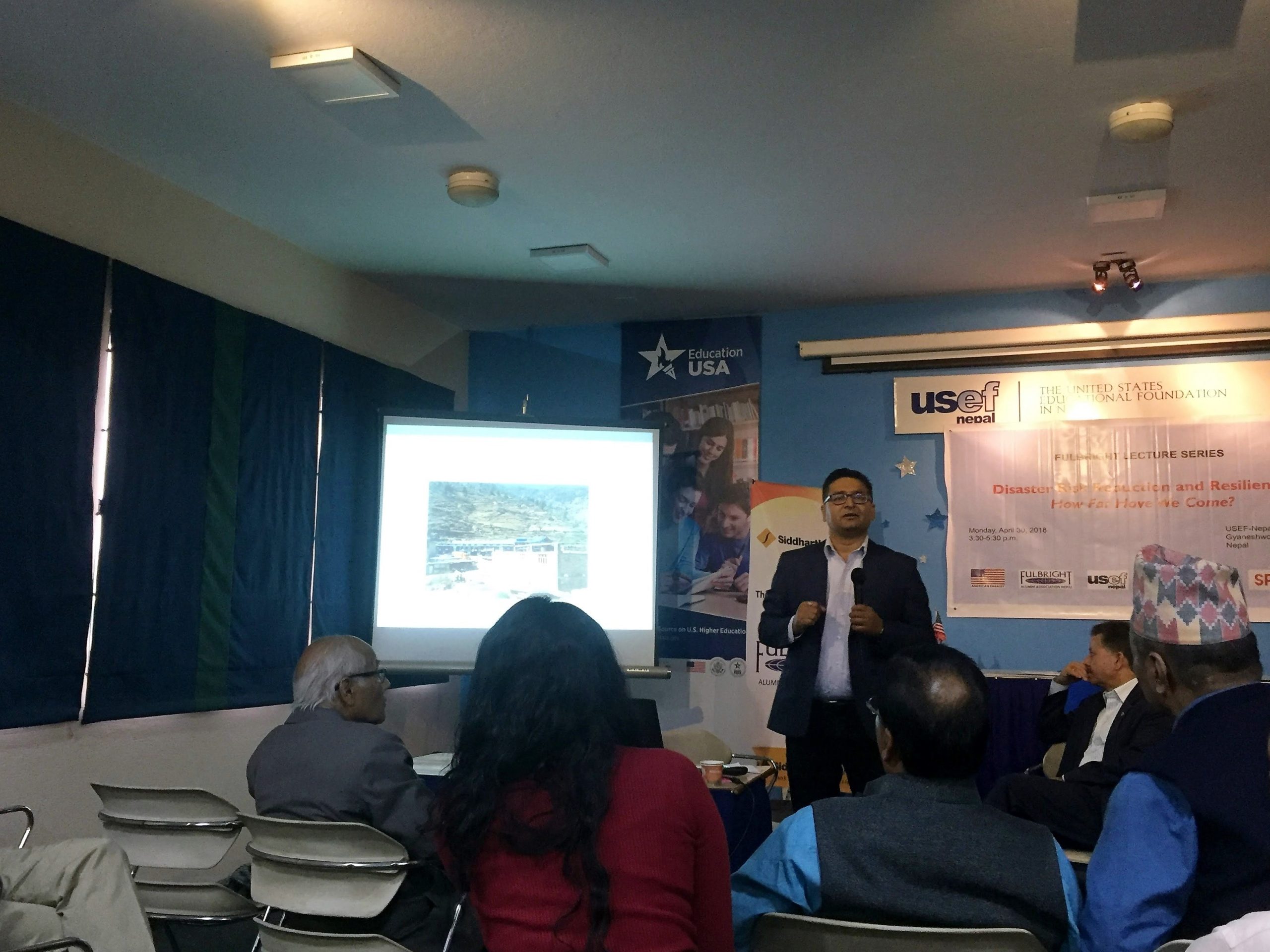
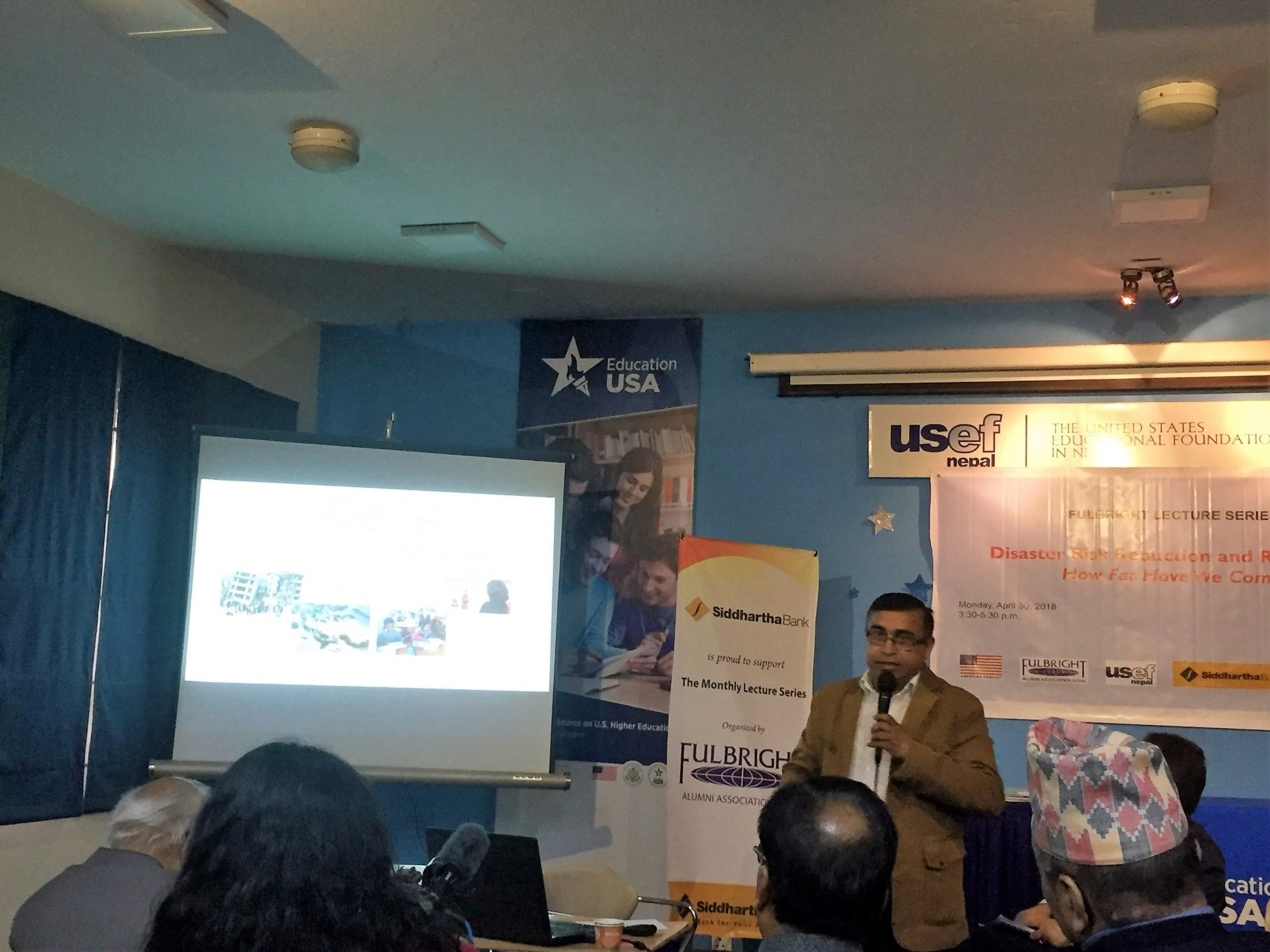
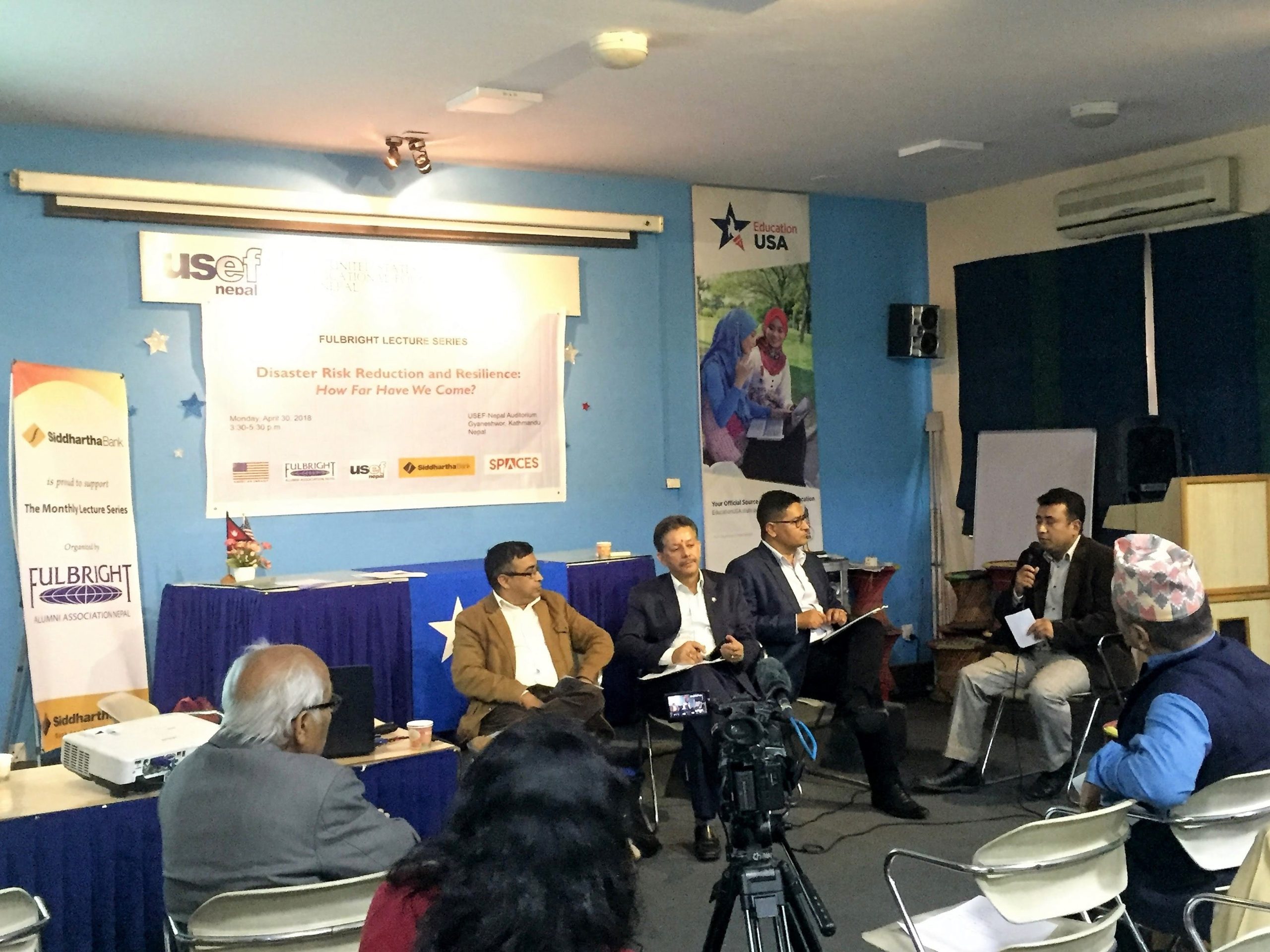
In the April 2018 edition of Fulbright Lecture Series, Fulbright Alumni Association of Nepal (FAAN) presented a panel discussion in Kathmandu on " Disaster Risk Reduction and Resilience: How Far Have We Come?" featuring Er. Tapendra B. Khadka, Project Director (Joint Secretary), CLPIU (Building), National Reconstruction Authority, Mr. Ajay Chandra Lal, Assistant Professor, Institute of Engineering; DRRM Expert, and Mr. Anil Pokhrel, Senior Risk and Adaptation Specialist, Plan8.
Dr. Kirti Kusum Joshi, General Secretary of FAAN, moderated the discussion.
Supported by the U.S. Embassy in Nepal (under Enriching by Outreaching project), the event was organized in partnership with the USEF-Nepal, Siddhartha Bank Limited, and media partner SPACES magazine The event took place at USEF-Nepal Auditorium, Gyaneshwor.
The March 2018 edition of Fulbright Lecture Series presented by Fulbright Alumni Association of Nepal (FAAN) featured the work of Samaanta Foundation, which has been providing higher education opportunities to talented but economically challenged children from different parts of the country.
Ms. Jyoti Pandey, Director of Programs at Samaanta Foundation and her team shared their inspiring story, highlighting what it means to give back to society and how it is done. Besides the works of the Foundation, Ms. Pandey also talked about the challenges to run a volunteering organization in Nepal including fundraising, sustainability, and impact assessment issues, and about measures to overcome these challenges.
Ms. Prerana Marasini, Executive Member of FAAN, moderated the discussion.
Supported by Siddhartha Bank Limited, the event was organized in partnership with USEF-Nepal. The event took place at USEF-Nepal Auditorium, Gyaneshwor.
In collaboration with Central Department of Hydrology and Meteorology (CDHM), Tribhuvan University, Fulbright Alumni Association Nepal (FAAN) organized a new episode of Fulbright Lecture Series featuring a panel discussion on ''University Education in Nepal: What are We Missing?".
The panelists included Prof. Dr. Anjana Singh (Academic Council Member, NAST), Associate Prof. Dr. Deepak Aryal, Head, CDHM, and Dr. Archana Shrestha, Senior Divisional Meteorologist, DHM as panelists.
The panelists shed light on the gaps (or opportunities to fulfill) in our university education system including, among others:
- Intellectual environment where ideas are challenged; faculties and students can agree to disagree
- Collaborative research within schools, between/among schools, and between academia and industries
- Commercialization of ideas
- Distinction between teaching and educating
- Vertical integration between primary, secondary, and university education.
Dr. Kirti Kusum Joshi, FAAN GS moderated the discussion. The event took place at CDHM Meeting Room, TU, Kirtipur.
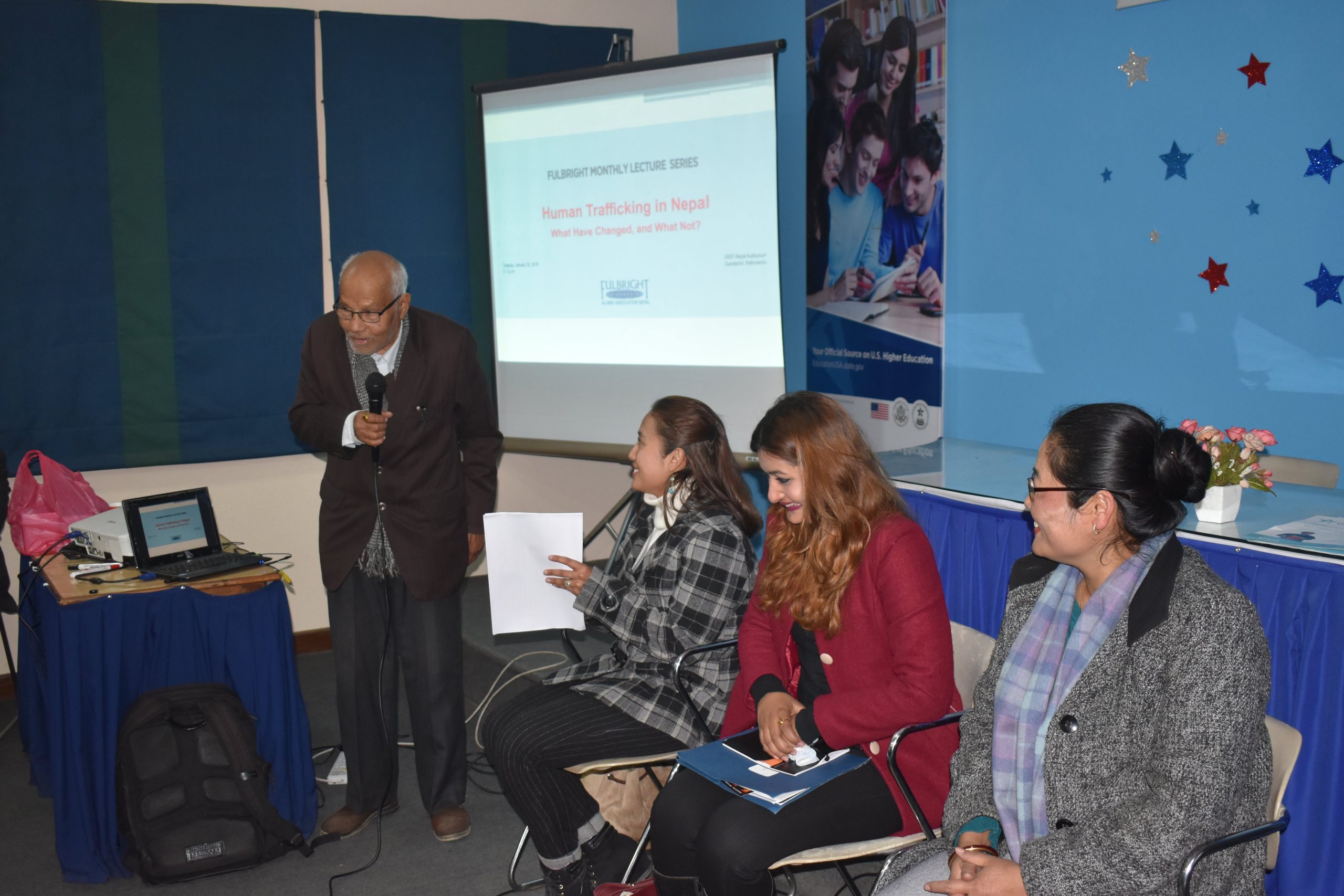
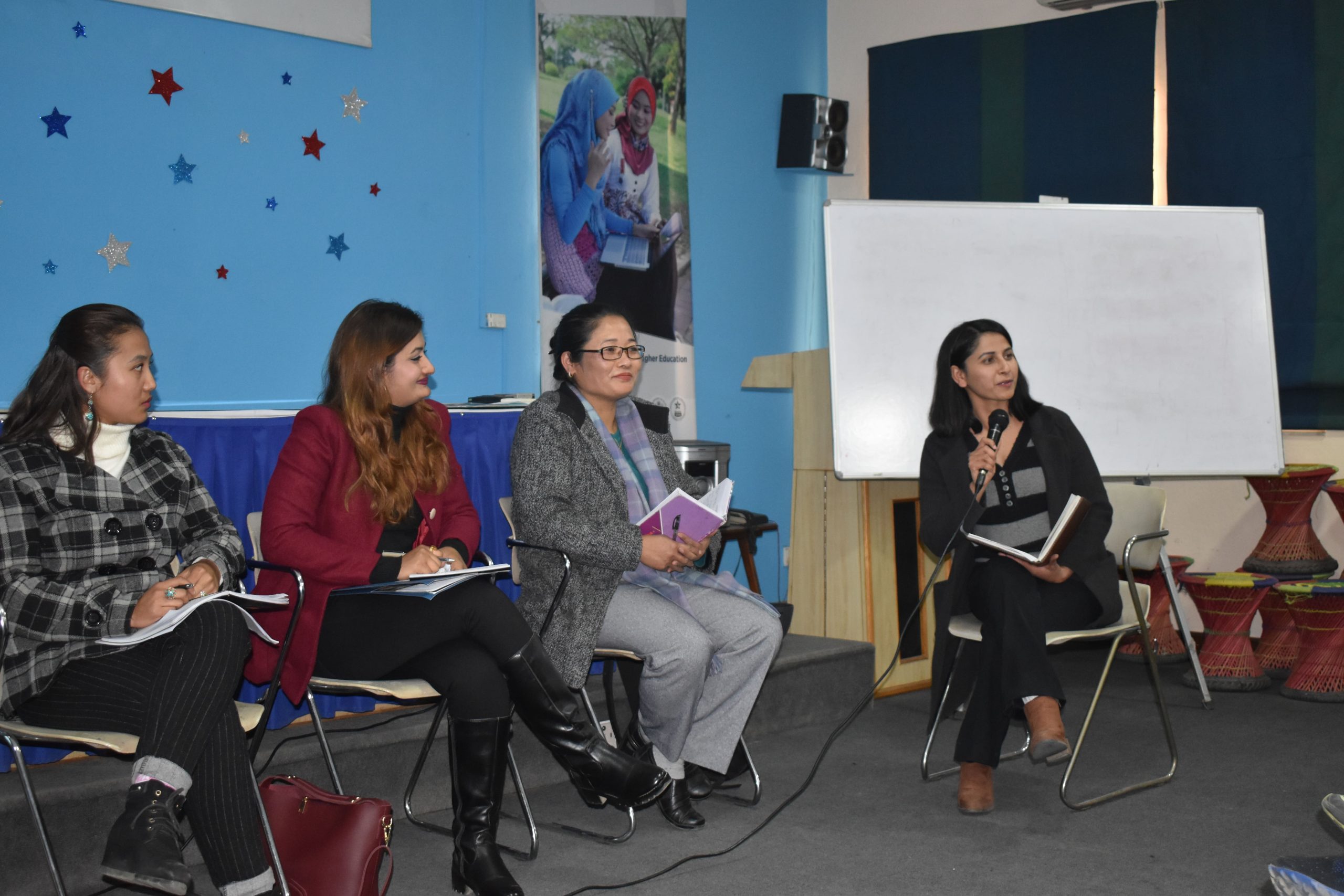
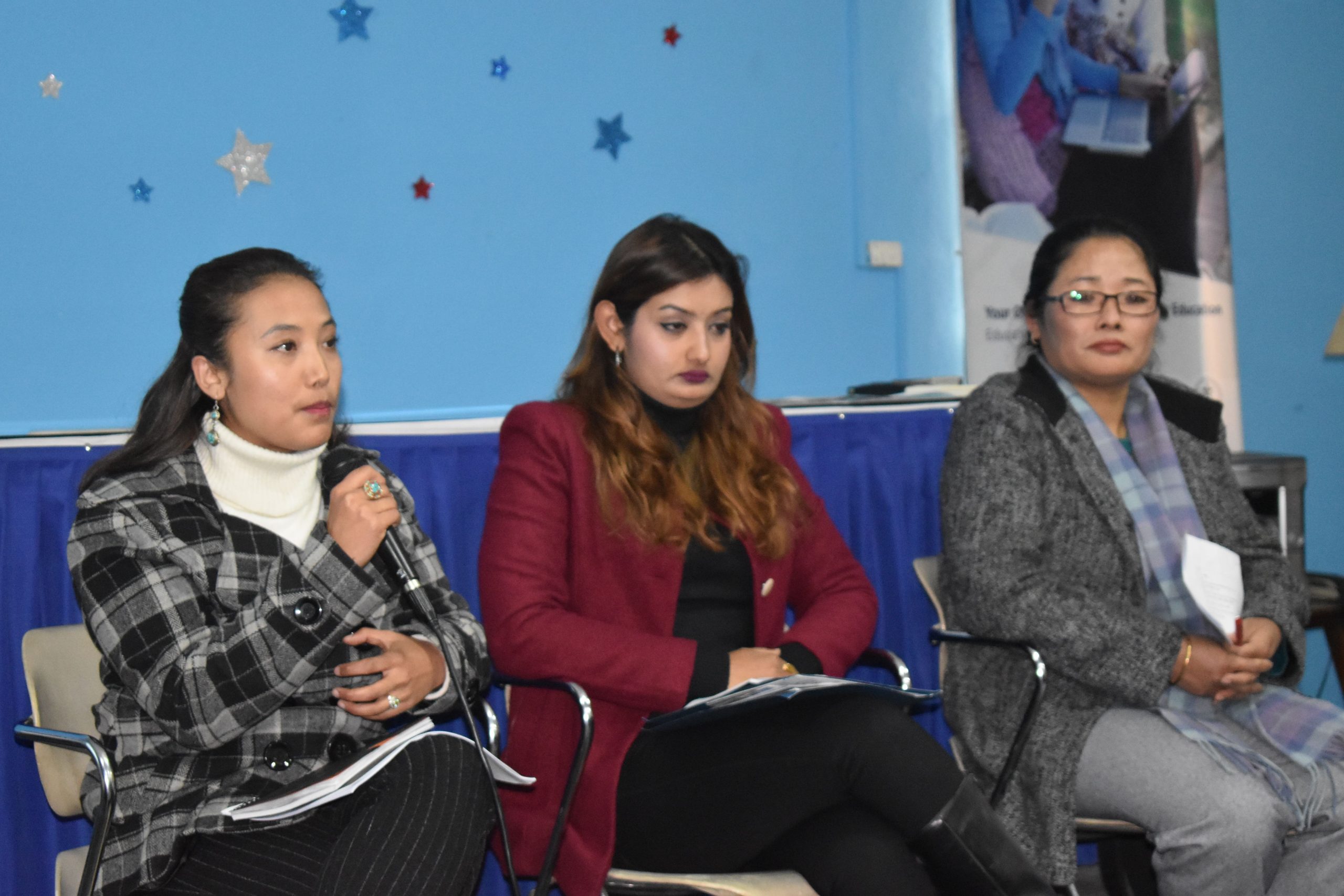
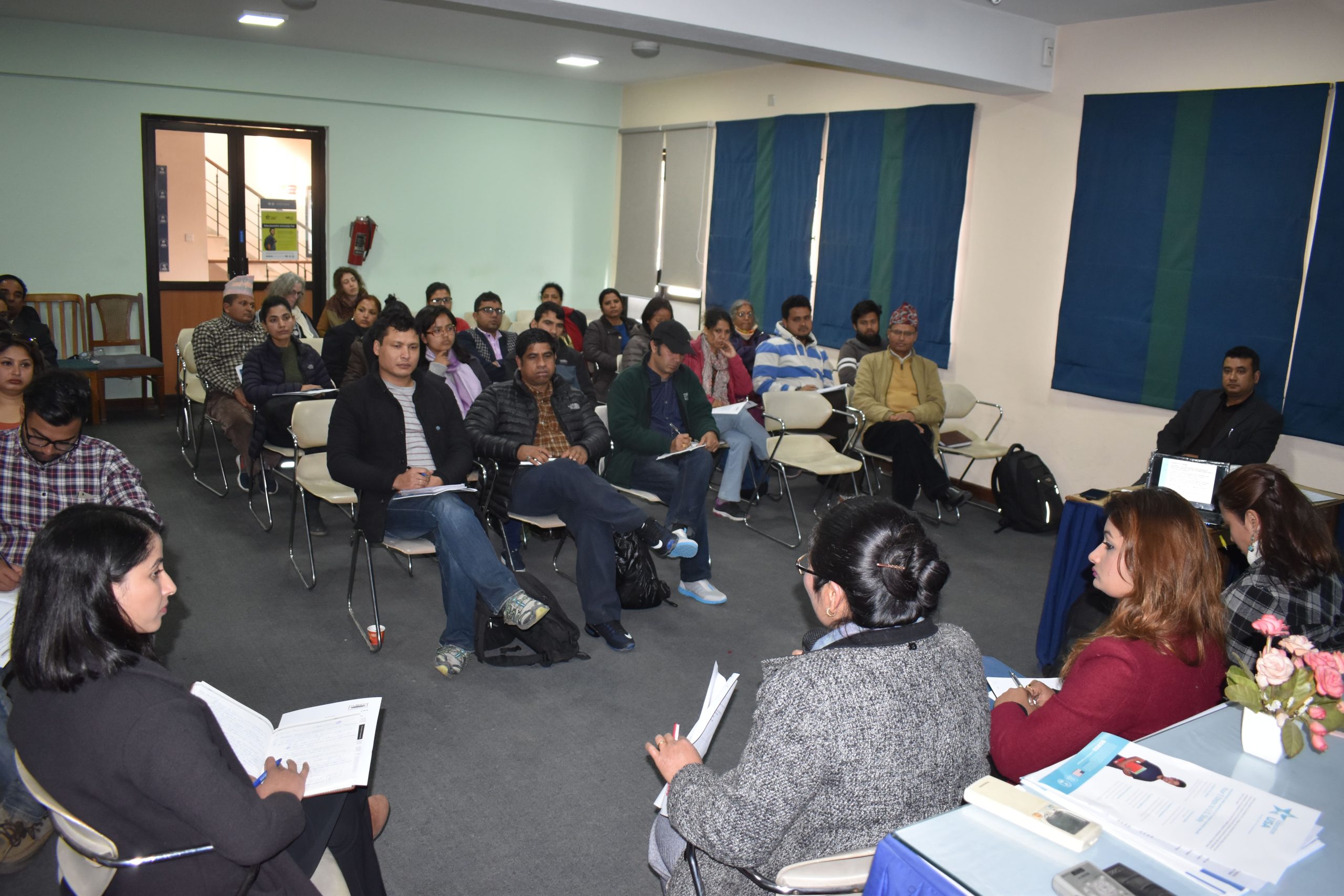
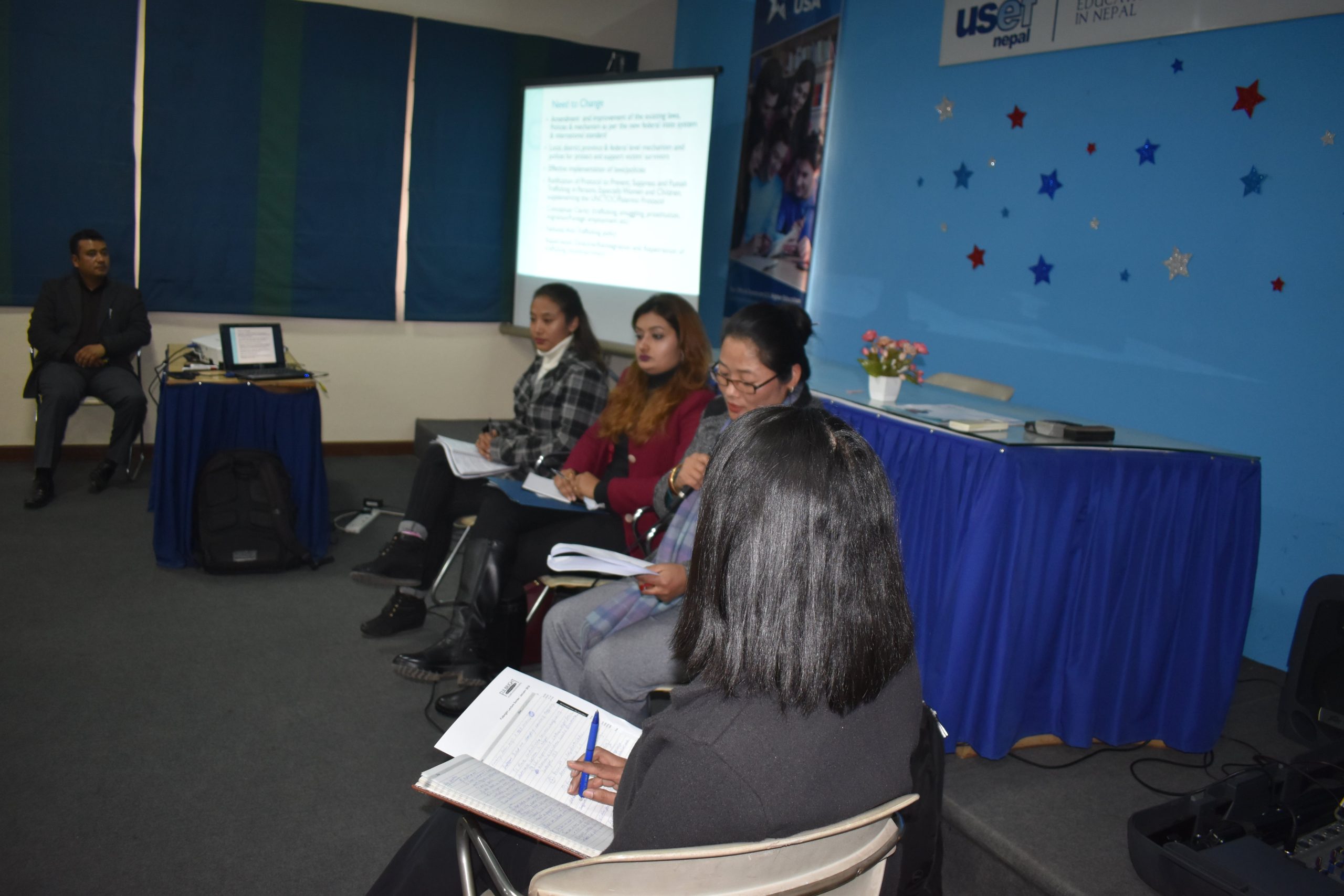
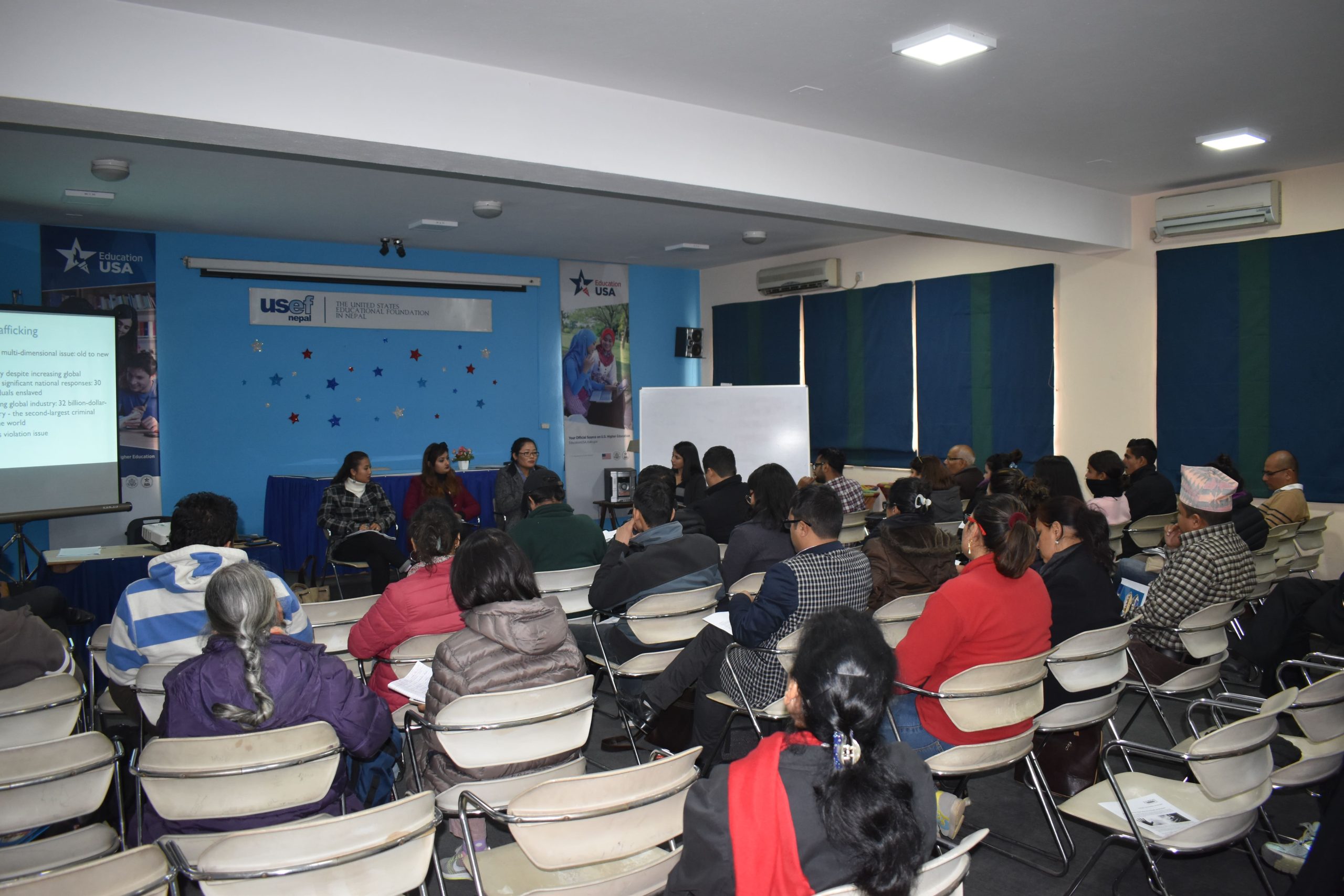
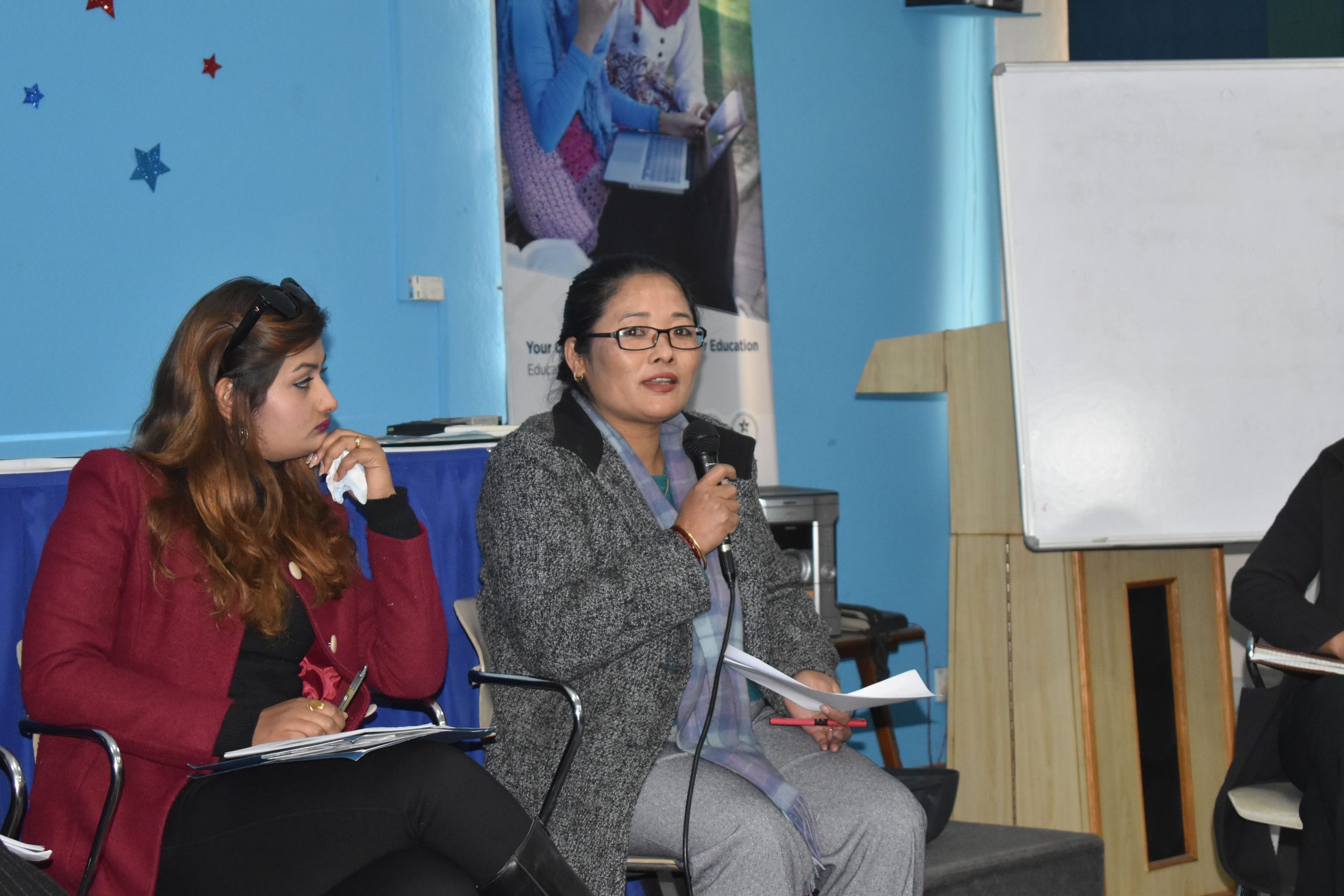
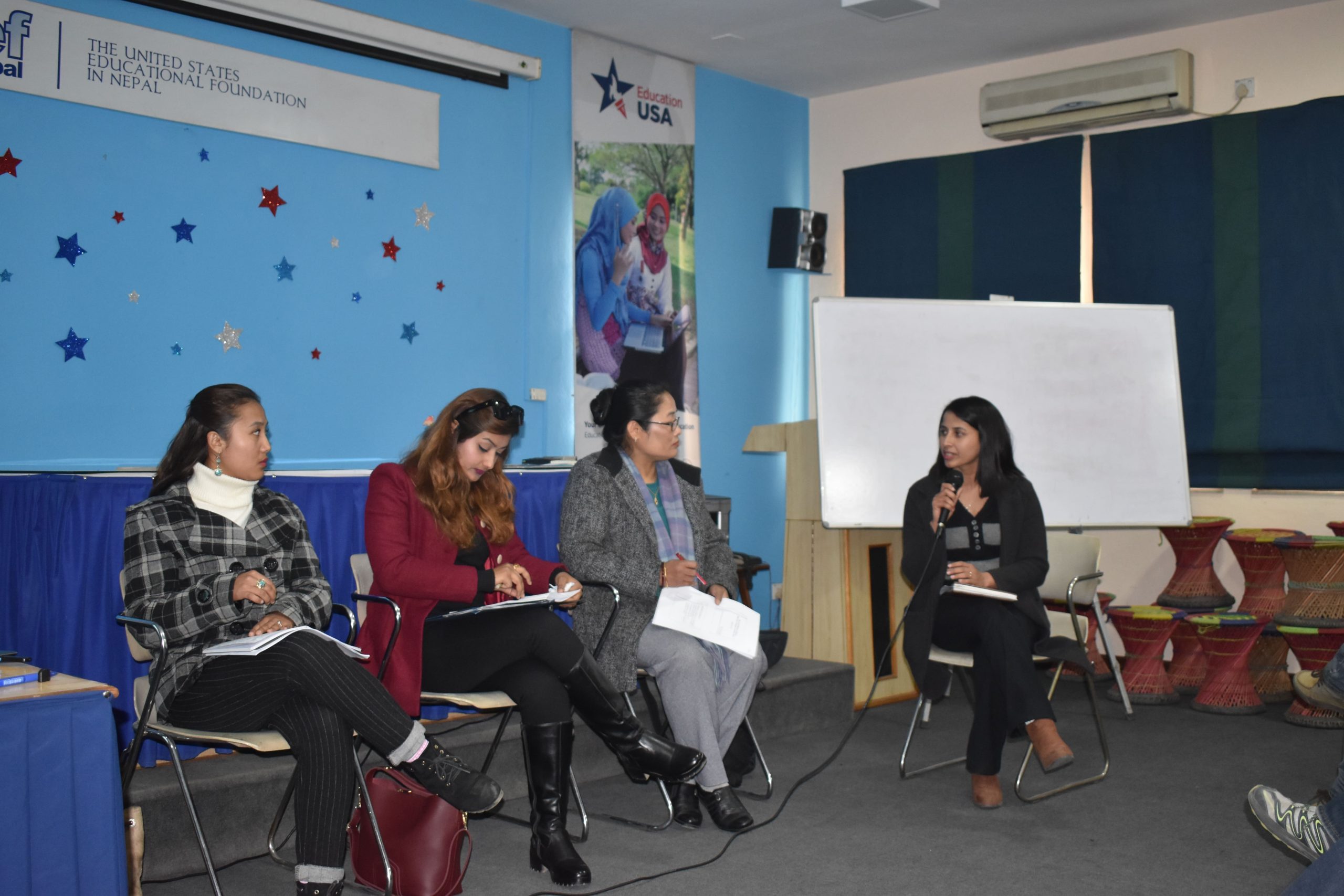
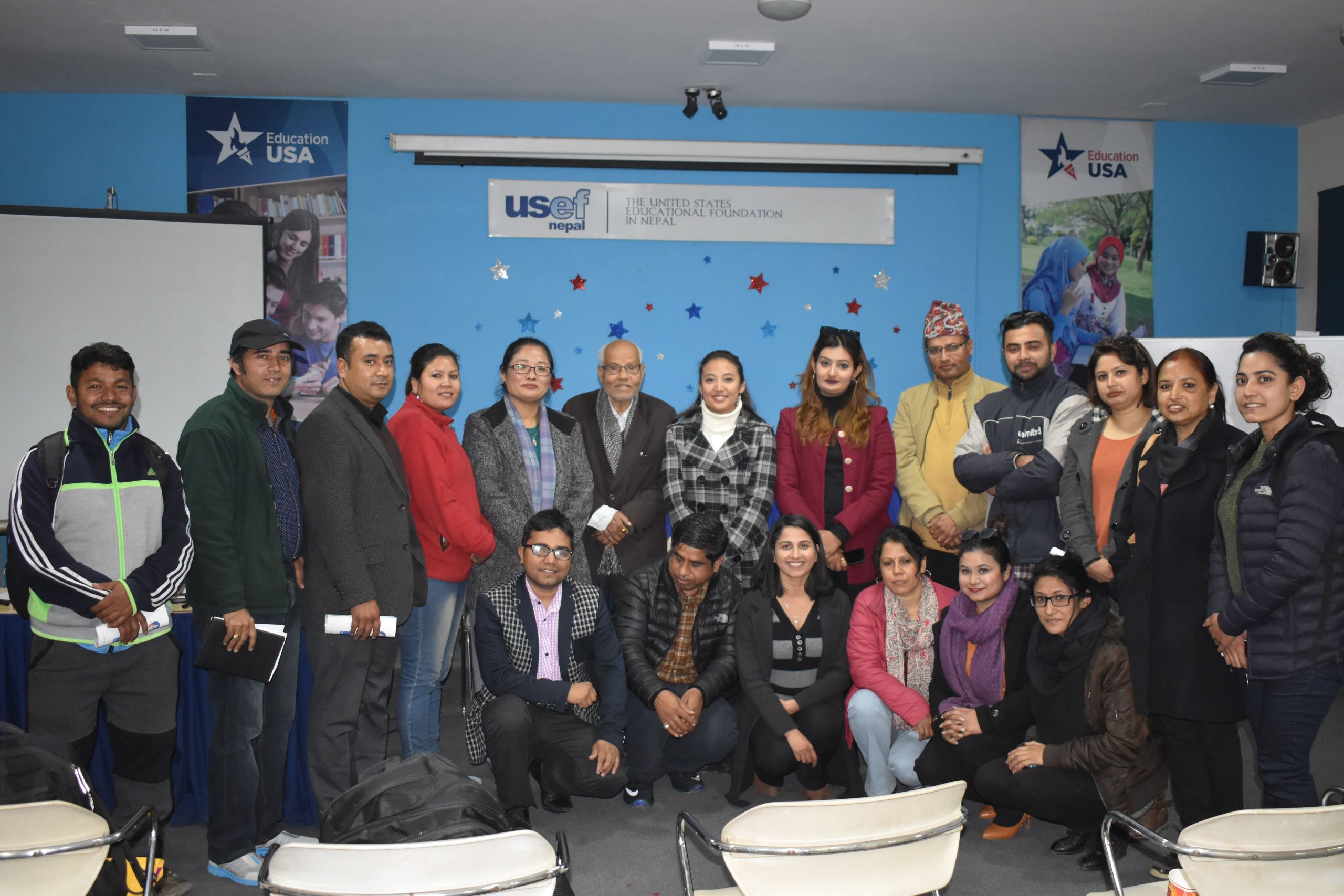
Fulbright Alumni Association of Nepal (FAAN) launched Fulbright Lecture Series with an inaugural panel discussion on "Human Trafficking in Nepal: What Have Changed, and What Not?", featuring Ms. Benu Maya Gurung (ED, AATWIN | IVLP), Ms. Rakshya Ojha (Team Leader, ABC Nepal | IVLP), and Ms. Dechen Lama (advocate | IVLP) as panelists. The panelists shed light on the complexity of human trafficking in Nepal.
Ms. Jony Mainaly (Executive Member, FAAN; LL.M., Duke) moderated the panel discussion.
The event took place at USEF Auditorium, Gyaneshwor, Kathmandu
Key takeaways from the discussion:
- Human trafficking is complex and multi-layered.
- The trafficking racket in Nepal is unbelievably strong.
- Human trafficking is not only about prostitution nor only about women and children. Men are also prone to trafficking although men in general do not accept that they are/could be victims.
- Some positive changes have happened but human trafficking business is ever changing. Anyone can be tricked into trafficking -- anyone including well-to-do and well-educated ones.
 Human Trafficing_Gurung
Human Trafficing_Lama
Human Trafficing_Gurung
Human Trafficing_Lama